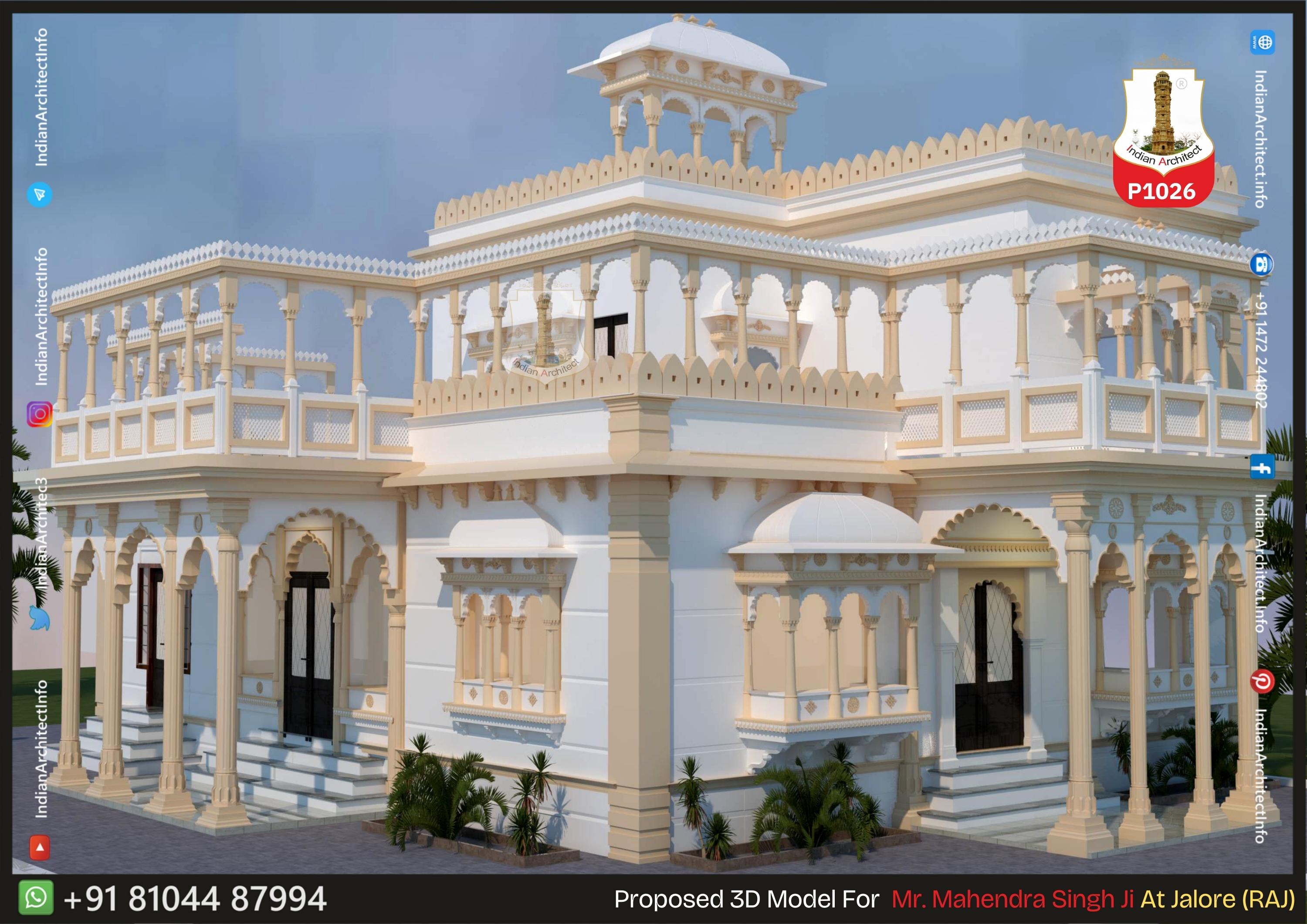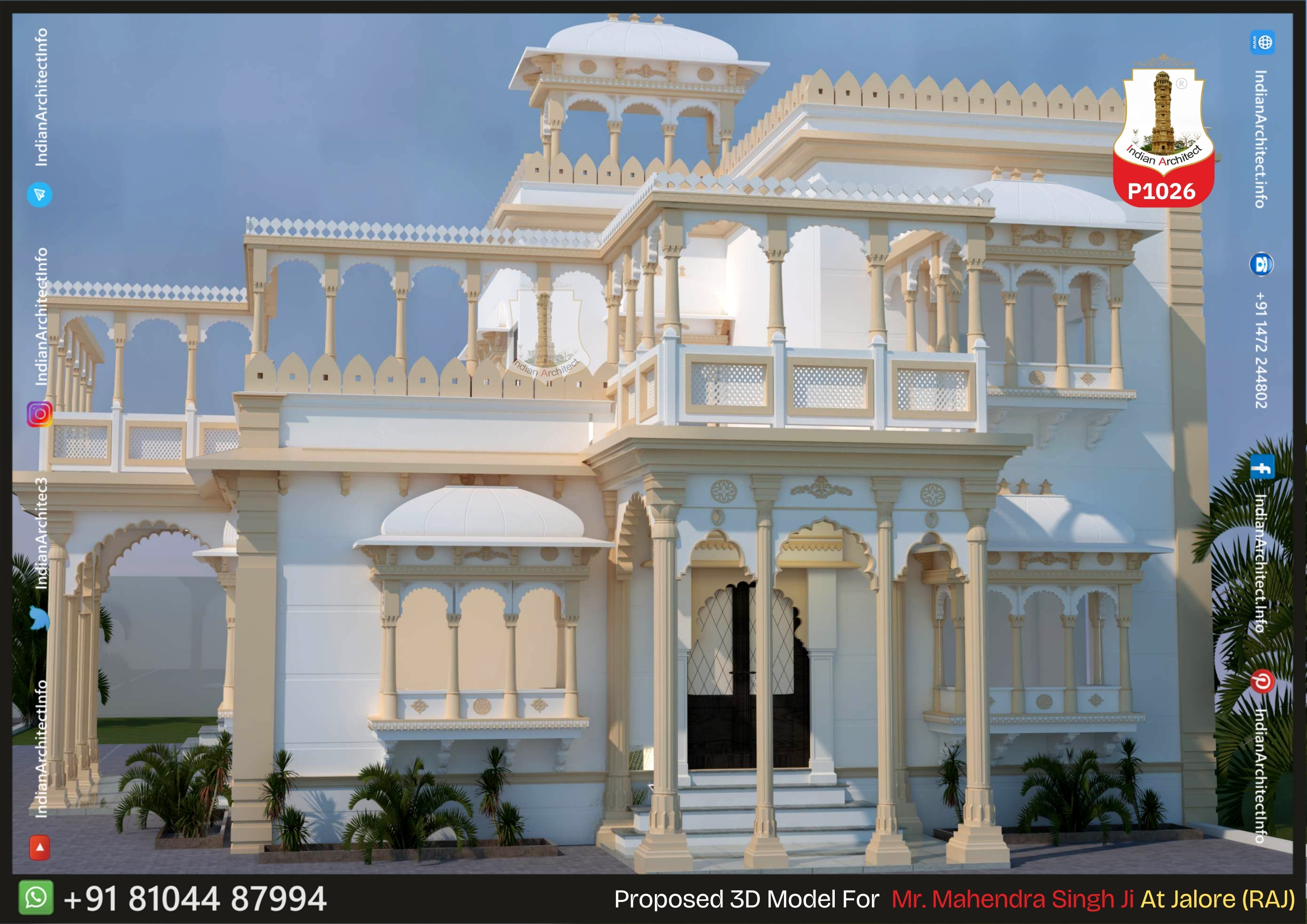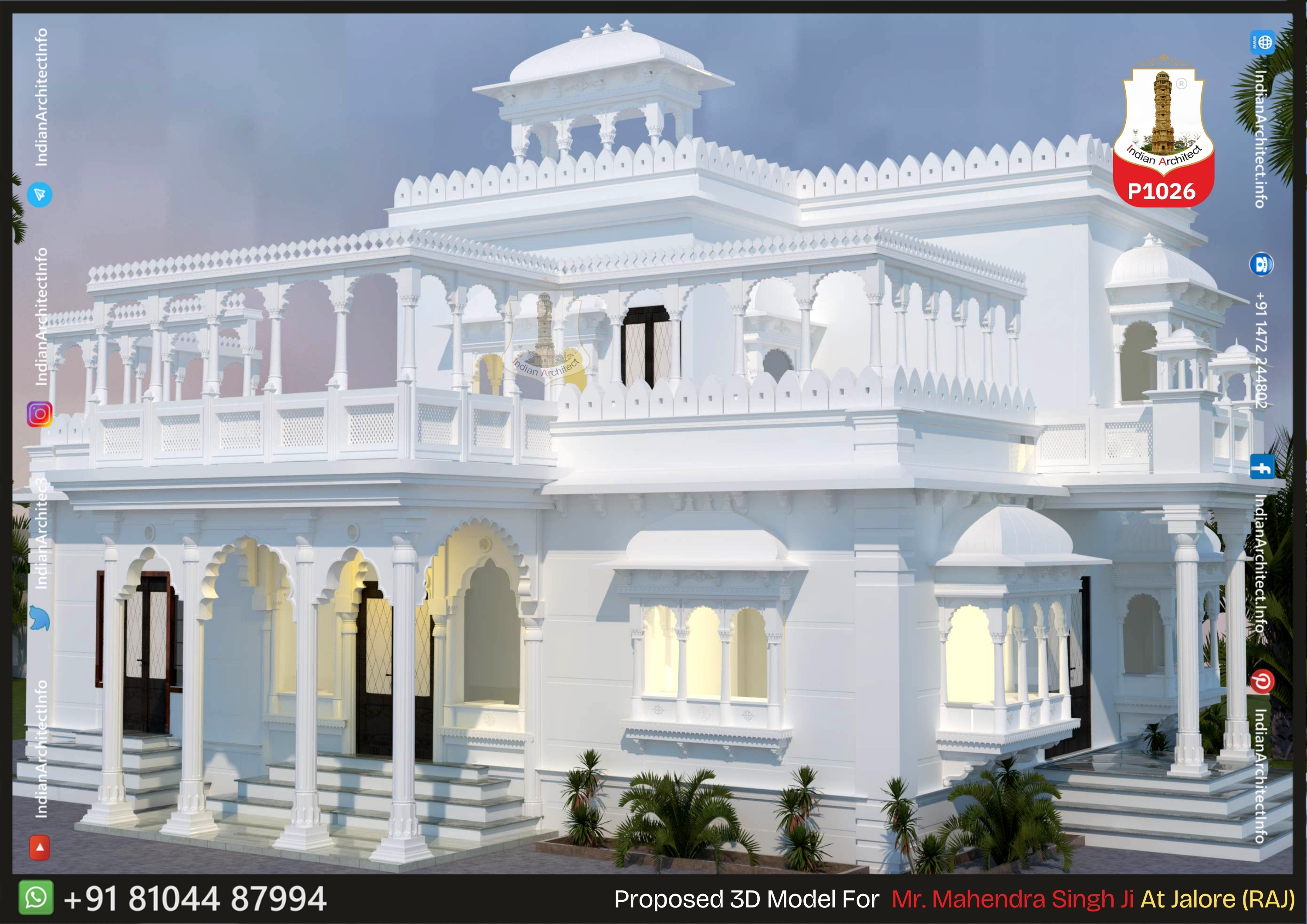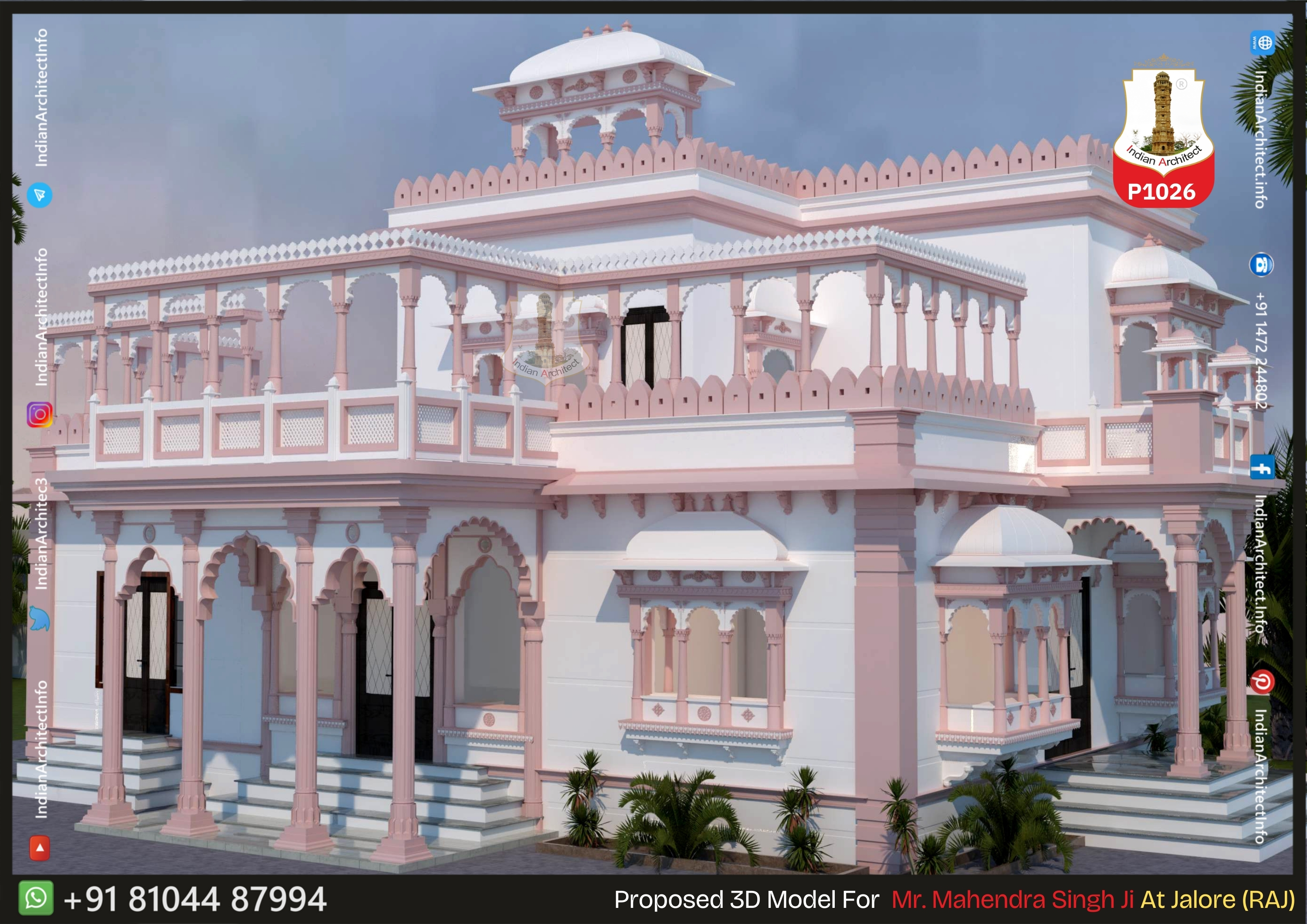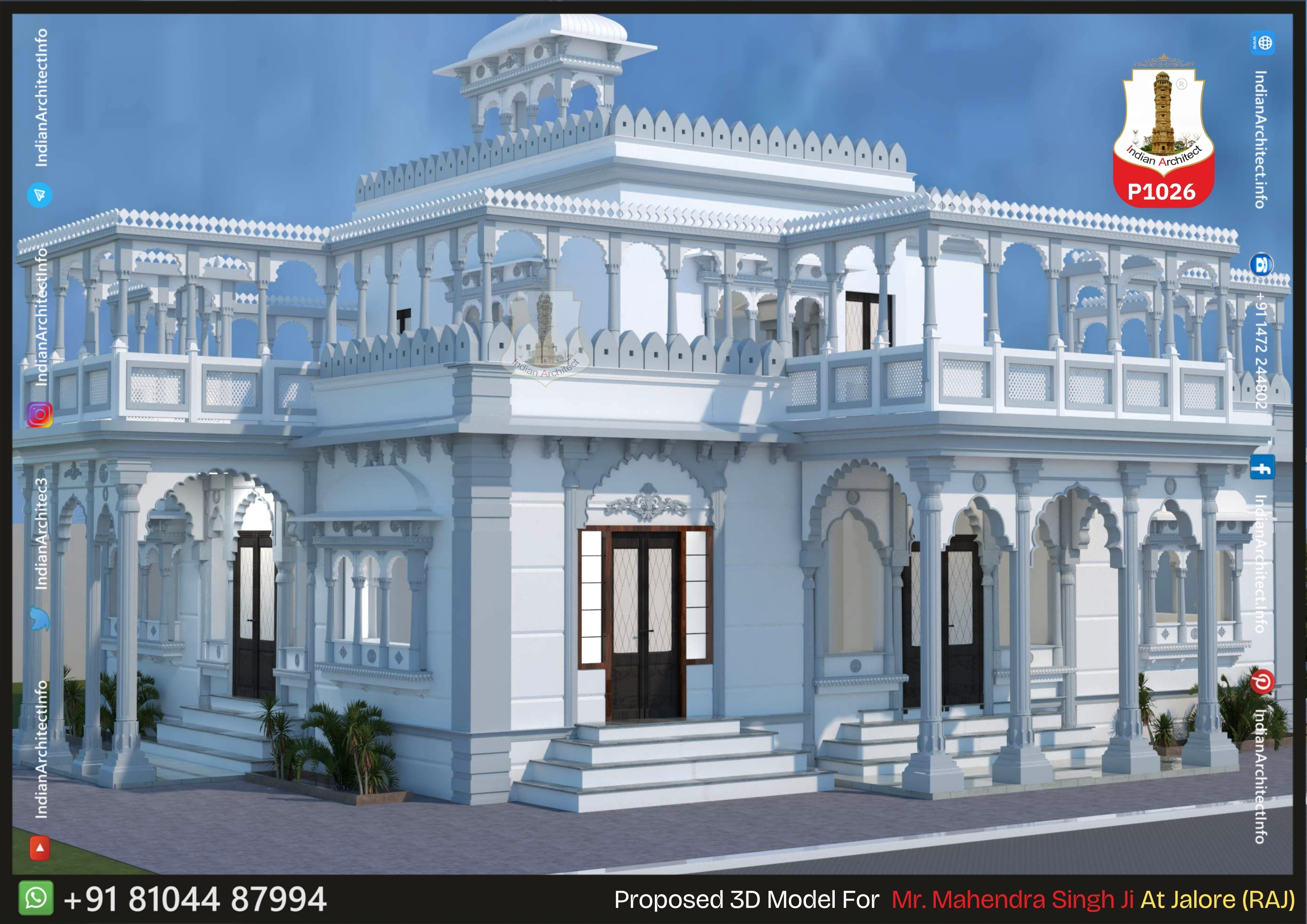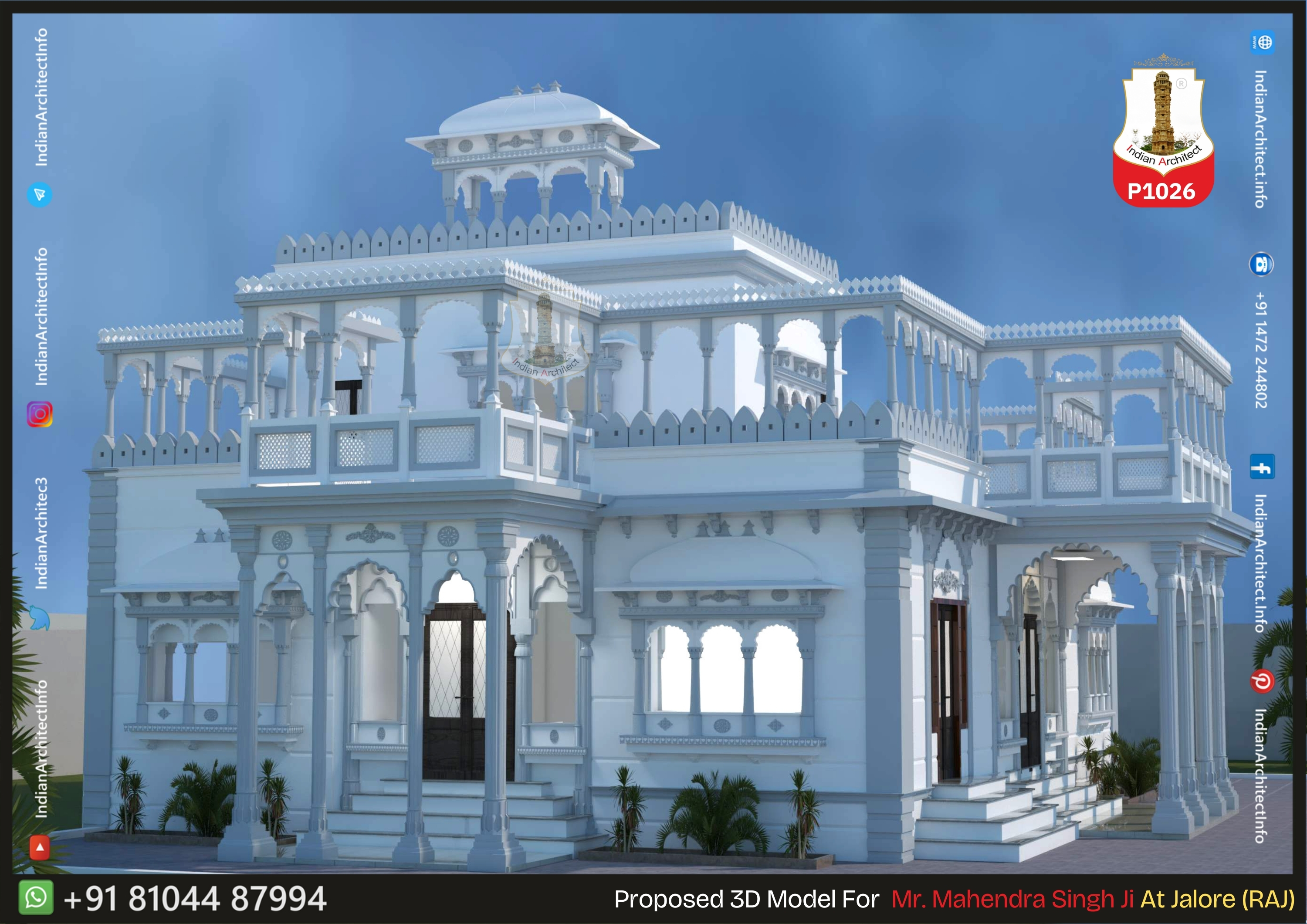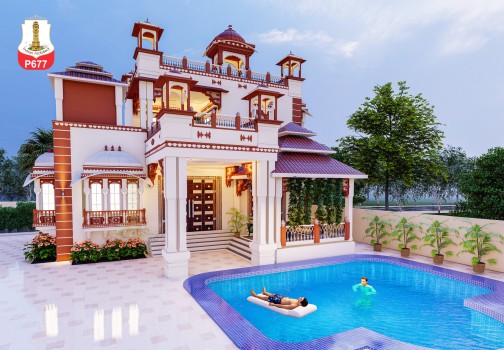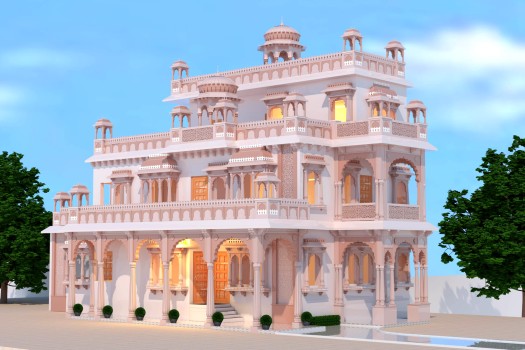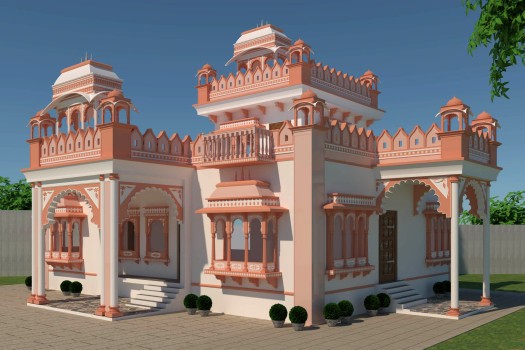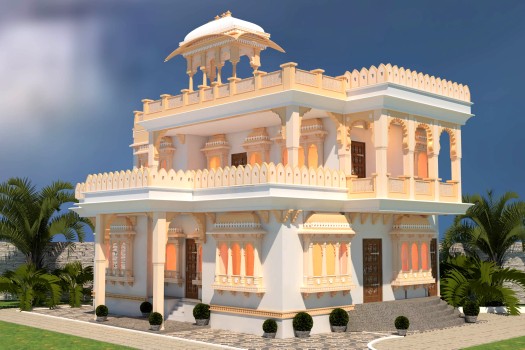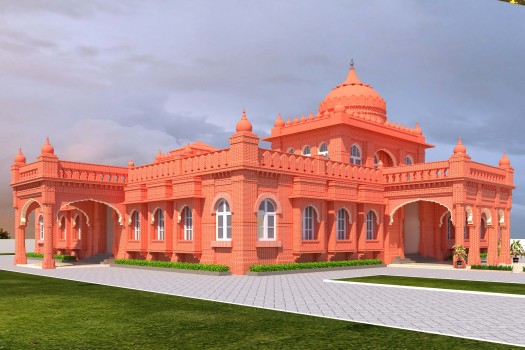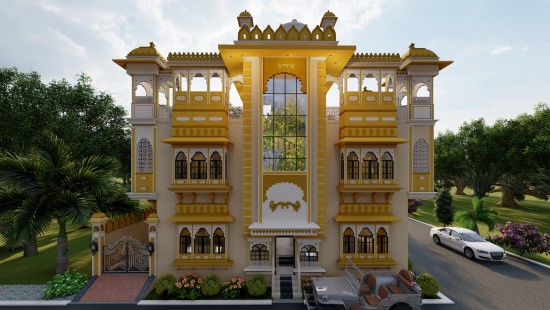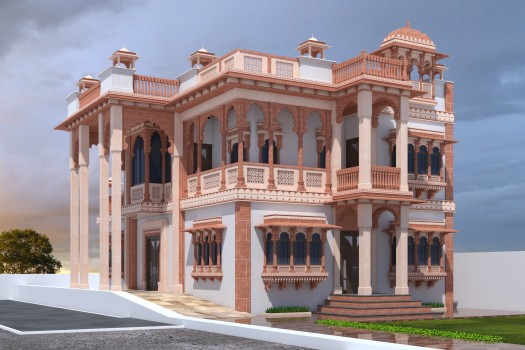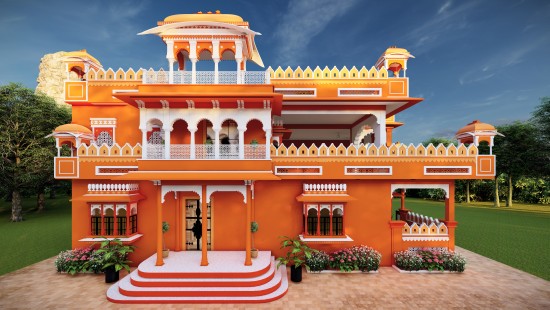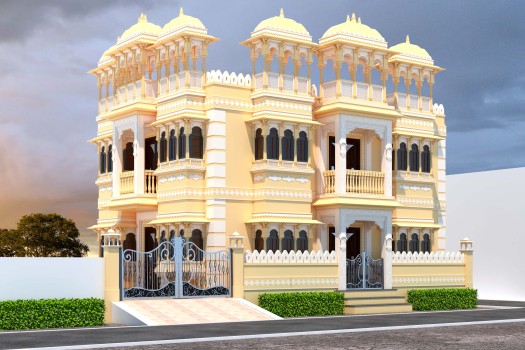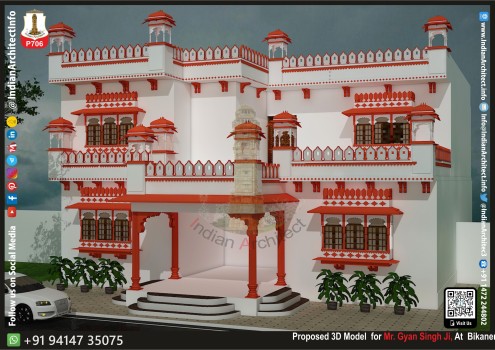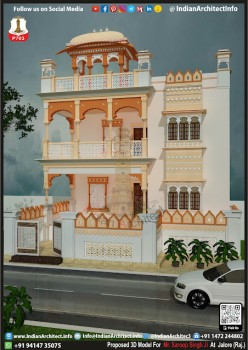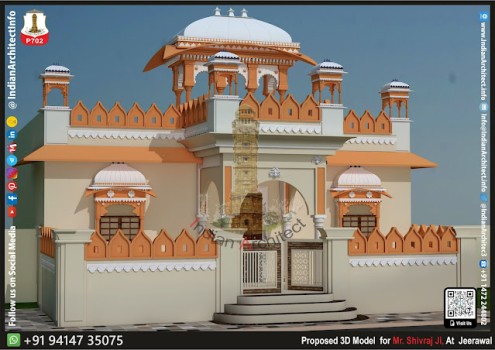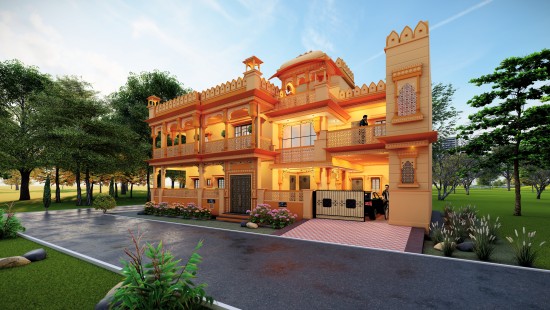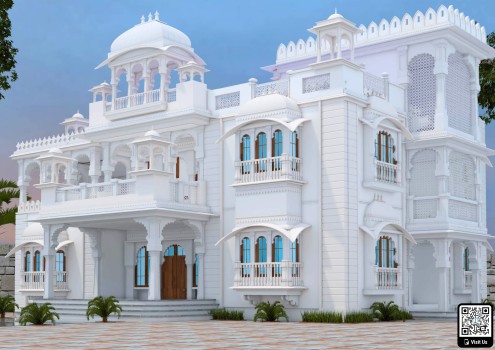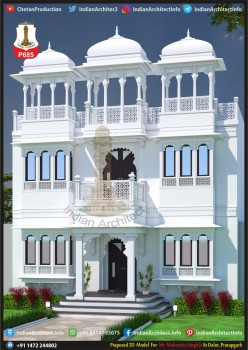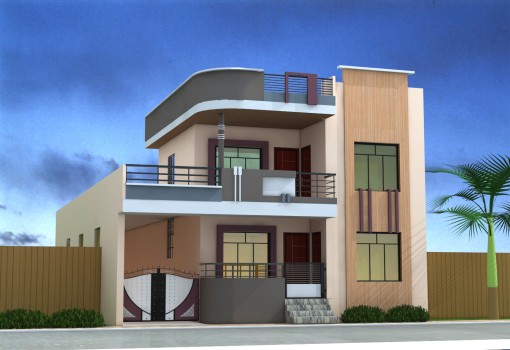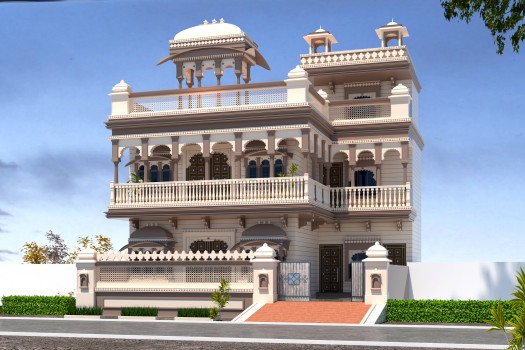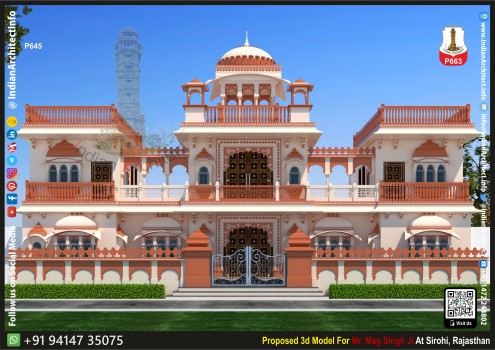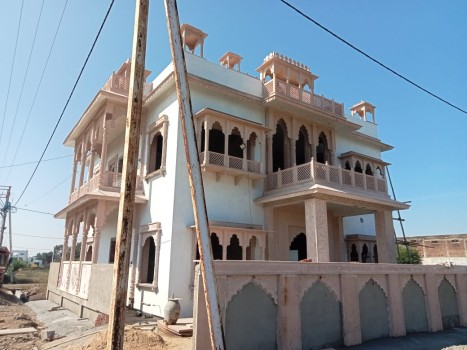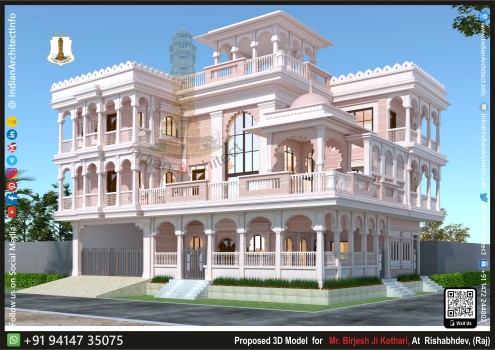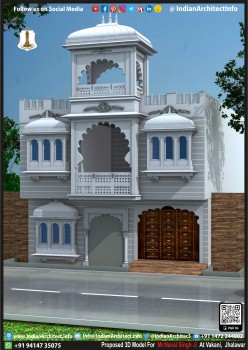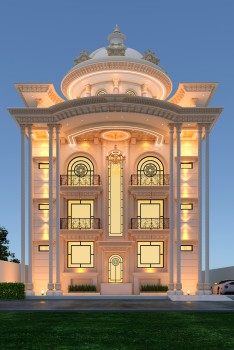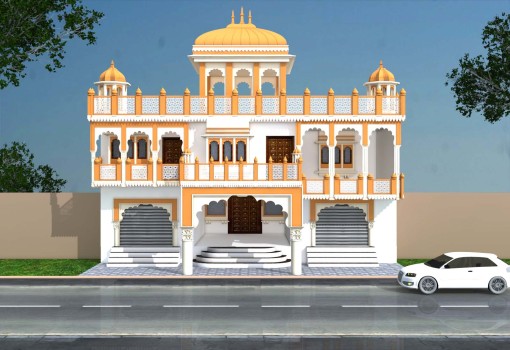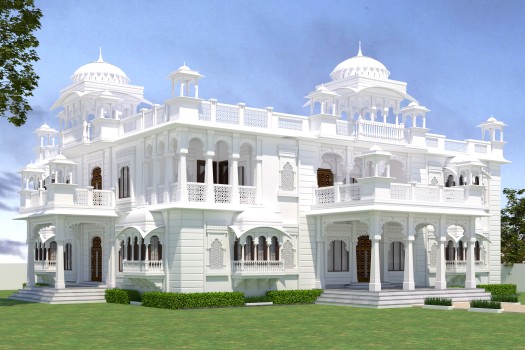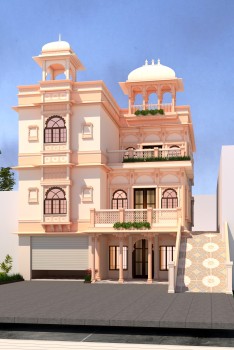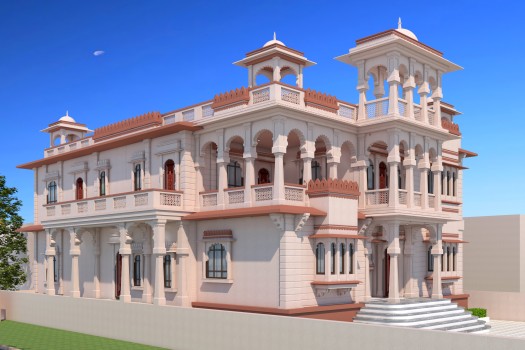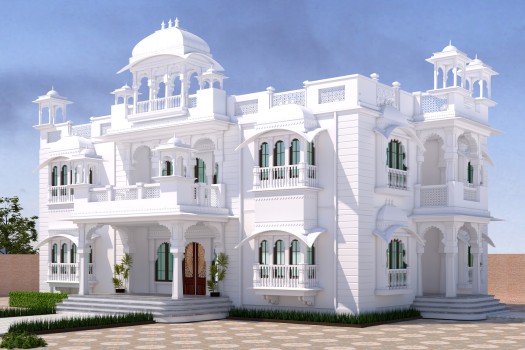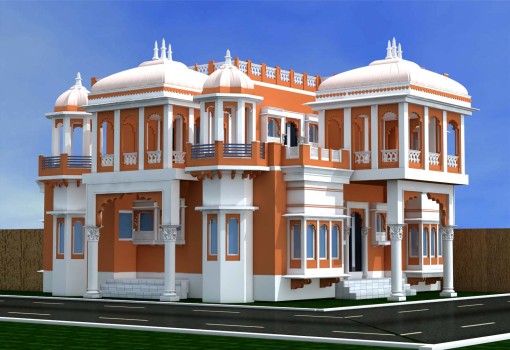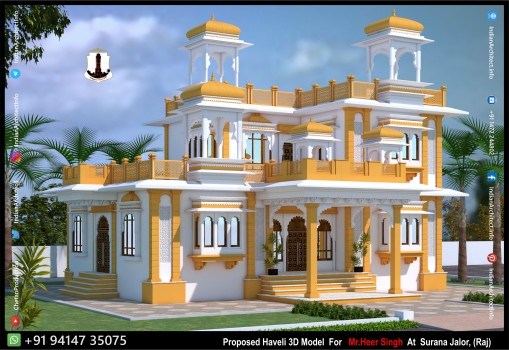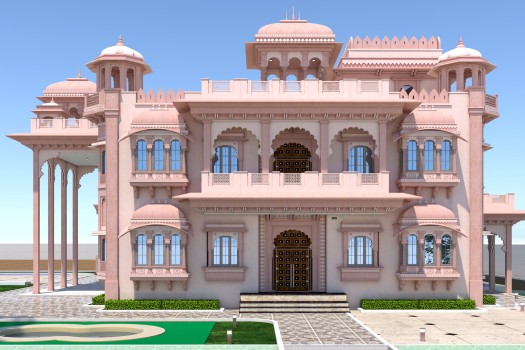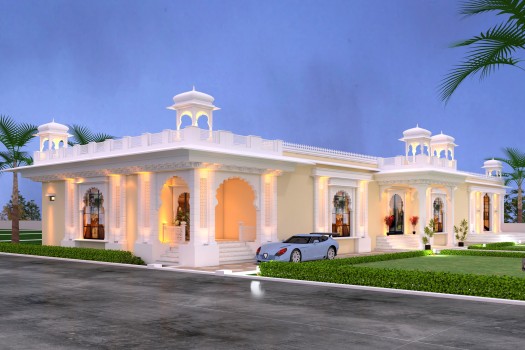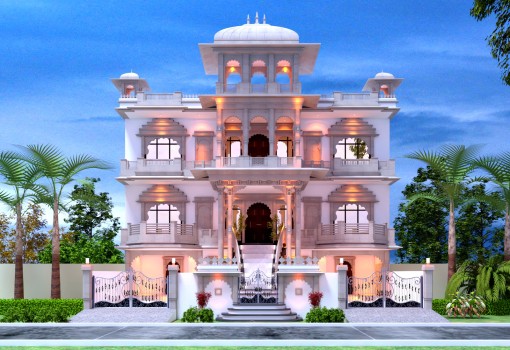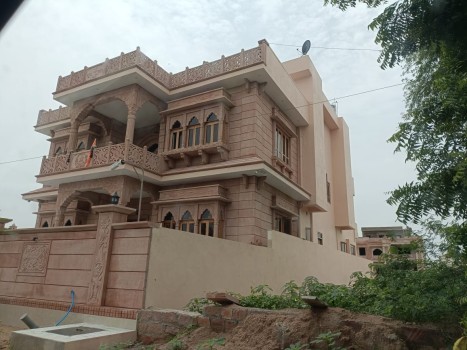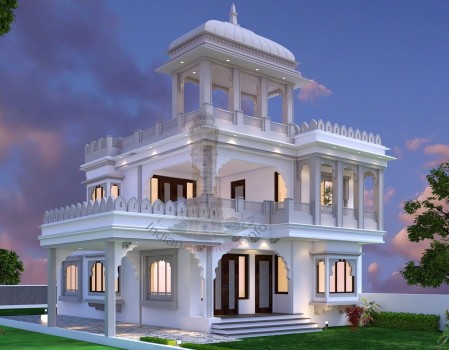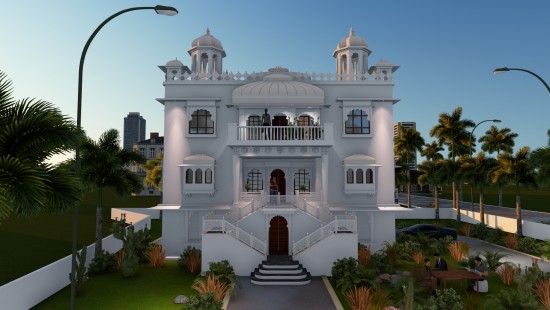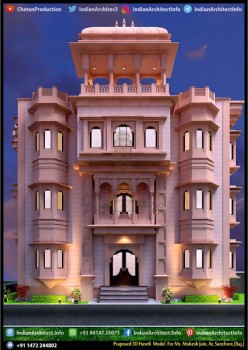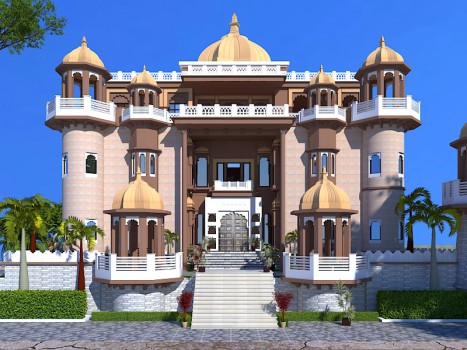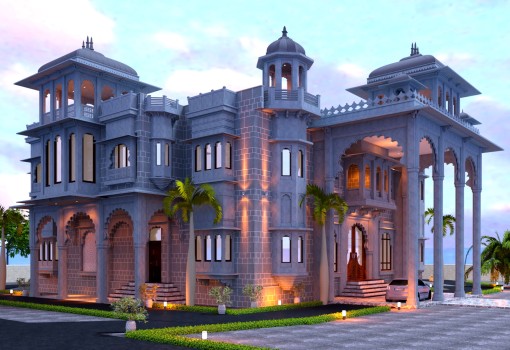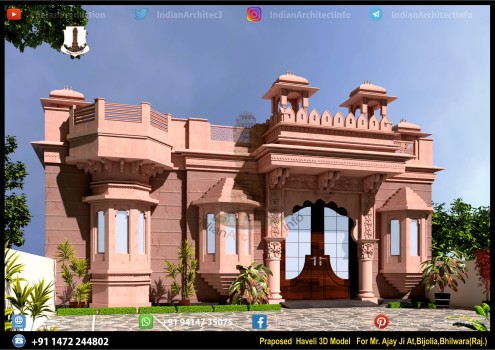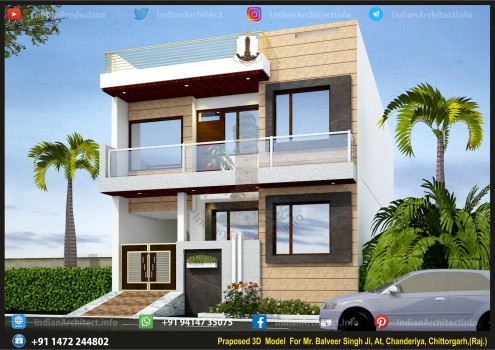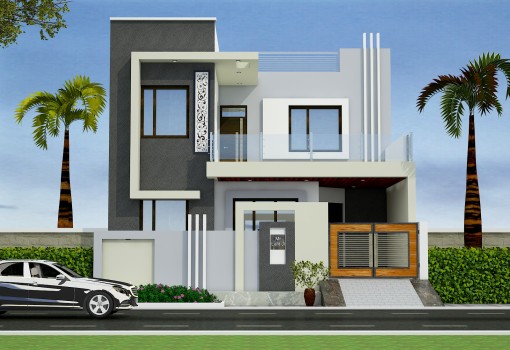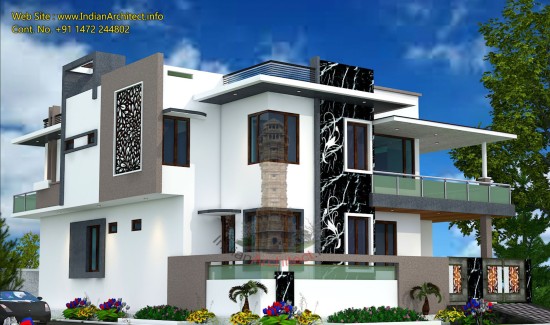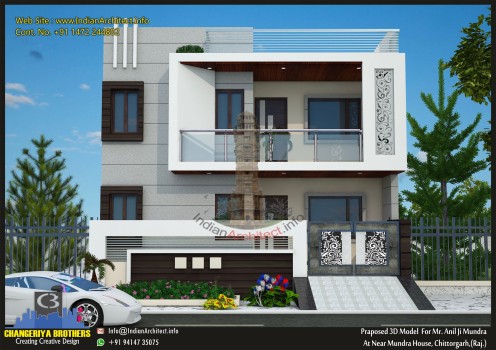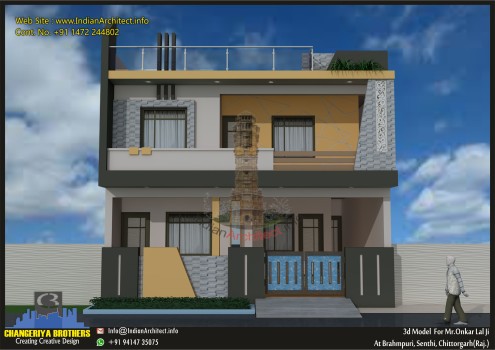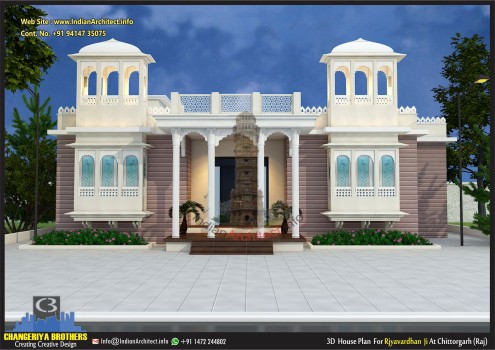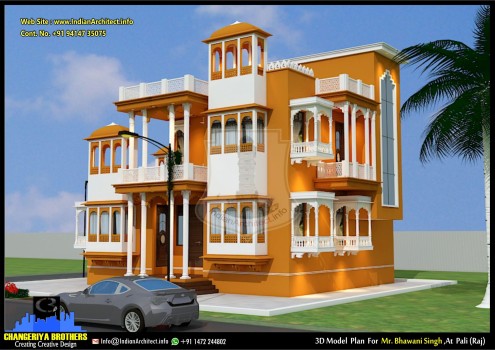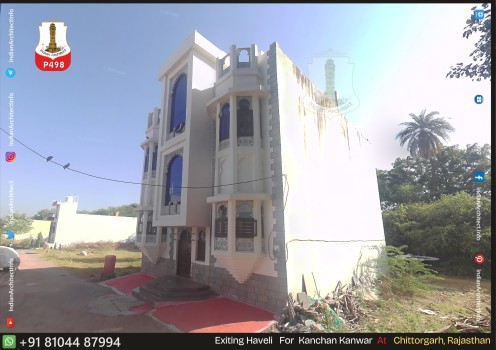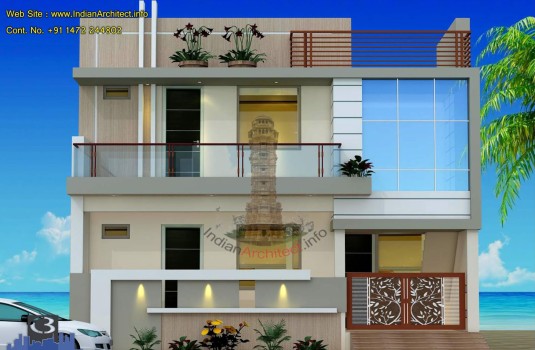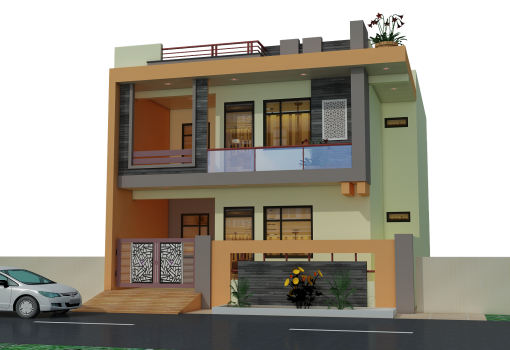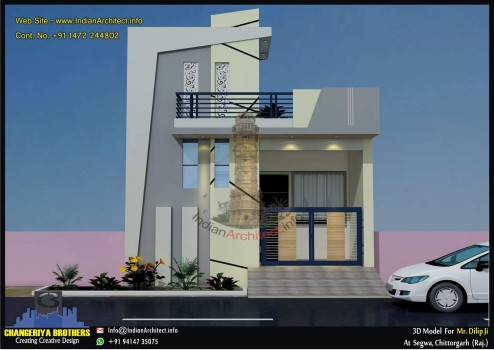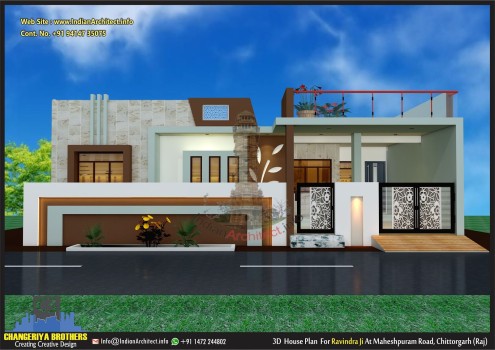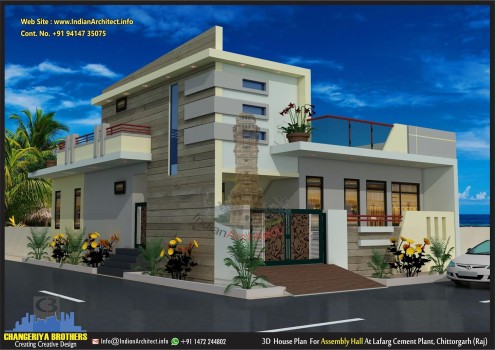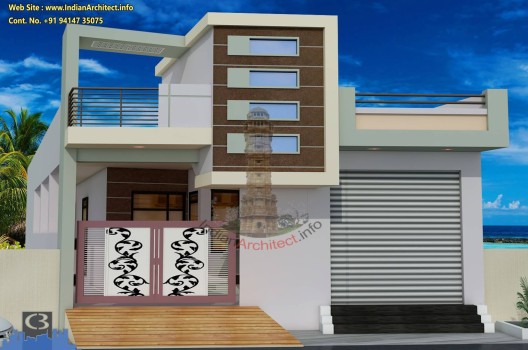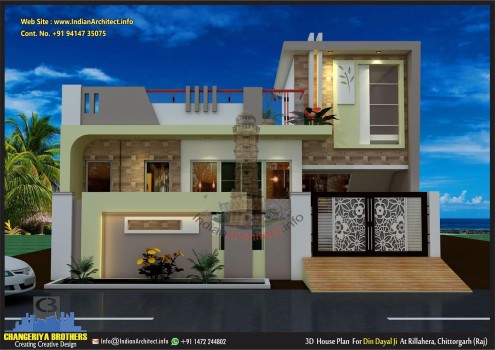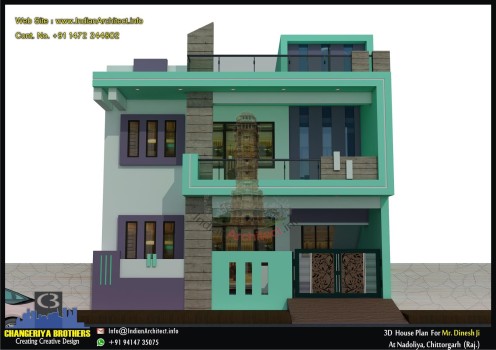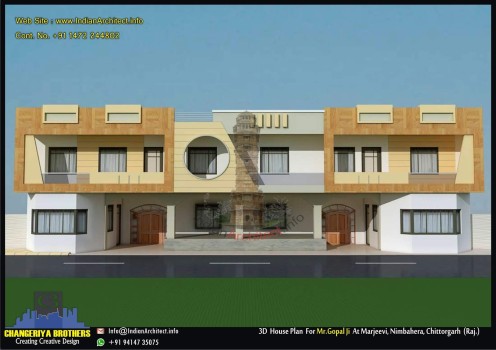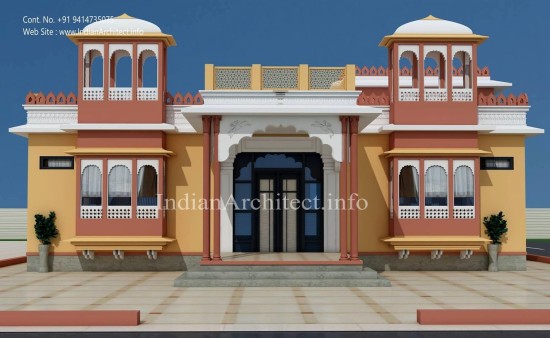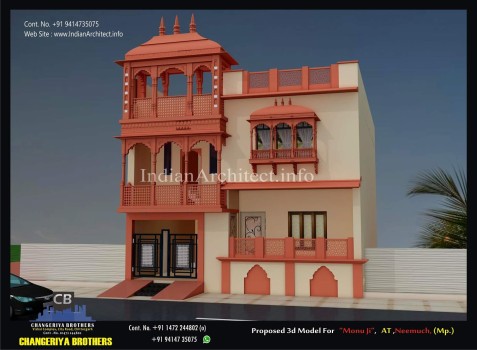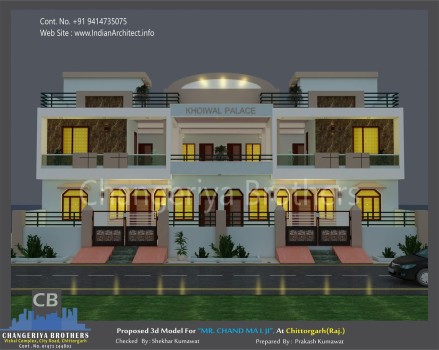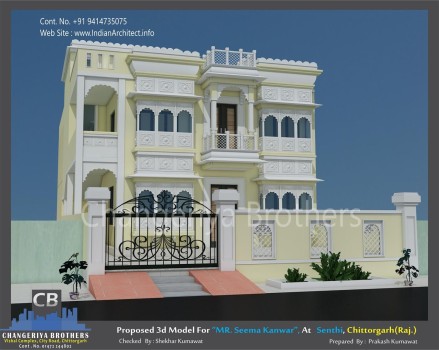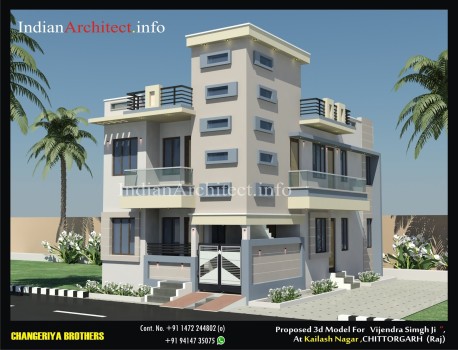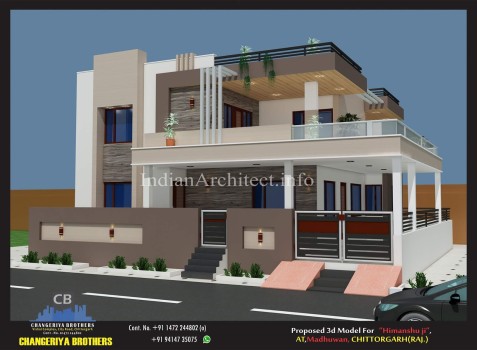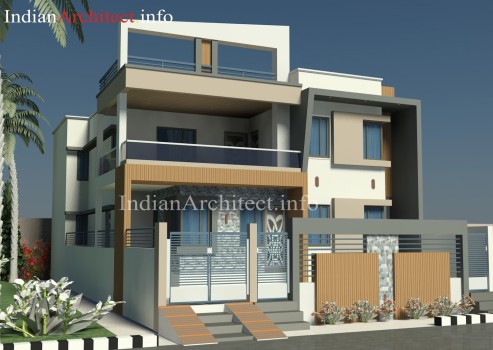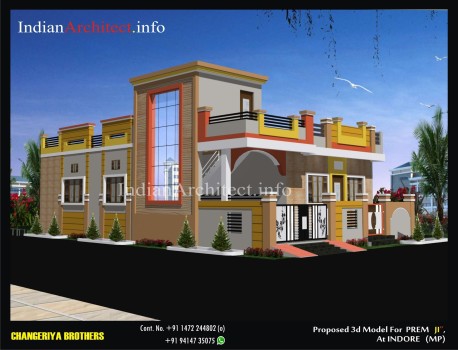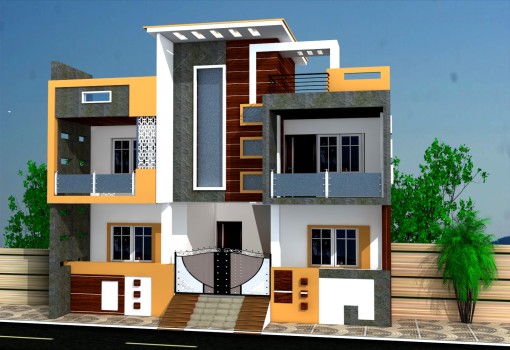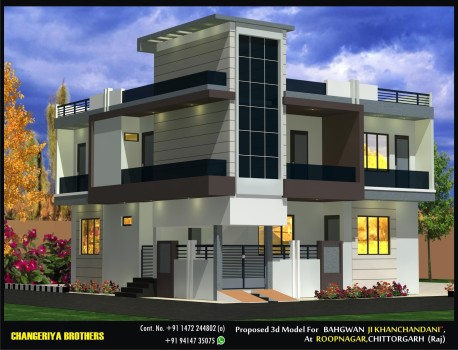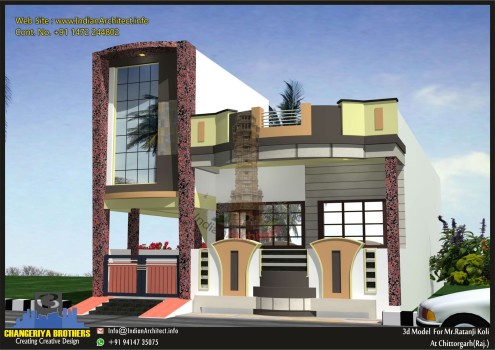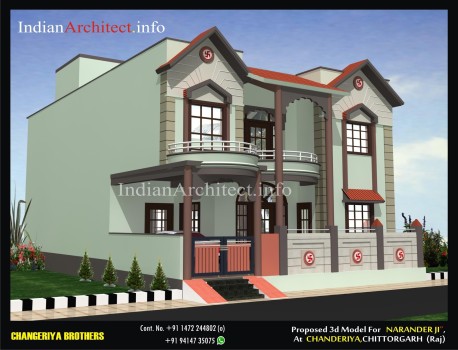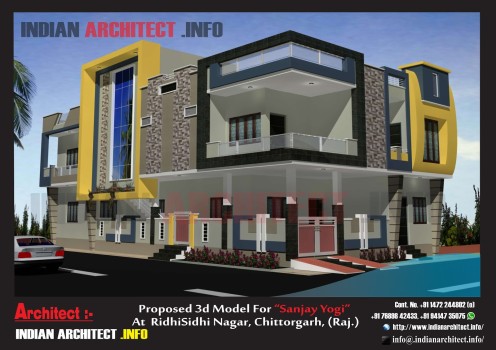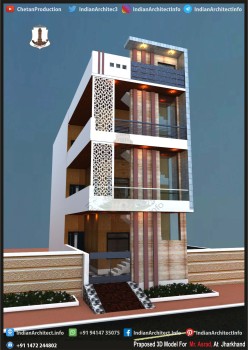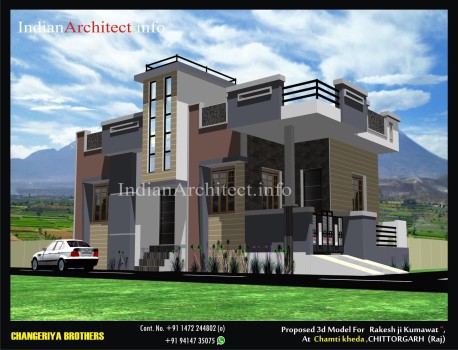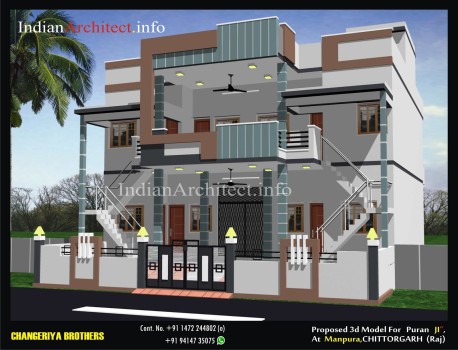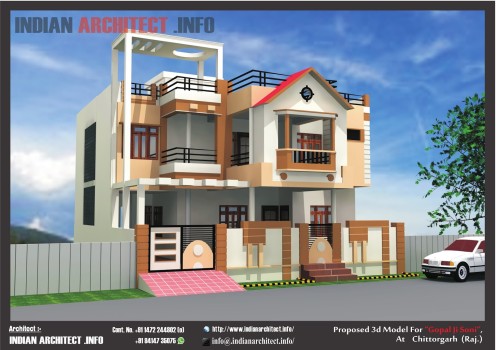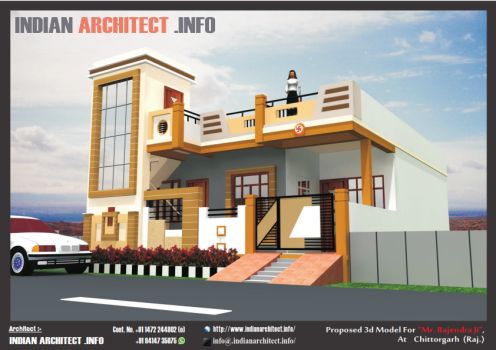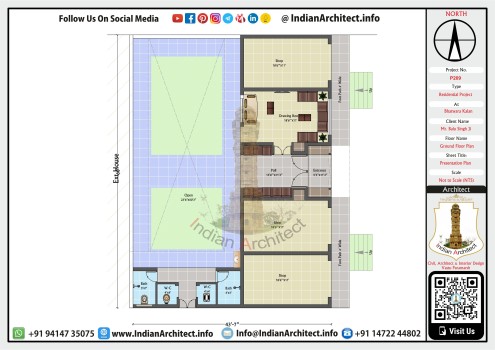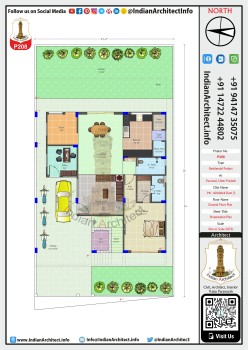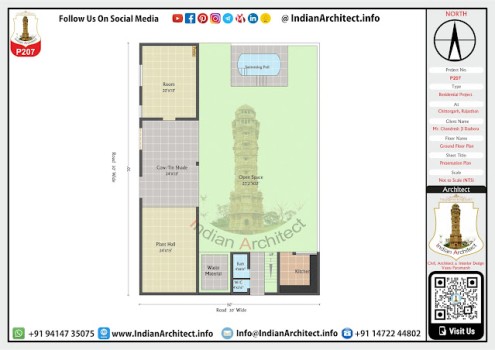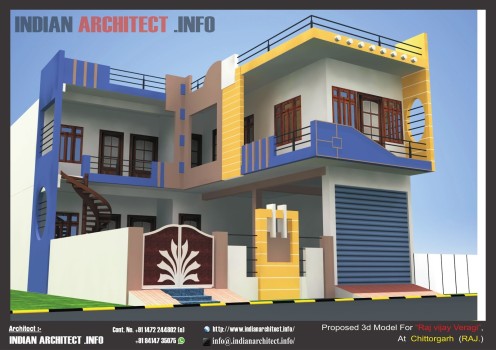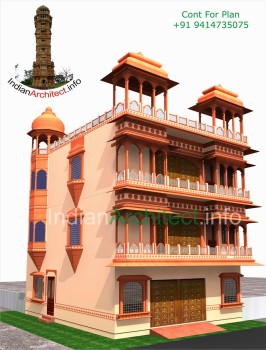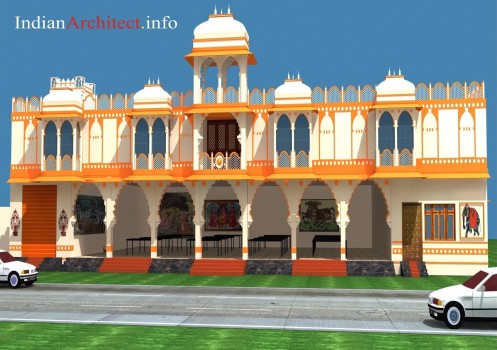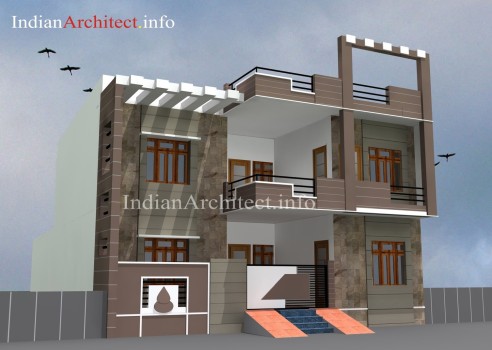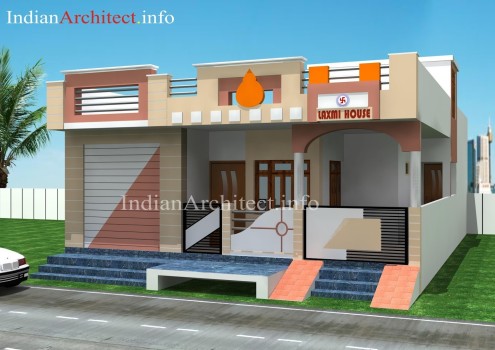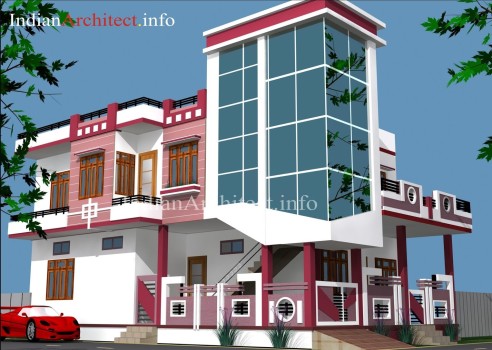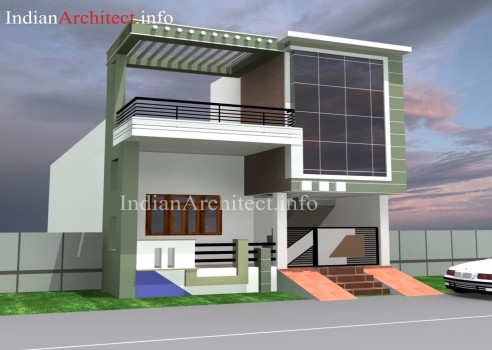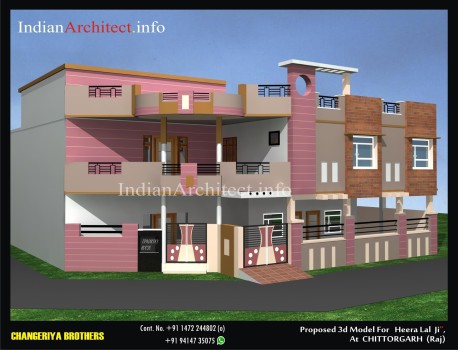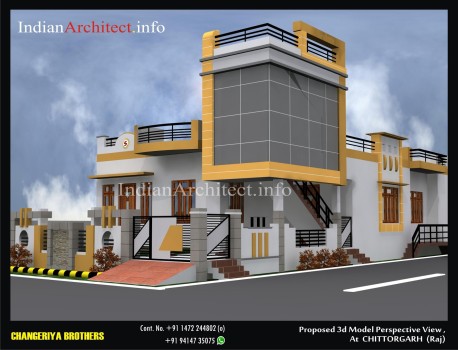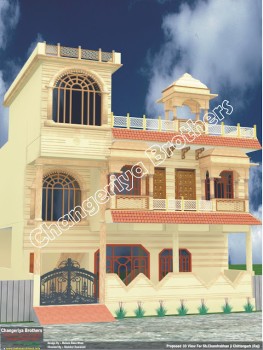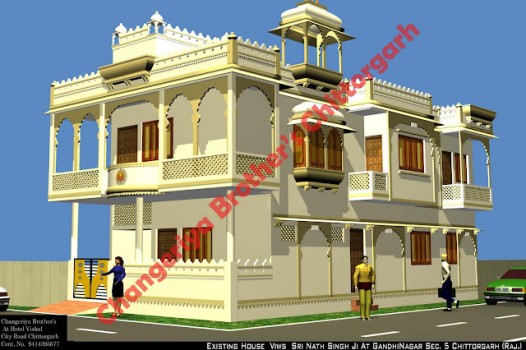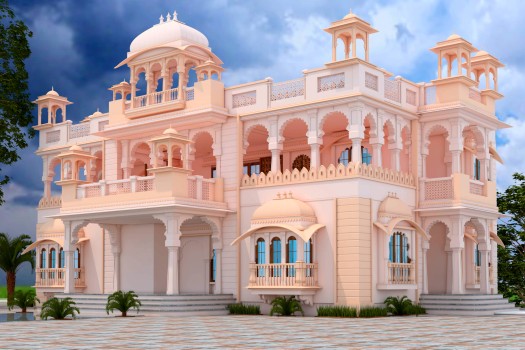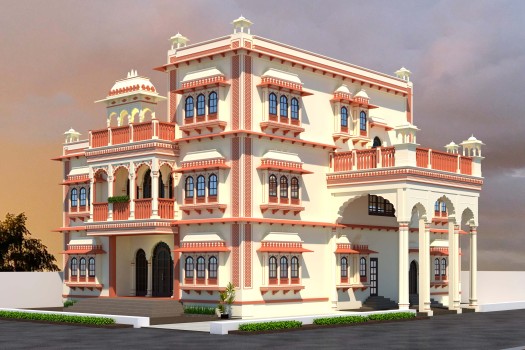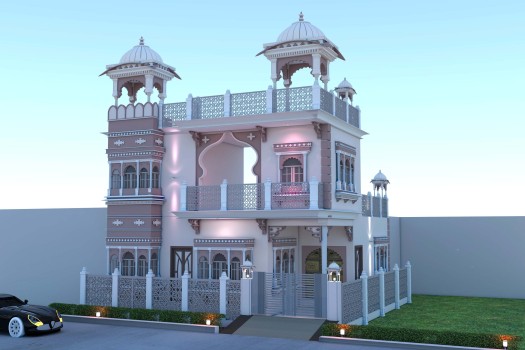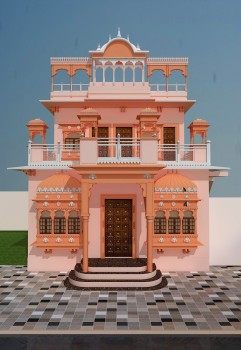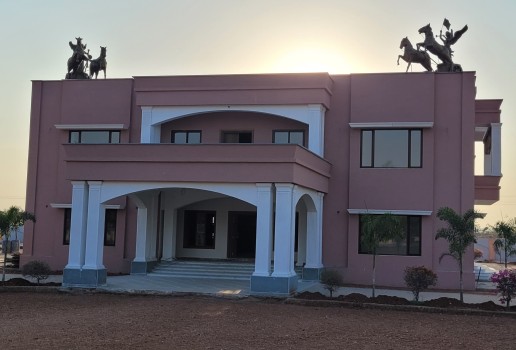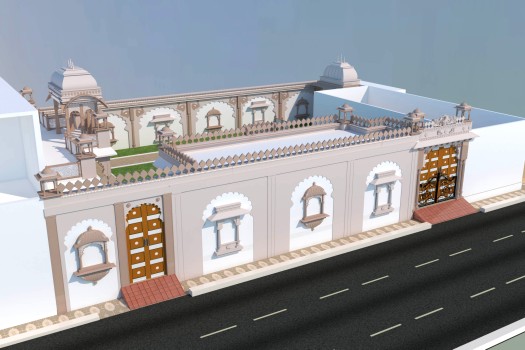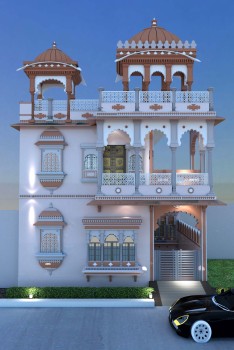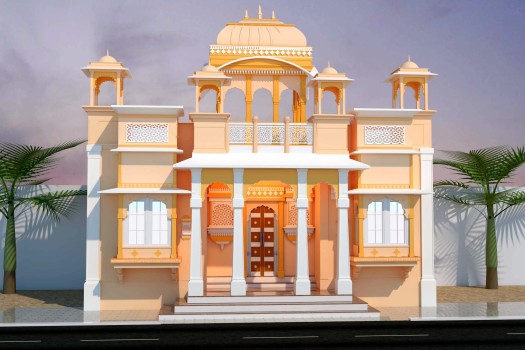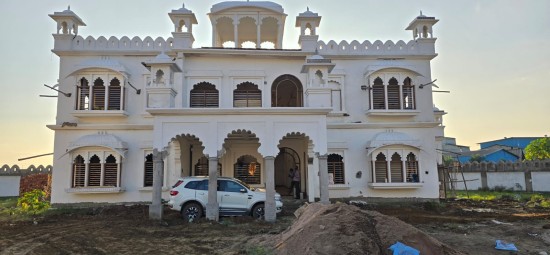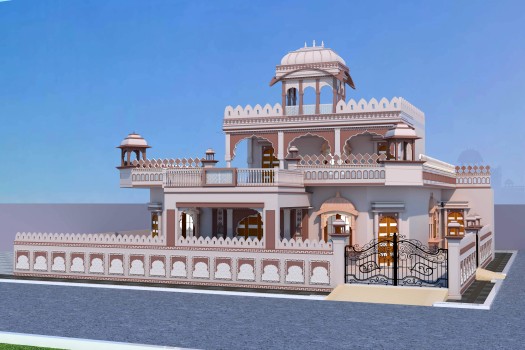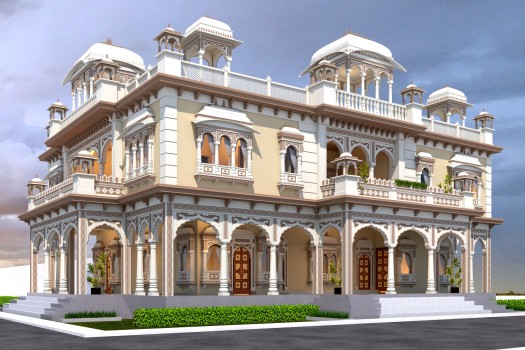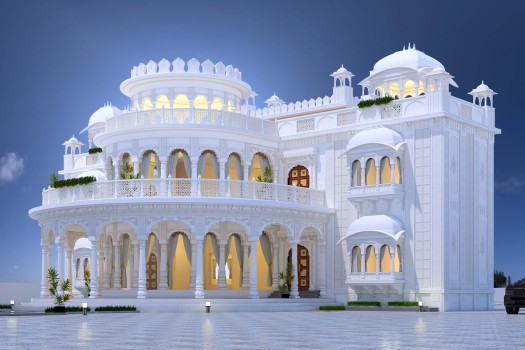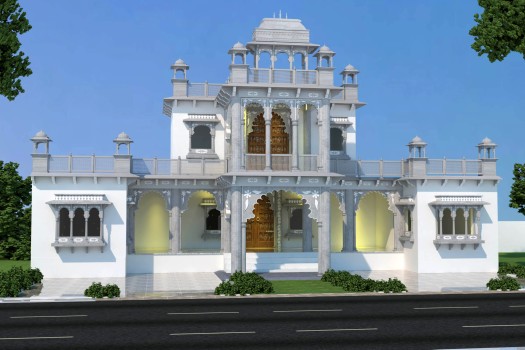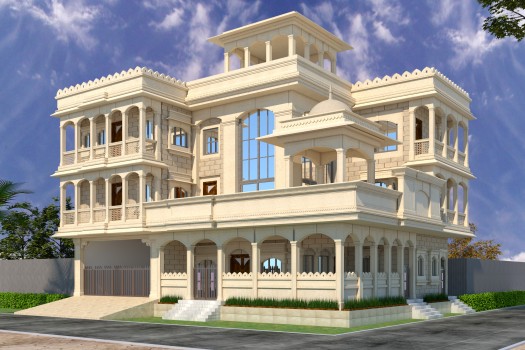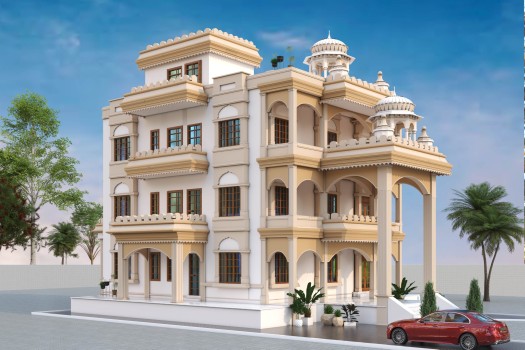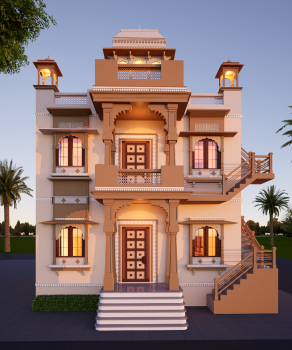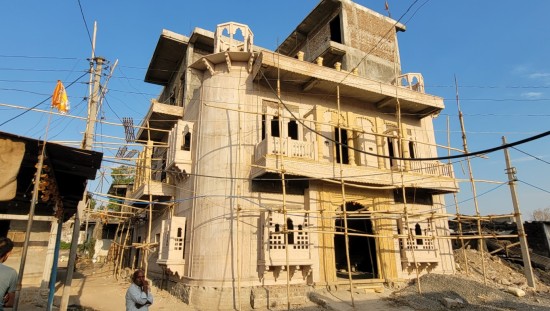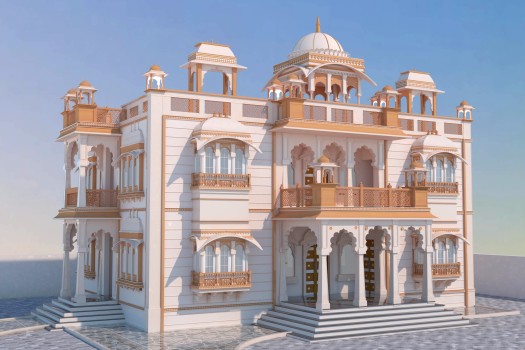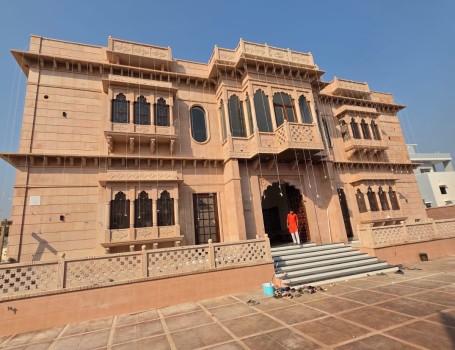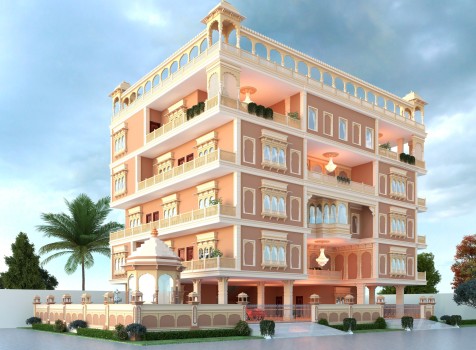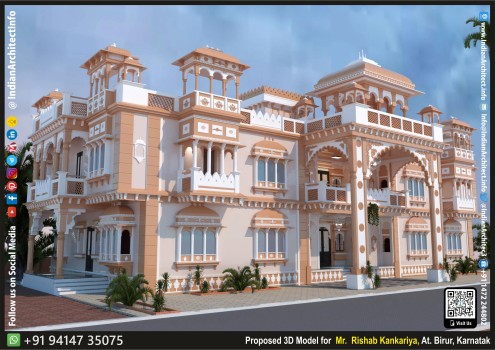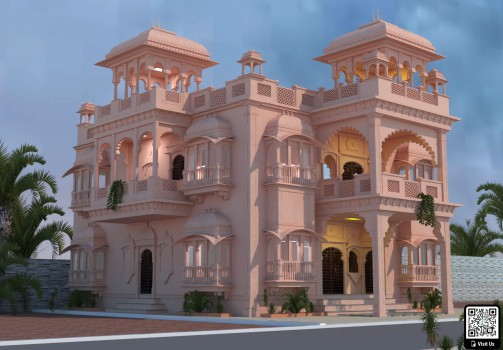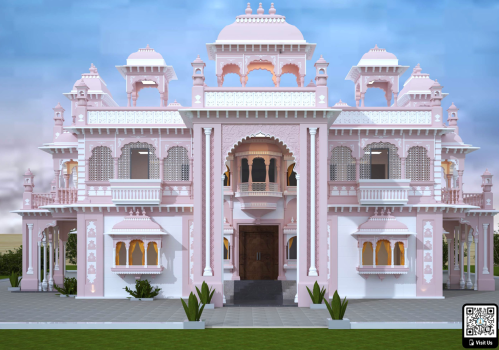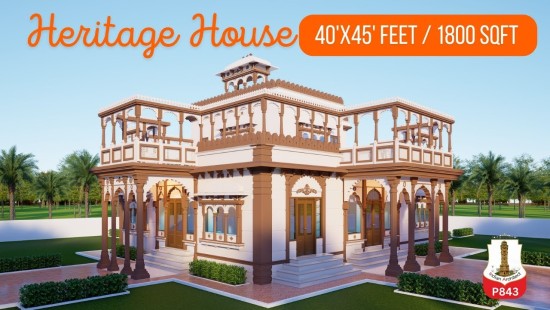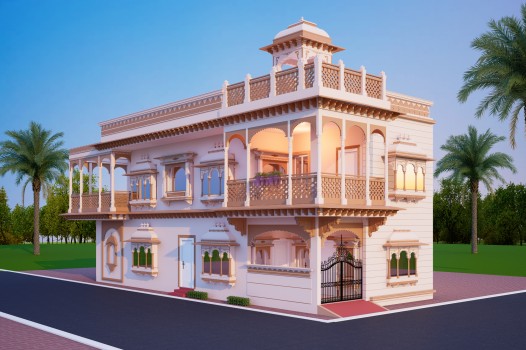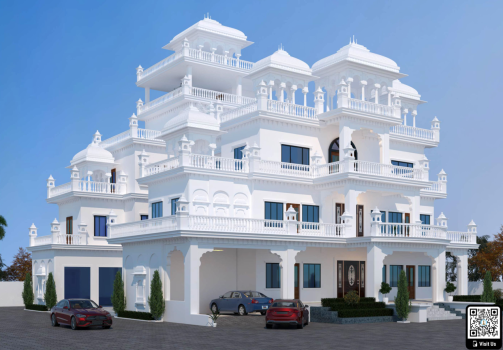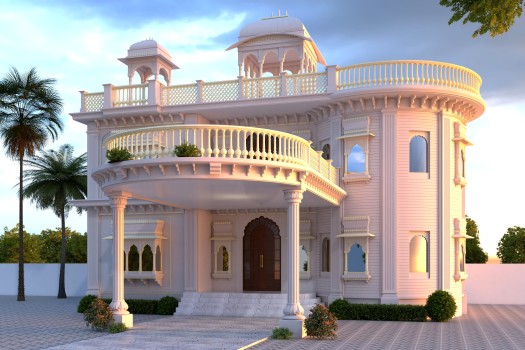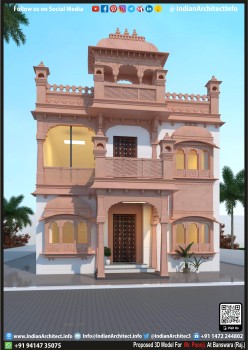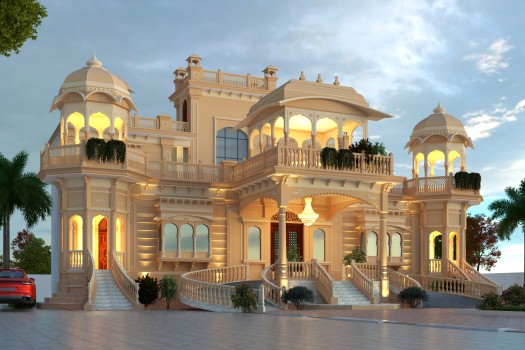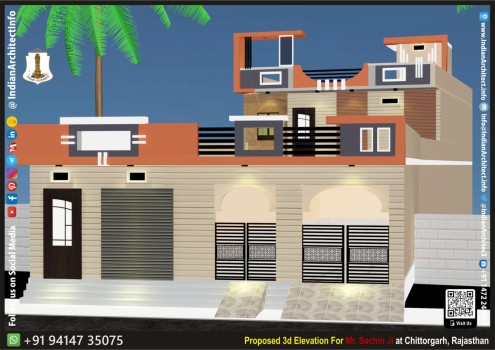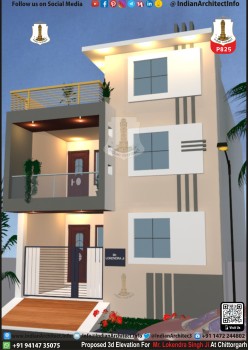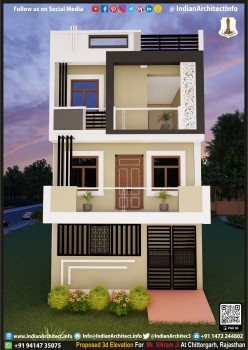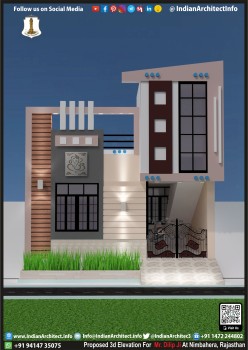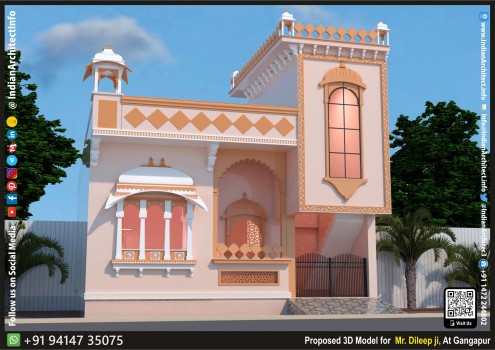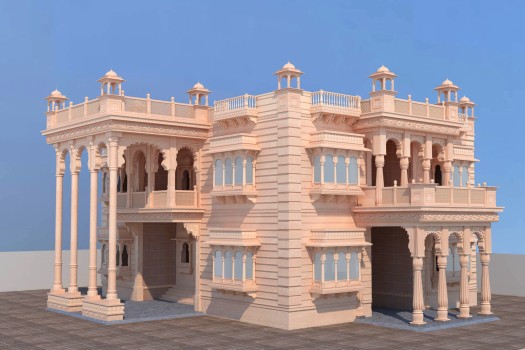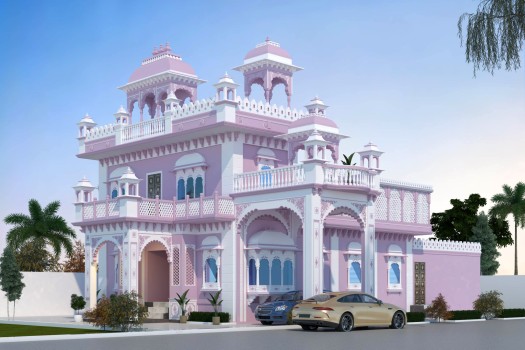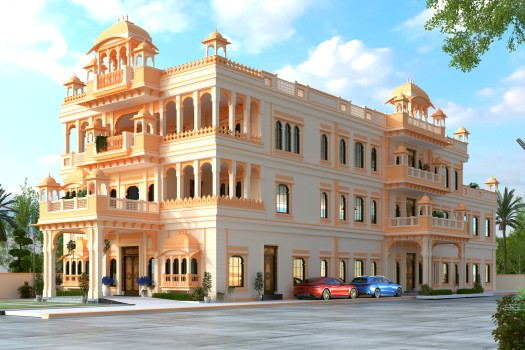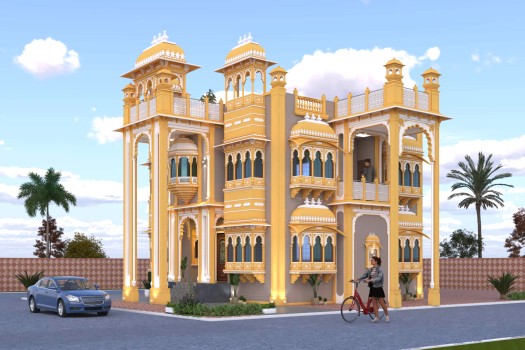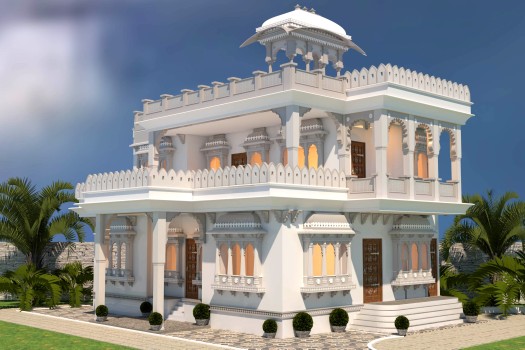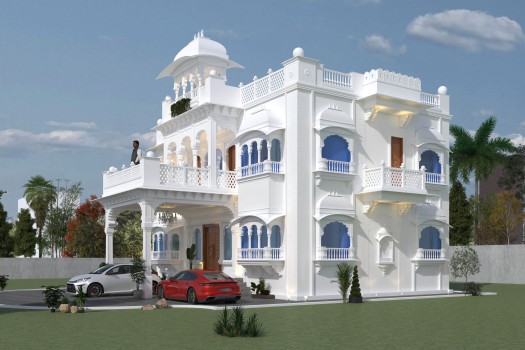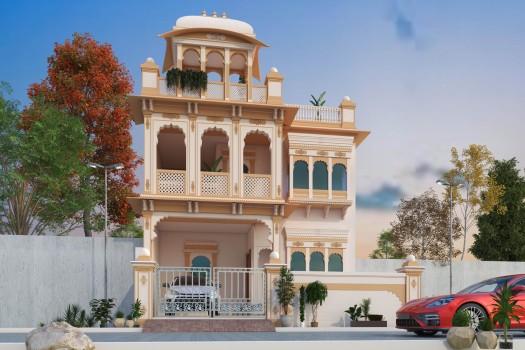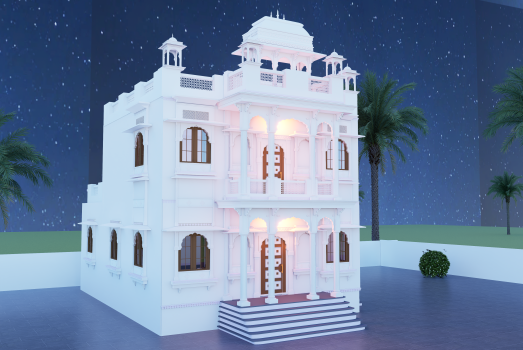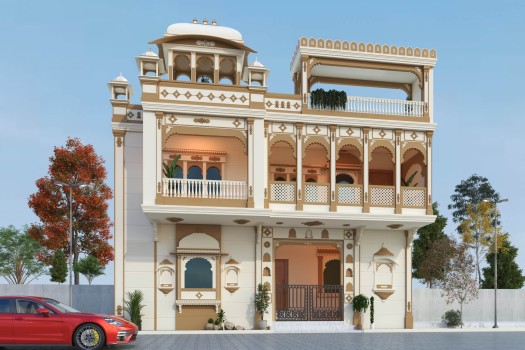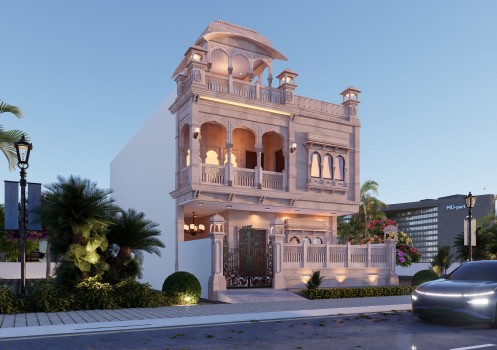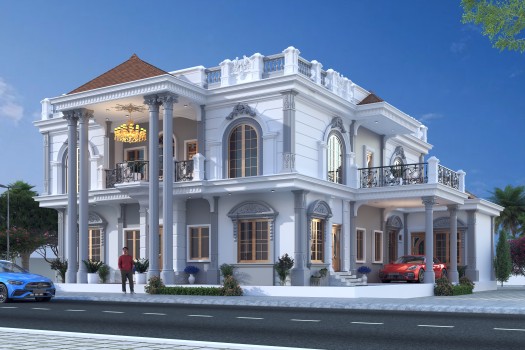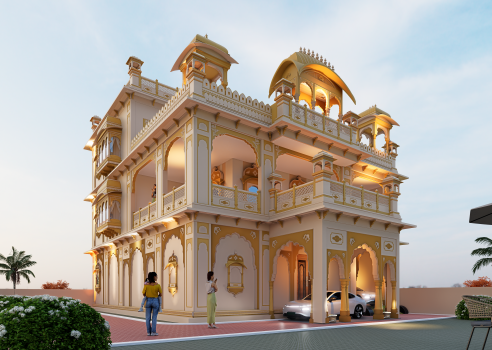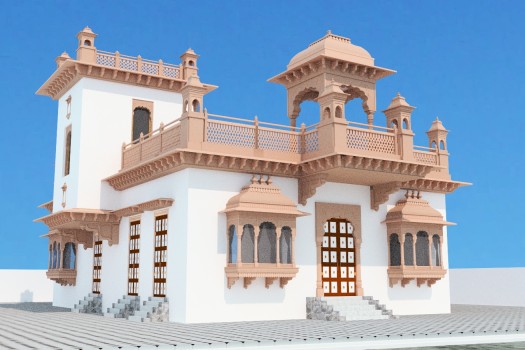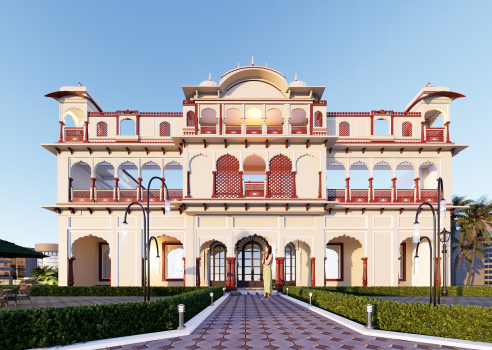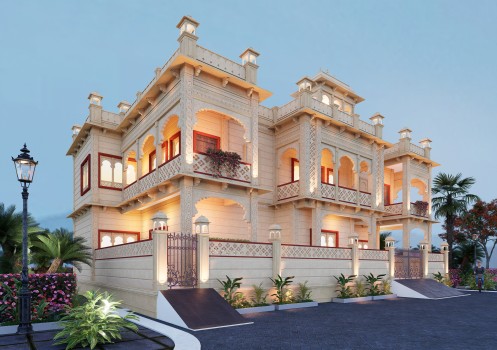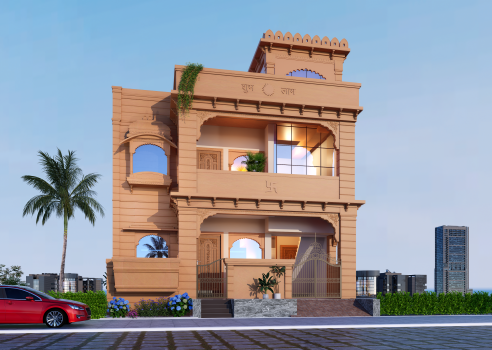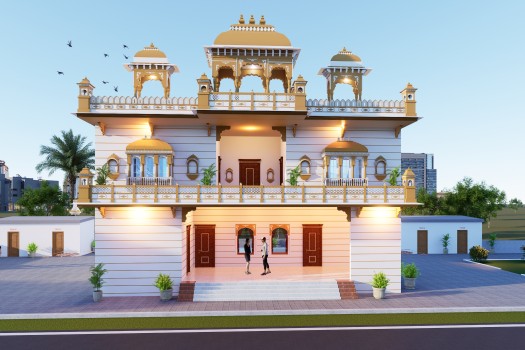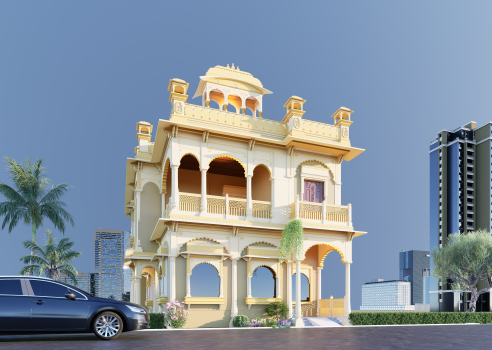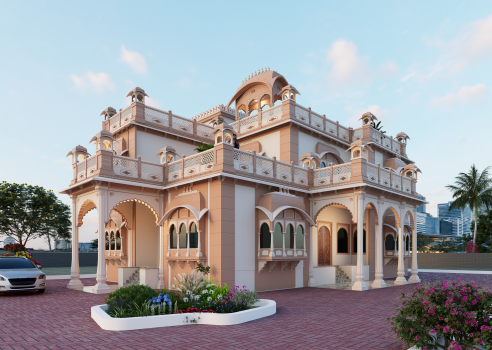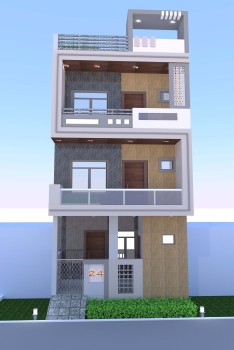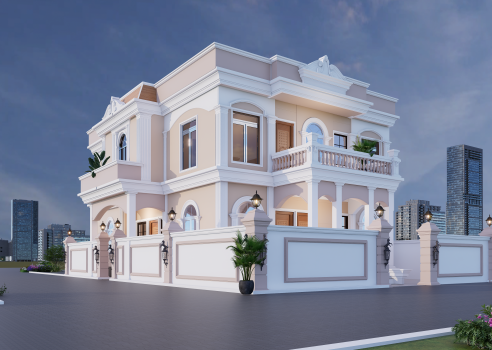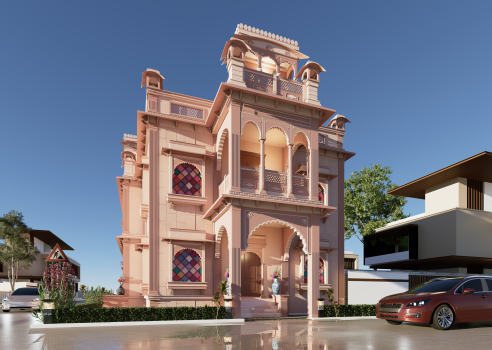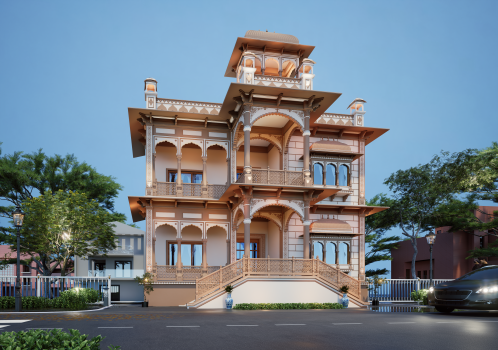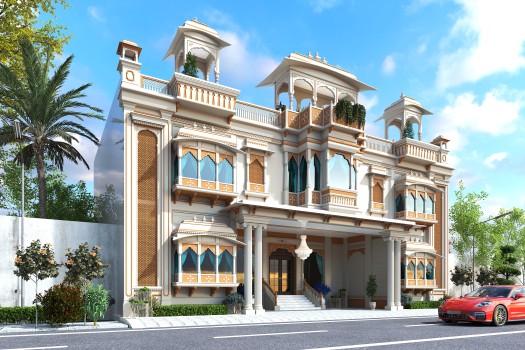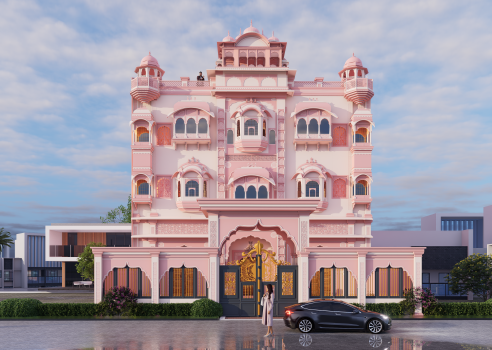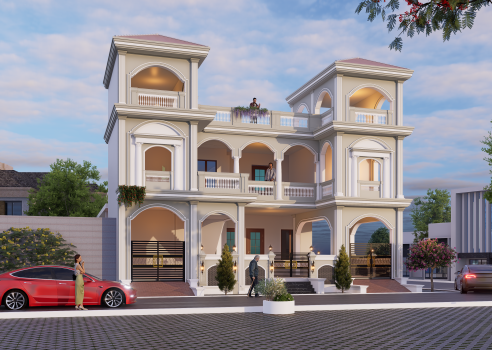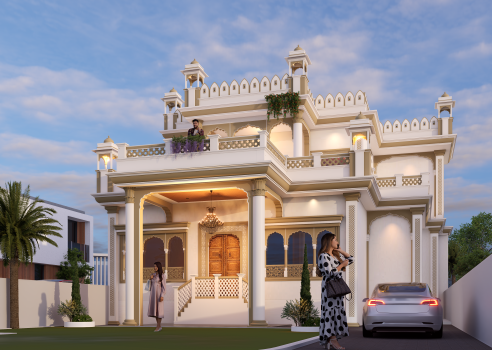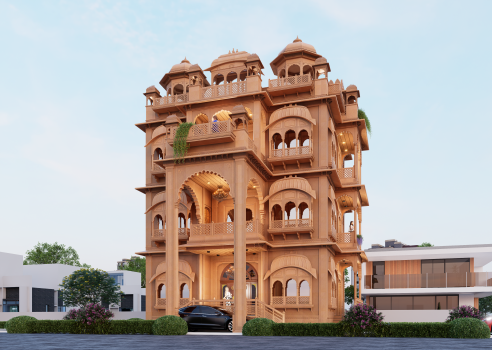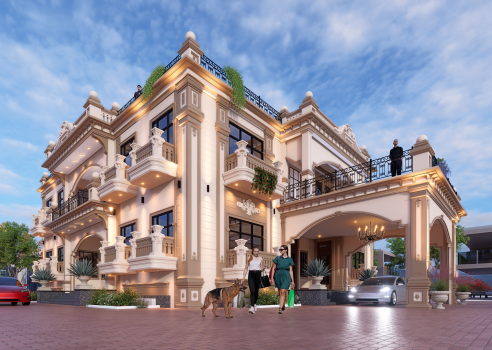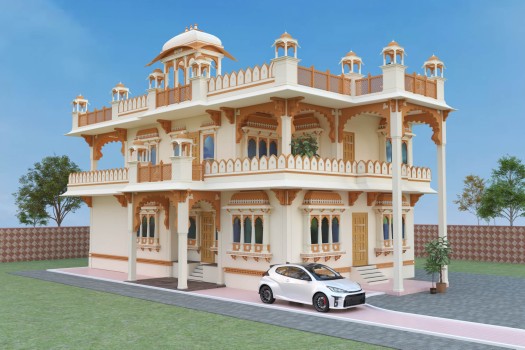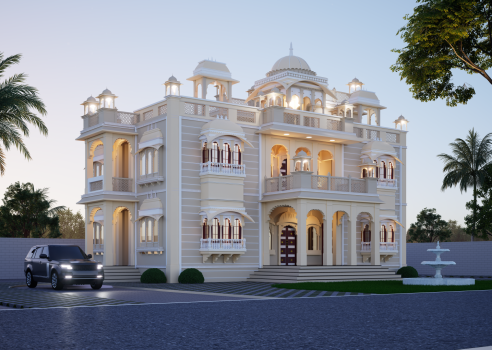
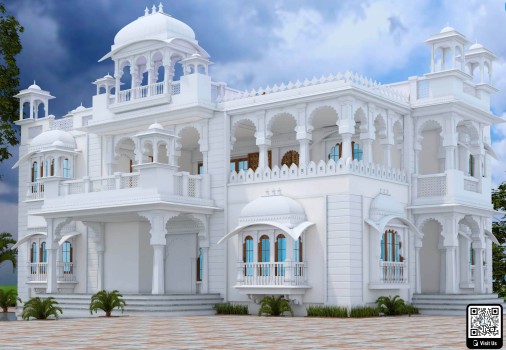
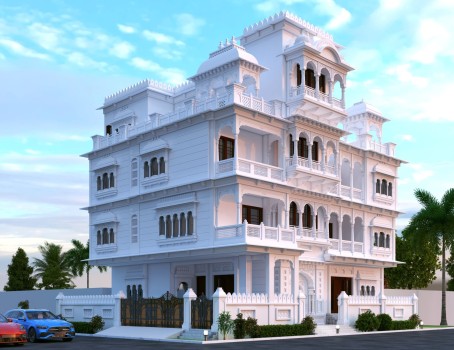
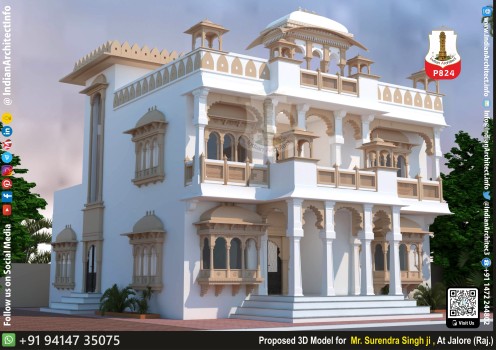
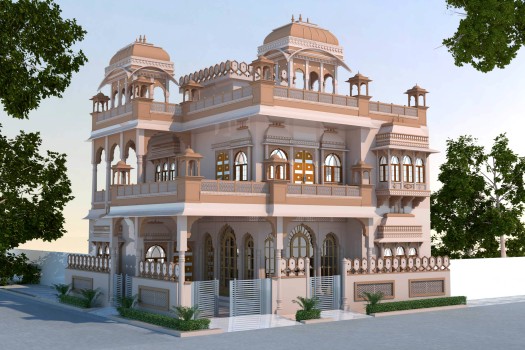
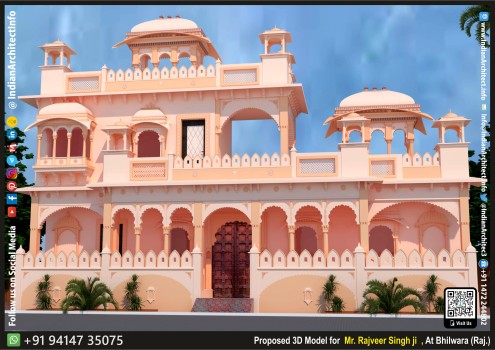
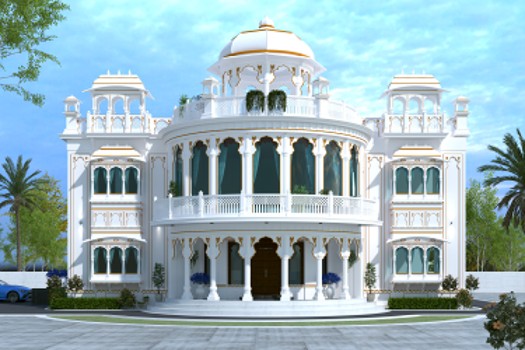
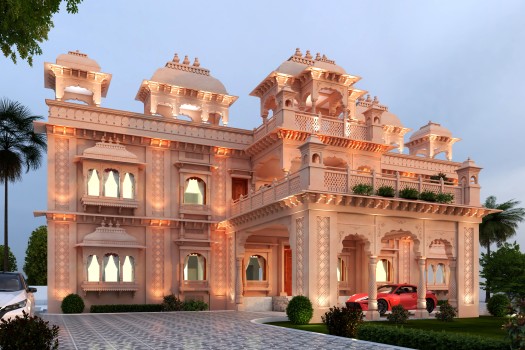
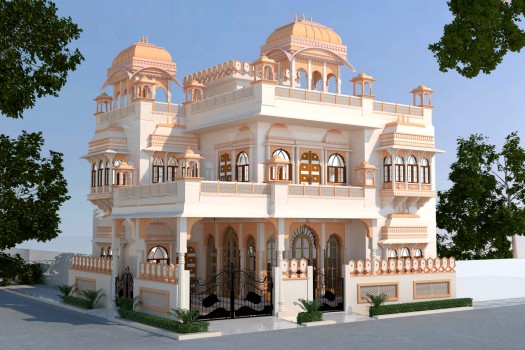
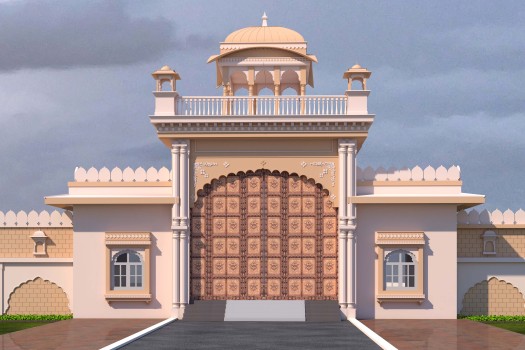
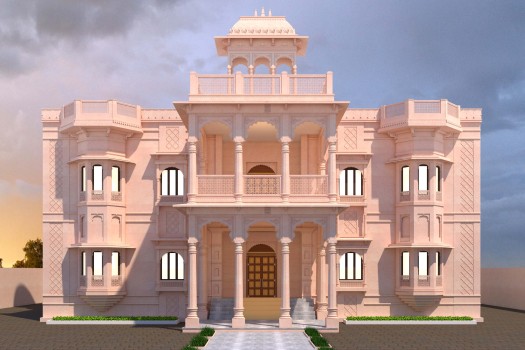
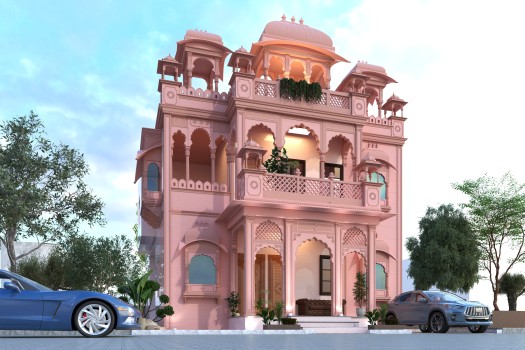
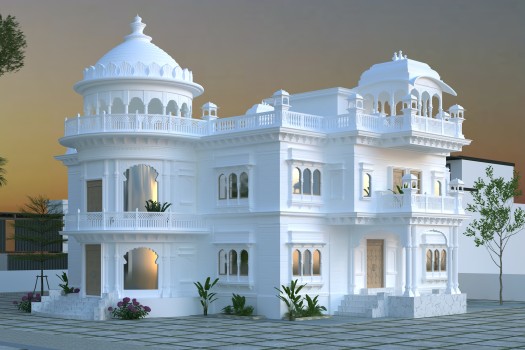
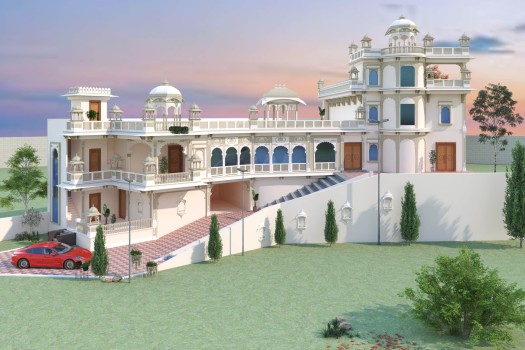
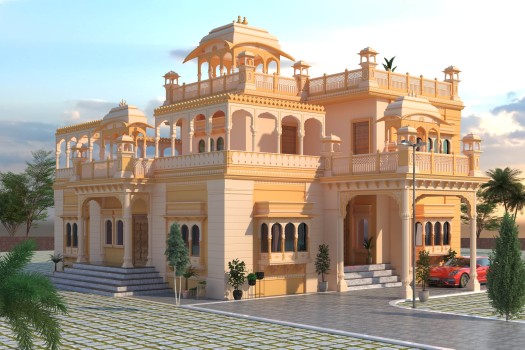
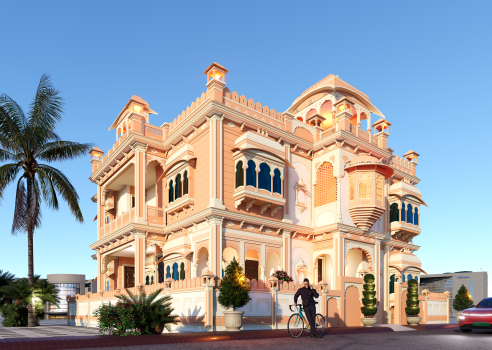
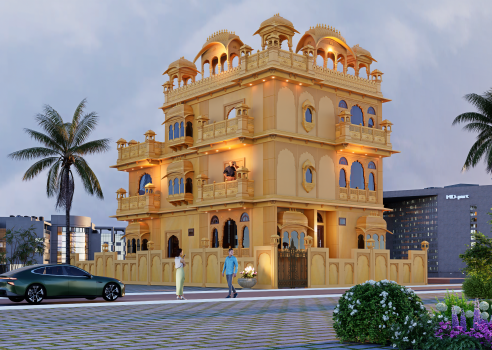
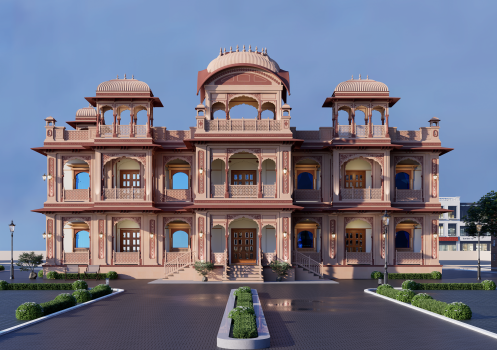
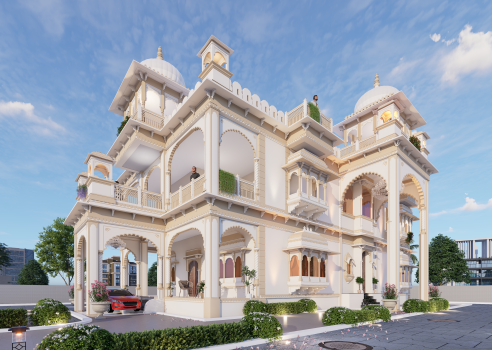
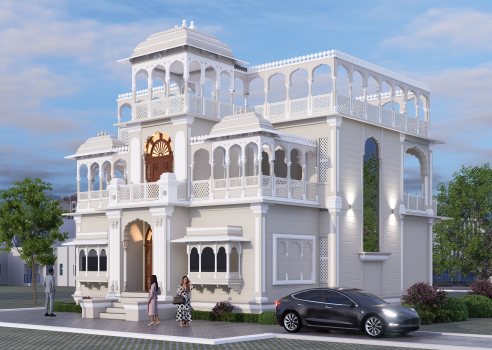
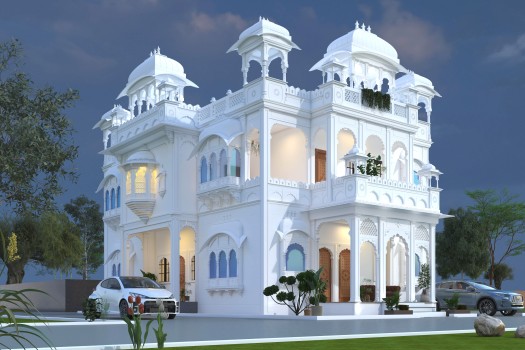
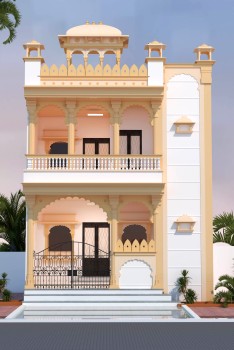
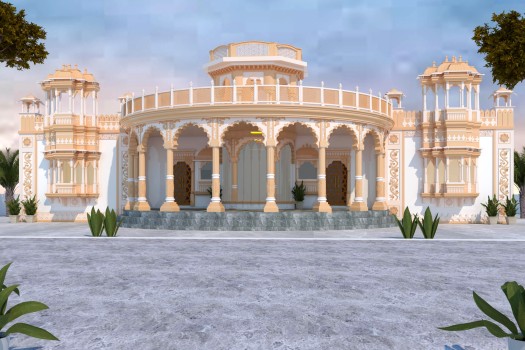
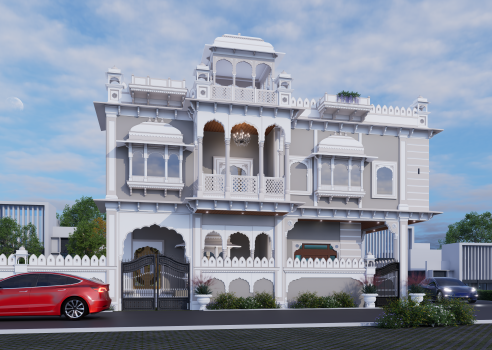
Grand Chhatri: The rooftop features a prominent Chhatri (domed pavilion) with intricately carved pillars, serving as the crown of the entire structure.
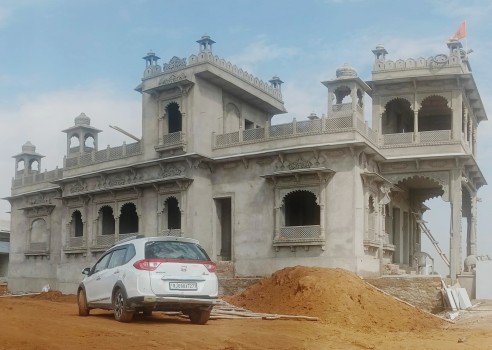
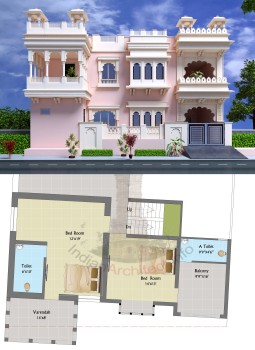
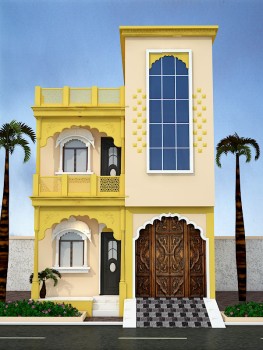
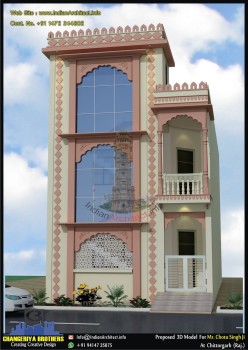
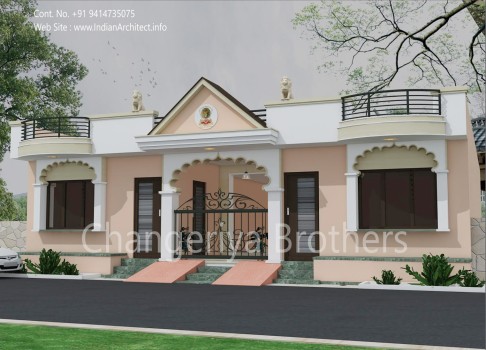
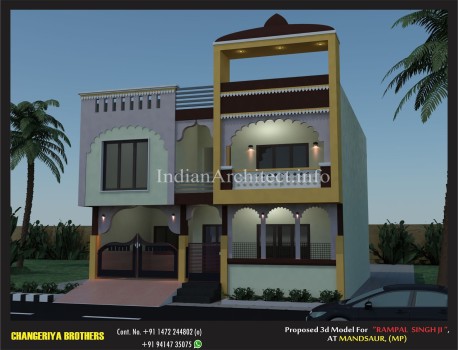
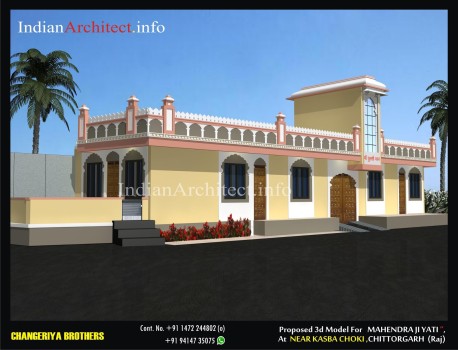
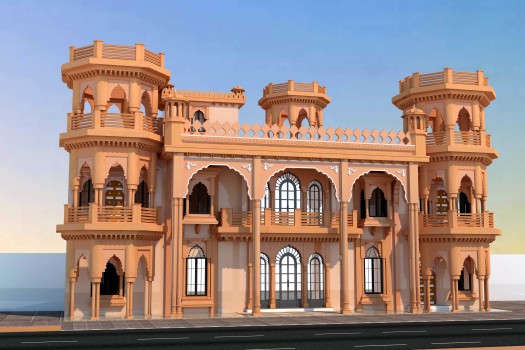
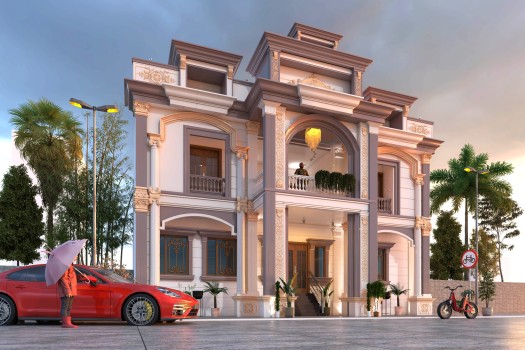
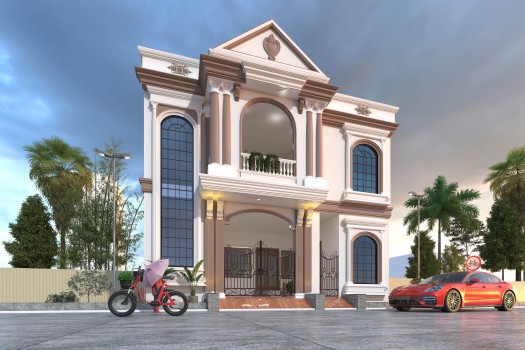
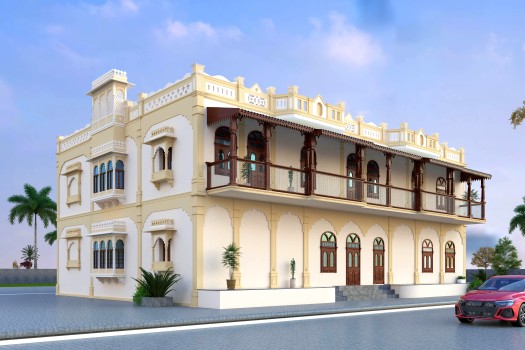
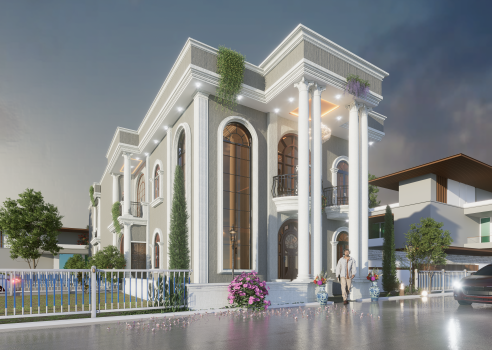
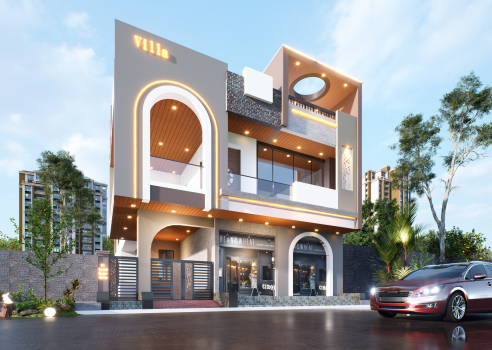
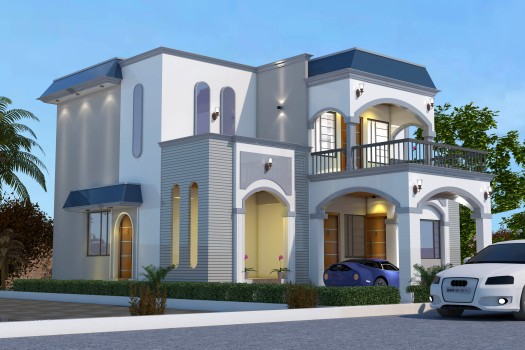
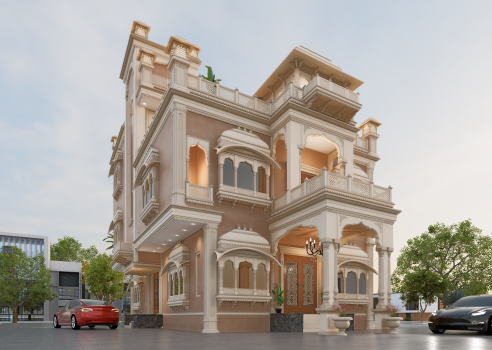
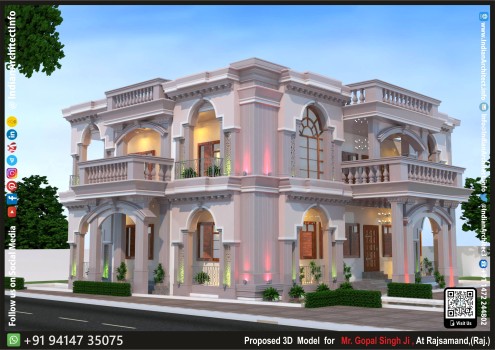
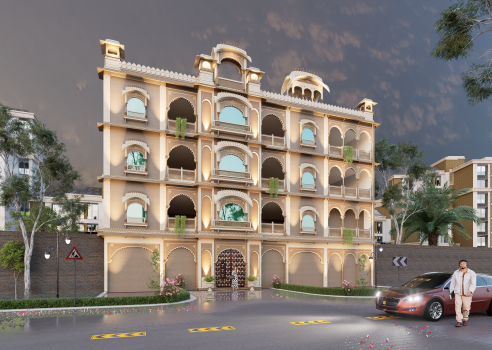
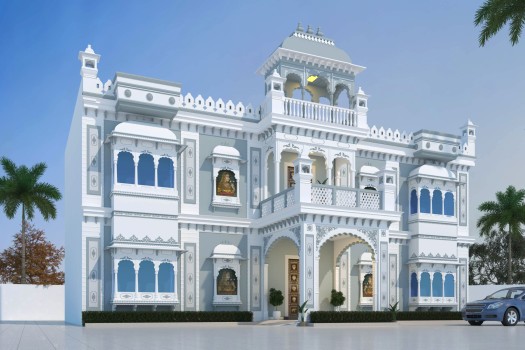
Cusped Arches: The elevation prominently features multi-foil or cusped arches above the entrances and windows, a hallmark of traditional haveli design.
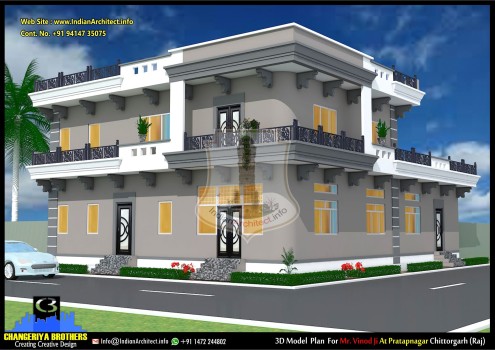
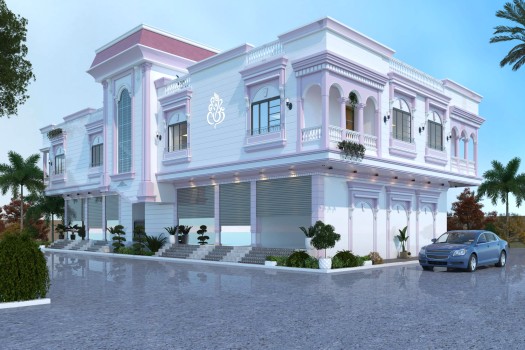
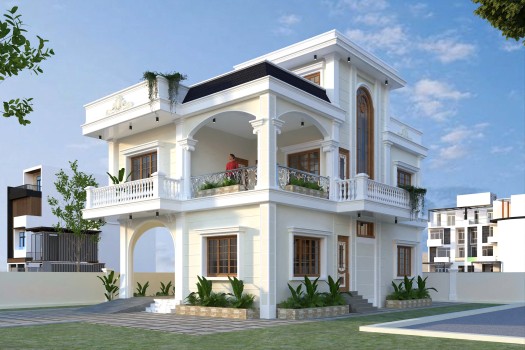
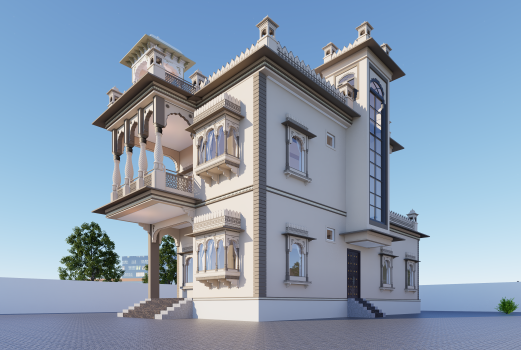
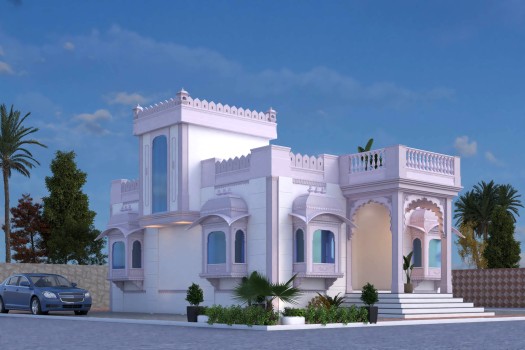
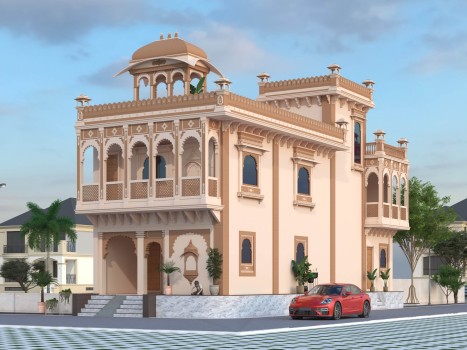
Cantilevered Jharokhas: Beautifully designed Jharokhas (overhanging balconies) with domed tops provide depth and historical character to the first floor.
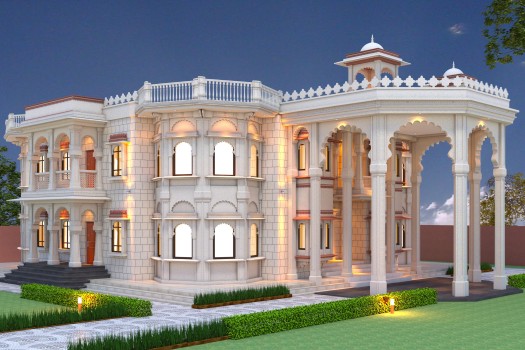
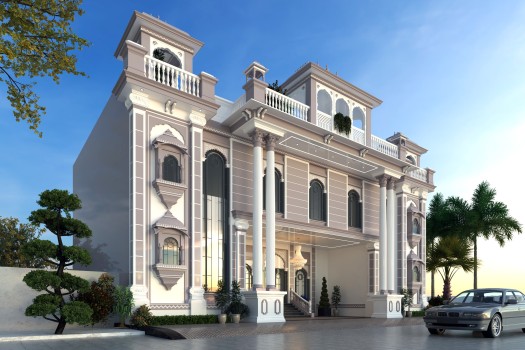
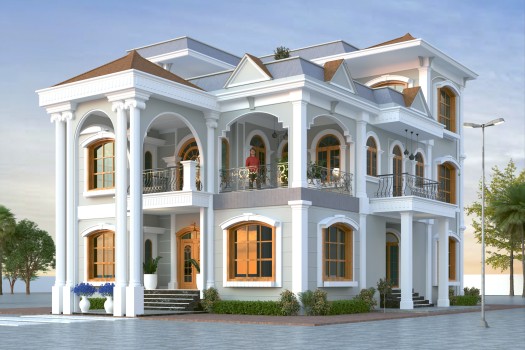
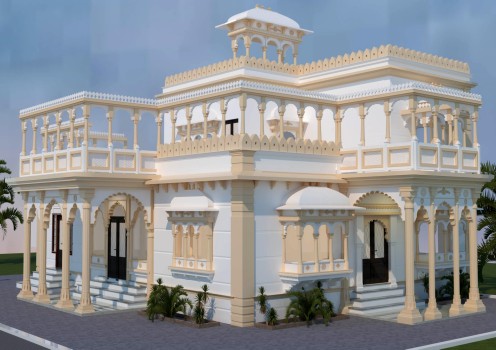
Ornamental Pillars: The ground and first floors are supported by slender, decorative columns with detailed capitals and bases that add vertical elegance.
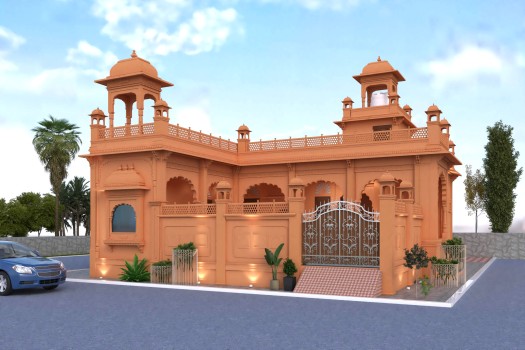
Kangura Parapet: The terrace boundaries are adorned with Kangura-style merlons, mimicking the defensive yet decorative battlements found in ancient Indian forts.
Stone Jaali Work: Fine lattice-work (Jaali) is used in the railings and window panels, allowing for light filtration while maintaining privacy.
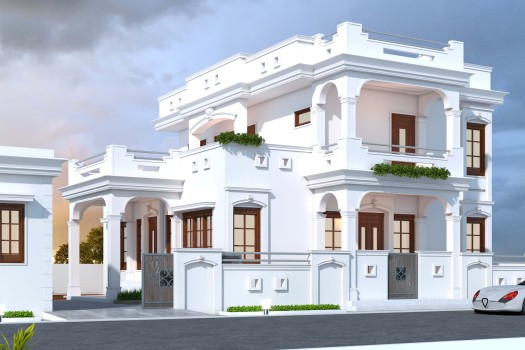
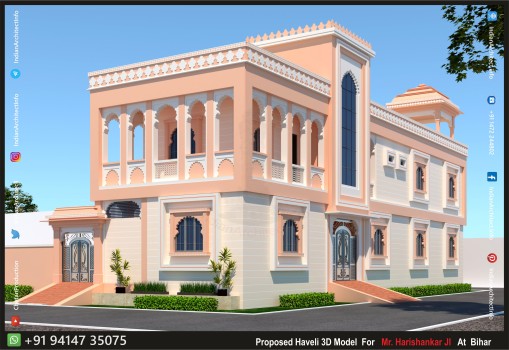
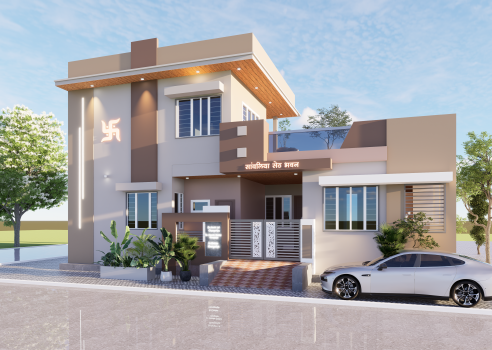
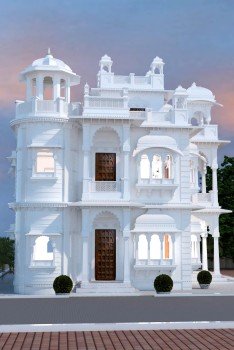
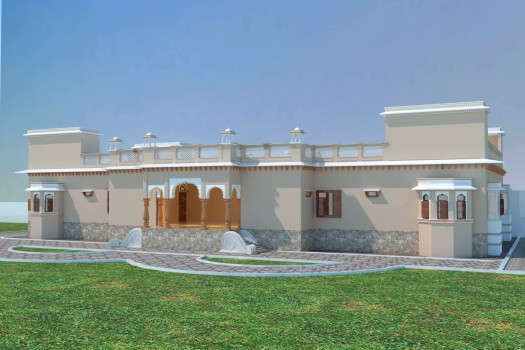
Sophisticated Color Palette: The use of cream, beige, and off-white tones creates a clean, monolithic look that emphasizes the shadows of the carvings.
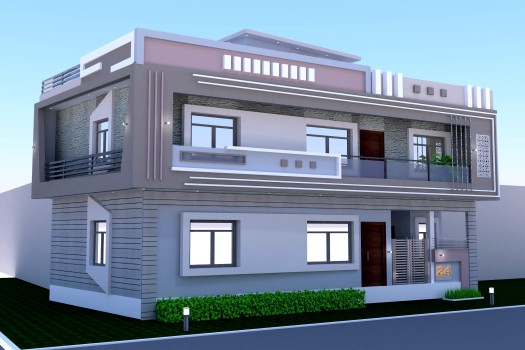
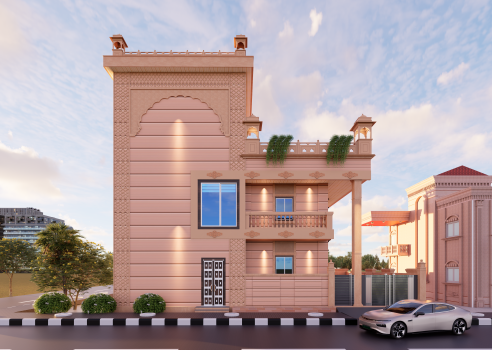
Horizontal Wall Grooves: The exterior walls feature recessed horizontal grooves, which break the monotony of the large surfaces and add texture.
Traditional Chhajjas: Sloping stone Chhajjas (eaves) are placed above the windows to provide shade and protection from rain, consistent with heritage standards.
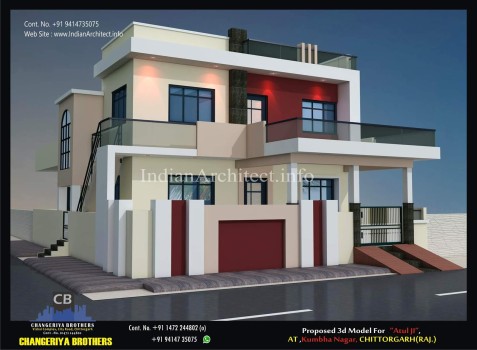
Elevated Plinth: The building sits on a high base, with wide, majestic steps leading to the main entrances, giving the house an imposing presence.
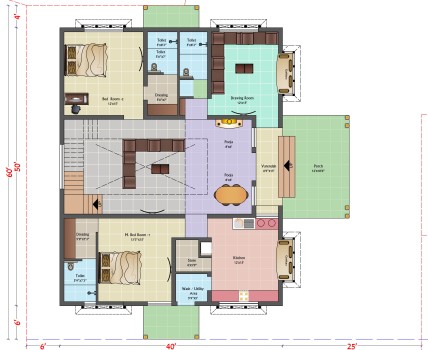
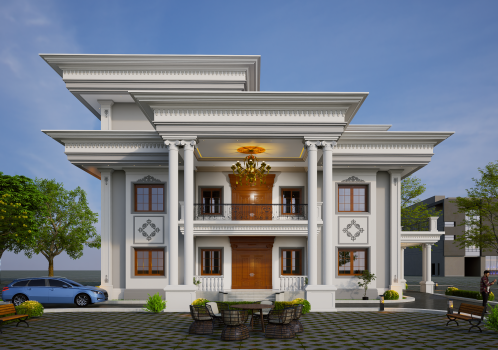
Symmetrical Balance: The design follows a strict symmetrical layout, ensuring that the proportions remain balanced from every viewing angle.
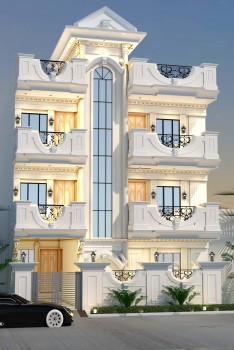
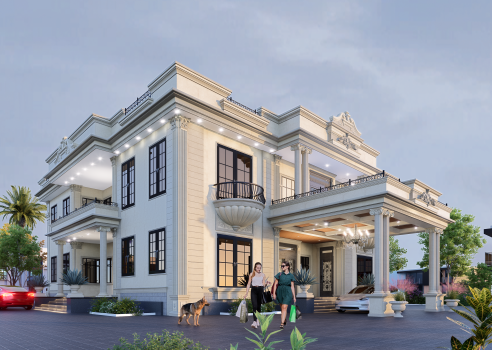
Decorative Cornices: Intricate molding and cornices run along the floor levels, clearly defining the transition between the ground and upper stories.
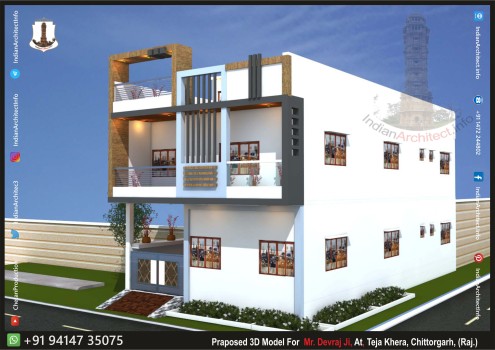
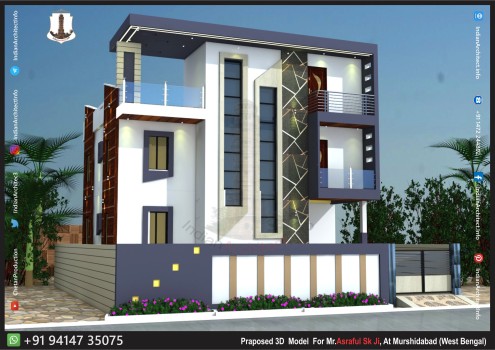
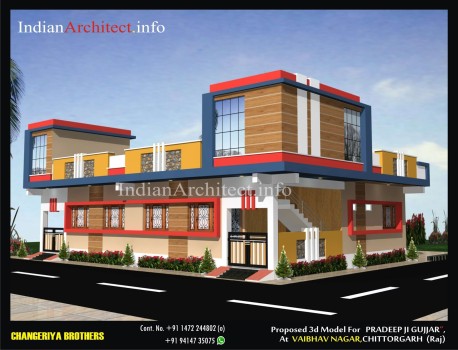
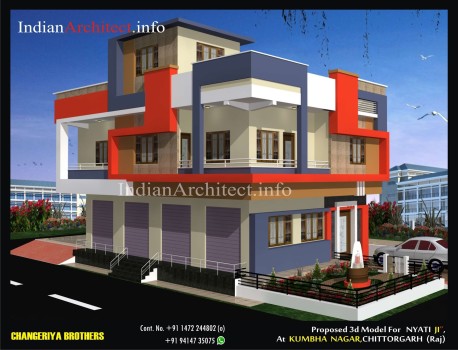
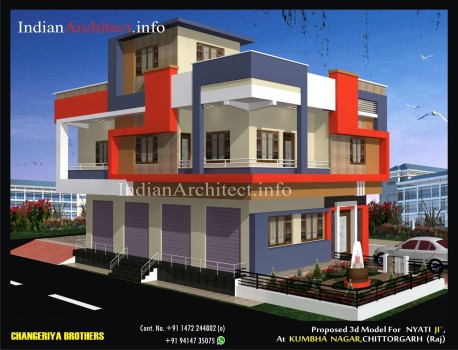
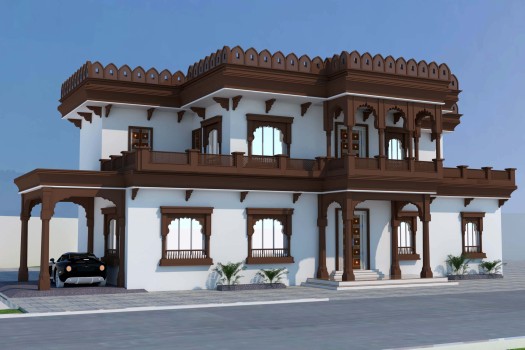
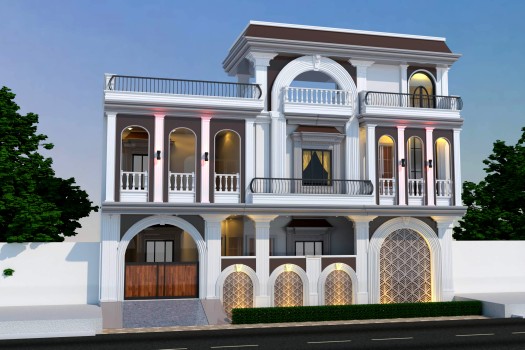
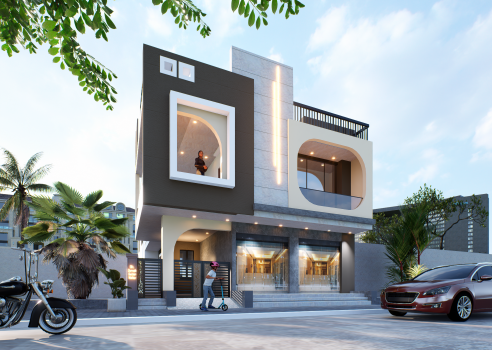
Contrast Window Frames: Dark-toned window frames provide a sharp visual contrast against the light-colored masonry, drawing attention to the openings.
Integrated Planters: The base of the building includes built-in landscaping pockets, adding a touch of greenery that softens the stone-heavy facade.
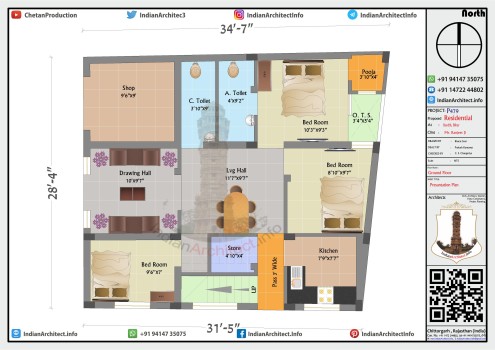
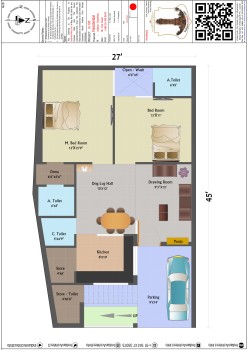
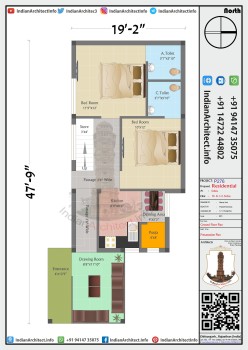
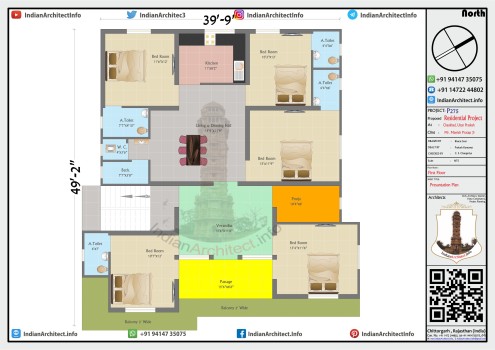
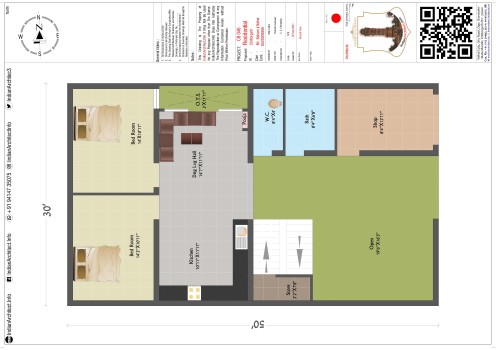
Project Description :
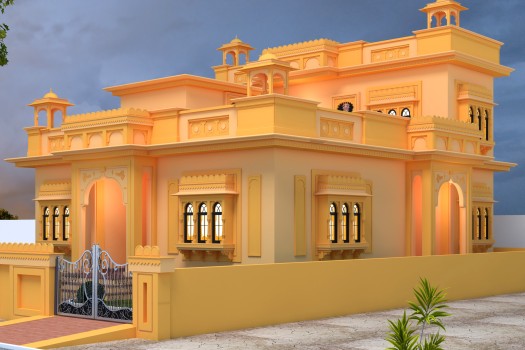
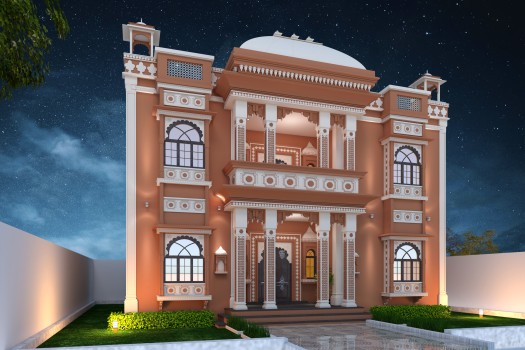
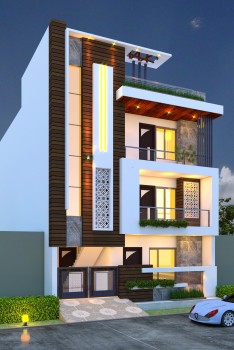
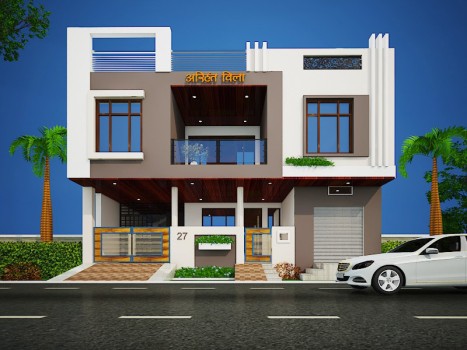
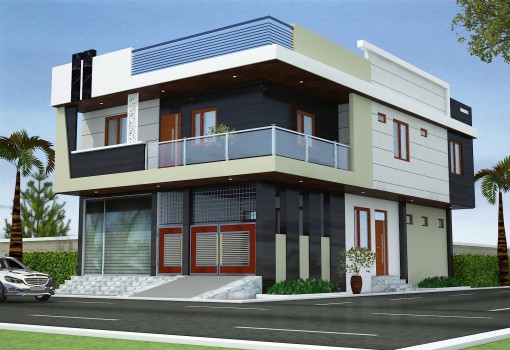
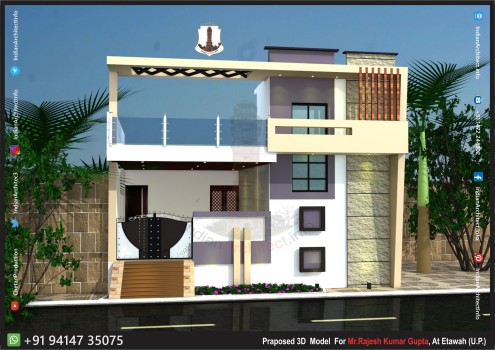
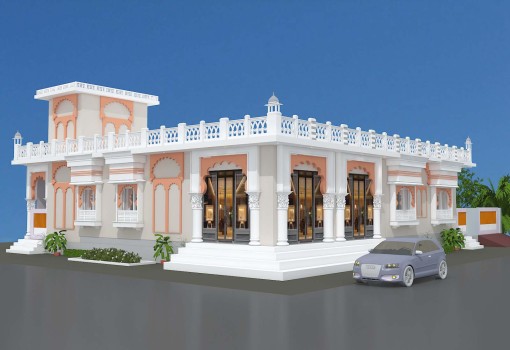
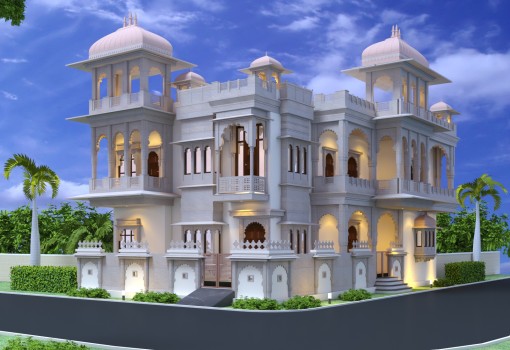
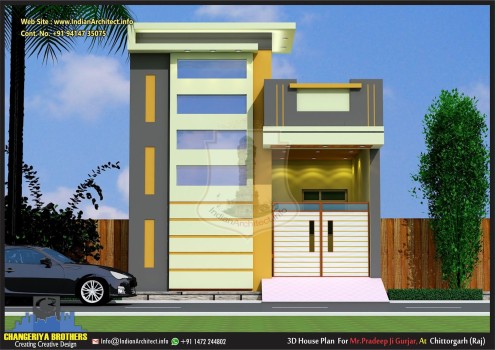
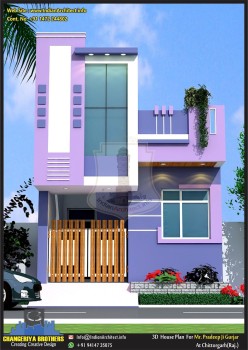
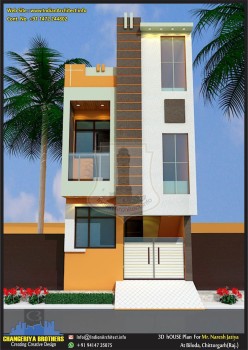
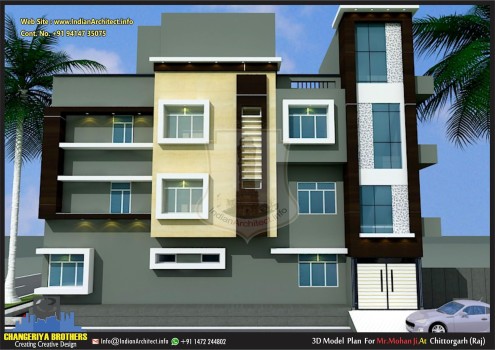
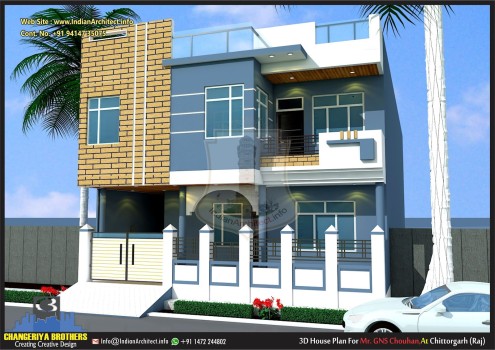
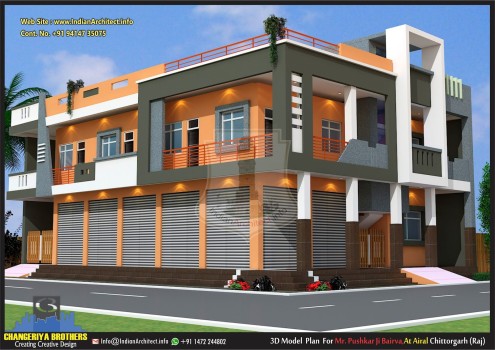
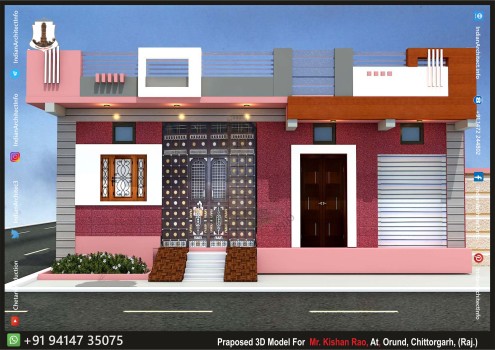
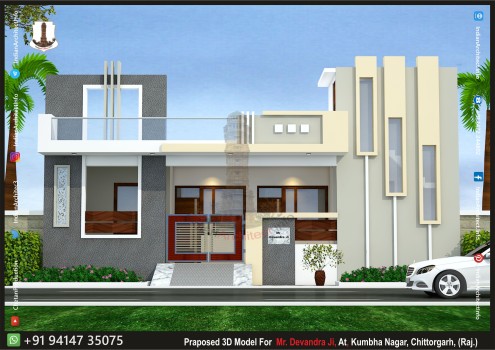
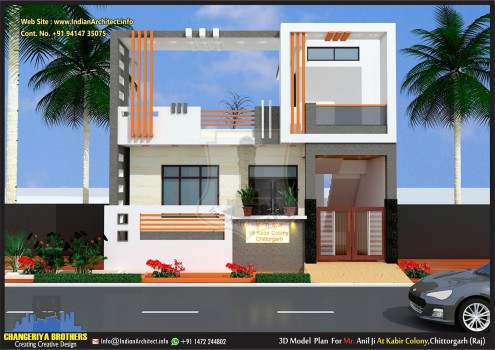
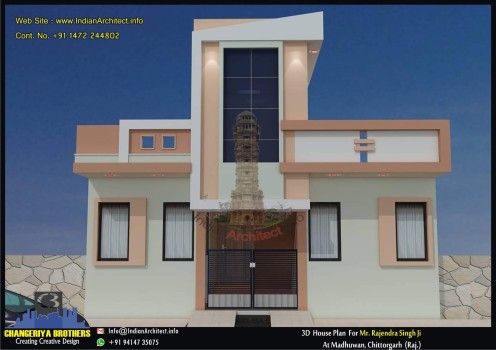
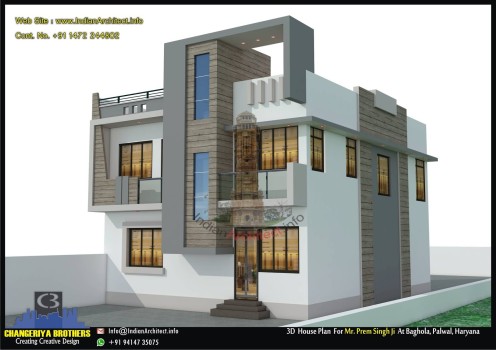
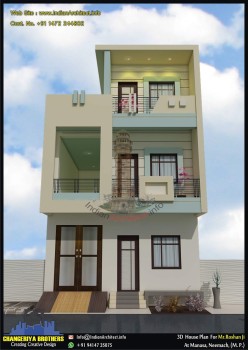
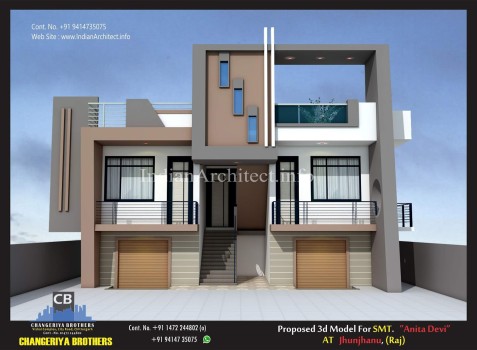
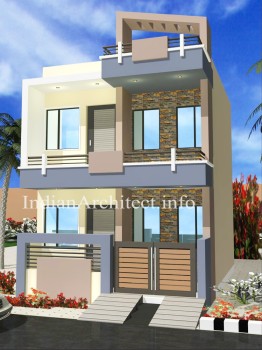
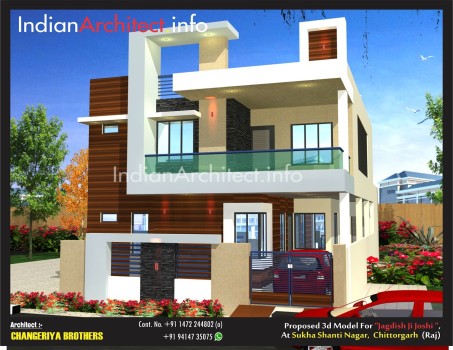
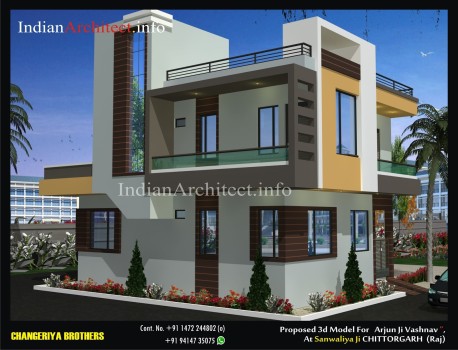
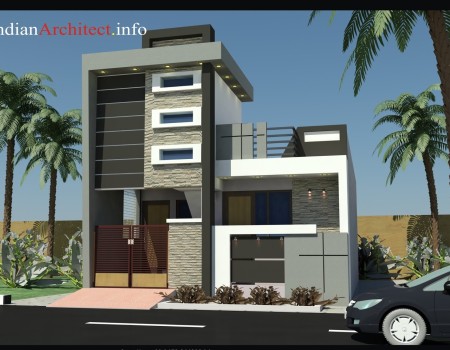
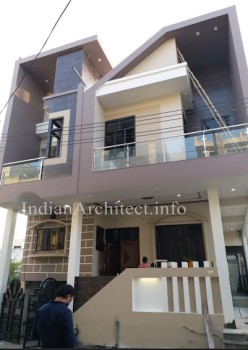
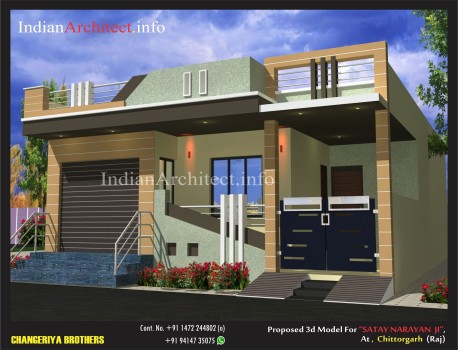
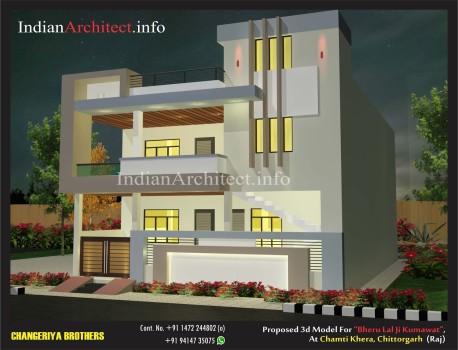
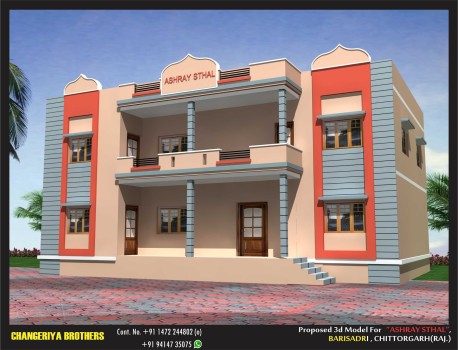
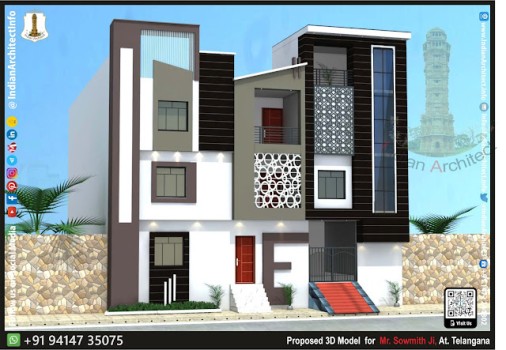
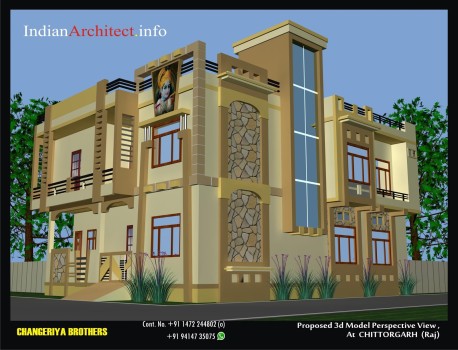
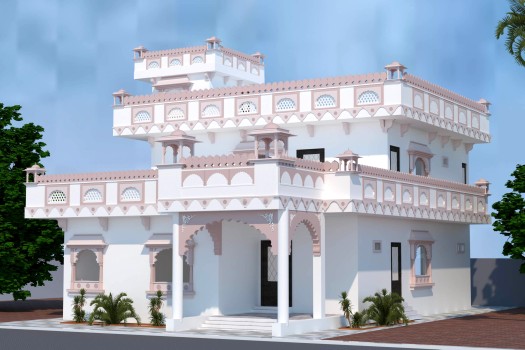
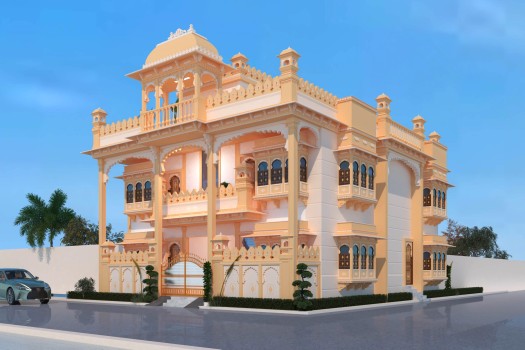
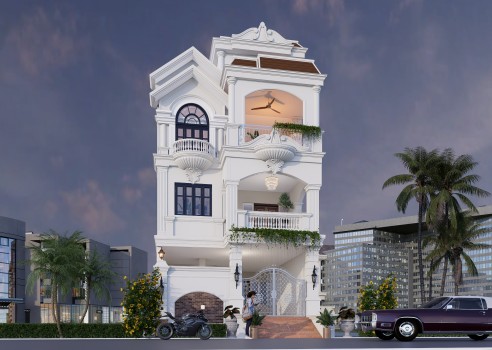
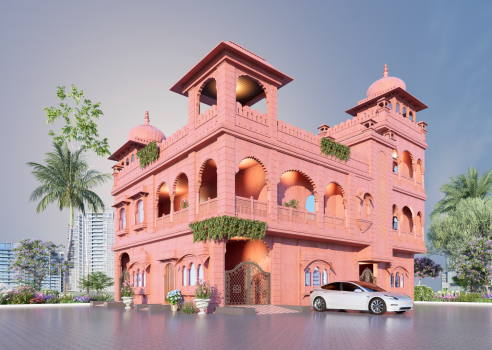
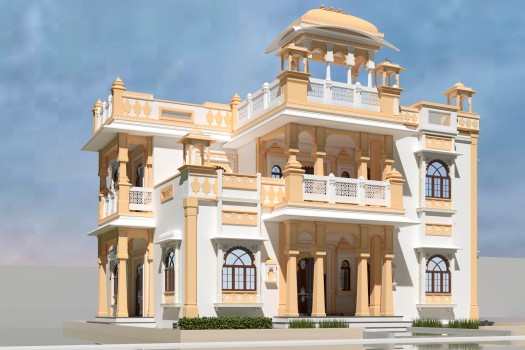
Architectural Style: The building is a premier example of Rajputana and Indo-Saracenic architecture, blending traditional royal aesthetics with structured symmetry.
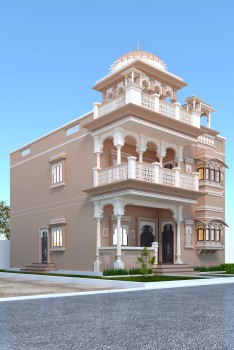
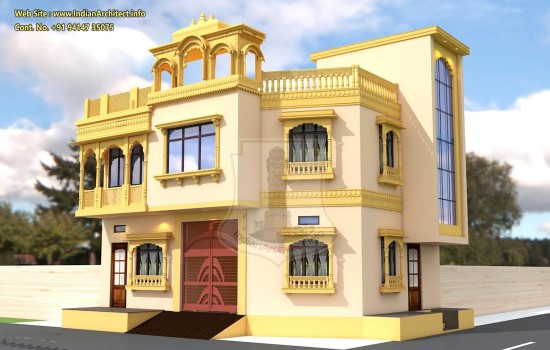
Grand Chhatri: The rooftop features a prominent Chhatri (domed pavilion) with intricately carved pillars, serving as the crown of the entire structure.
Cusped Arches: The elevation prominently features multi-foil or cusped arches above the entrances and windows, a hallmark of traditional haveli design.
Cantilevered Jharokhas: Beautifully designed Jharokhas (overhanging balconies) with domed tops provide depth and historical character to the first floor.
Ornamental Pillars: The ground and first floors are supported by slender, decorative columns with detailed capitals and bases that add vertical elegance.
Kangura Parapet: The terrace boundaries are adorned with Kangura-style merlons, mimicking the defensive yet decorative battlements found in ancient Indian forts.
Stone Jaali Work: Fine lattice-work (Jaali) is used in the railings and window panels, allowing for light filtration while maintaining privacy.
Sophisticated Color Palette: The use of cream, beige, and off-white tones creates a clean, monolithic look that emphasizes the shadows of the carvings.
Horizontal Wall Grooves: The exterior walls feature recessed horizontal grooves, which break the monotony of the large surfaces and add texture.
Traditional Chhajjas: Sloping stone Chhajjas (eaves) are placed above the windows to provide shade and protection from rain, consistent with heritage standards.
Elevated Plinth: The building sits on a high base, with wide, majestic steps leading to the main entrances, giving the house an imposing presence.
Symmetrical Balance: The design follows a strict symmetrical layout, ensuring that the proportions remain balanced from every viewing angle.
Decorative Cornices: Intricate molding and cornices run along the floor levels, clearly defining the transition between the ground and upper stories.
Contrast Window Frames: Dark-toned window frames provide a sharp visual contrast against the light-colored masonry, drawing attention to the openings.
Integrated Planters: The base of the building includes built-in landscaping pockets, adding a touch of greenery that softens the stone-heavy facade.

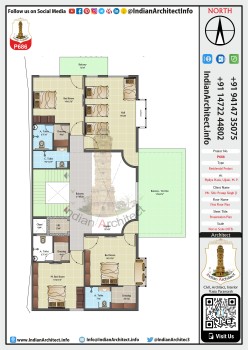
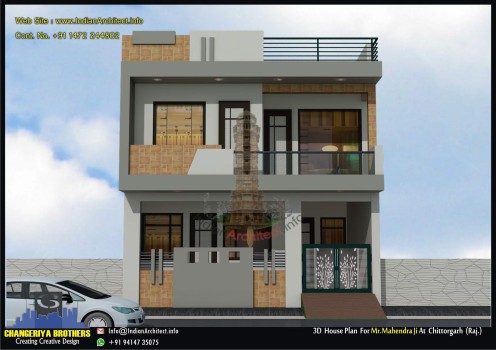
Client Name: Mr. Mahendra Singh Ji
Address:
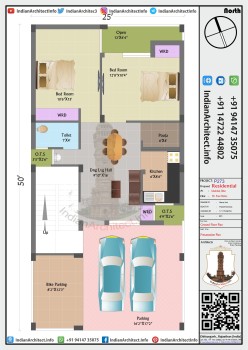
Category: Residential
Plot Area :
Total builtup area :
Width :
Length :
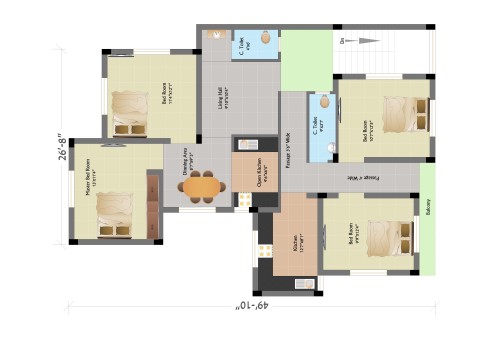
Category: Residential
Plot Area :
Total builtup area :
Width :
Length :

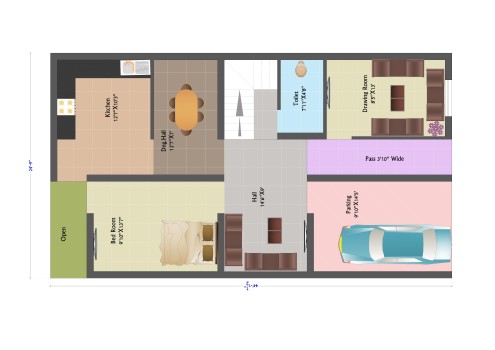
Category: Residential
Plot Area :
Total builtup area :
Width :
Length :

Category: Residential
Plot Area :
Total builtup area :
Width :
Length :
Category: Residential
Plot Area :
Total builtup area :
Width :
Length :
Category: Residential
Plot Area :
Total builtup area :
Width :
Length :
Category: Residential
Plot Area :
Total builtup area :
Width :
Length :
Category: Residential
Plot Area :
Total builtup area :
Width :
Length :
Category: Residential
Plot Area :
Total builtup area :
Width :
Length :
Category: Residential
Plot Area :
Total builtup area :
Width :
Length :
Category: Residential
Plot Area :
Total builtup area :
Width :
Length :
Category: Residential
Plot Area :
Total builtup area :
Width :
Length :
Category: Residential
Plot Area :
Total builtup area :
Width :
Length :
Category: Residential
Plot Area :
Total builtup area :
Width :
Length :
Category: Residential
Plot Area :
Total builtup area :
Width :
Length :
Category: Residential
Plot Area :
Total builtup area :
Width :
Length :
Category: Residential
Plot Area :
Total builtup area :
Width :
Length :
Category: Residential
Plot Area :
Total builtup area :
Width :
Length :
Category: Residential
Plot Area :
Total builtup area :
Width :
Length :
Category: Residential
Plot Area :
Total builtup area :
Width :
Length :
Category: Residential
Plot Area :
Total builtup area :
Width :
Length :
Category: Residential
Plot Area :
Total builtup area :
Width :
Length :
Category: Residential
Plot Area :
Total builtup area :
Width :
Length :
Category: Residential
Plot Area :
Total builtup area :
Width :
Length :
Category: Residential
Plot Area :
Total builtup area :
Width :
Length :
Category: Residential
Plot Area :
Total builtup area :
Width :
Length :
Category: Residential
Plot Area :
Total builtup area :
Width :
Length :
Category: Residential
Plot Area :
Total builtup area :
Width :
Length :
Category: Residential
Plot Area :
Total builtup area :
Width :
Length :
Category: Residential
Plot Area :
Total builtup area :
Width :
Length :
Category: Residential
Plot Area :
Total builtup area :
Width :
Length :
Category: Residential
Plot Area :
Total builtup area :
Width :
Length :
Category: Residential
Plot Area :
Total builtup area :
Width :
Length :
Category: Residential
Plot Area :
Total builtup area :
Width :
Length :
Category: Residential
Plot Area :
Total builtup area :
Width :
Length :