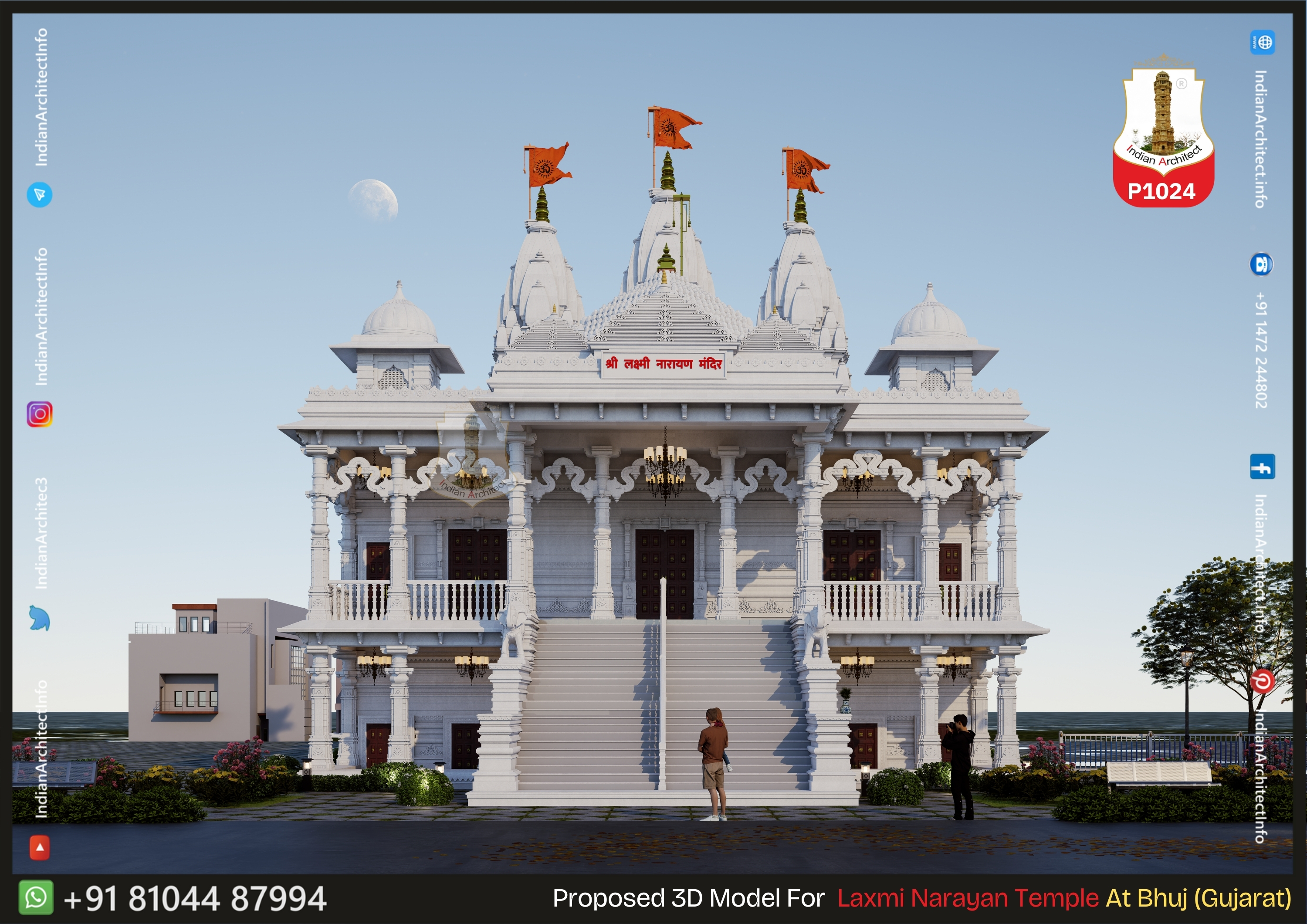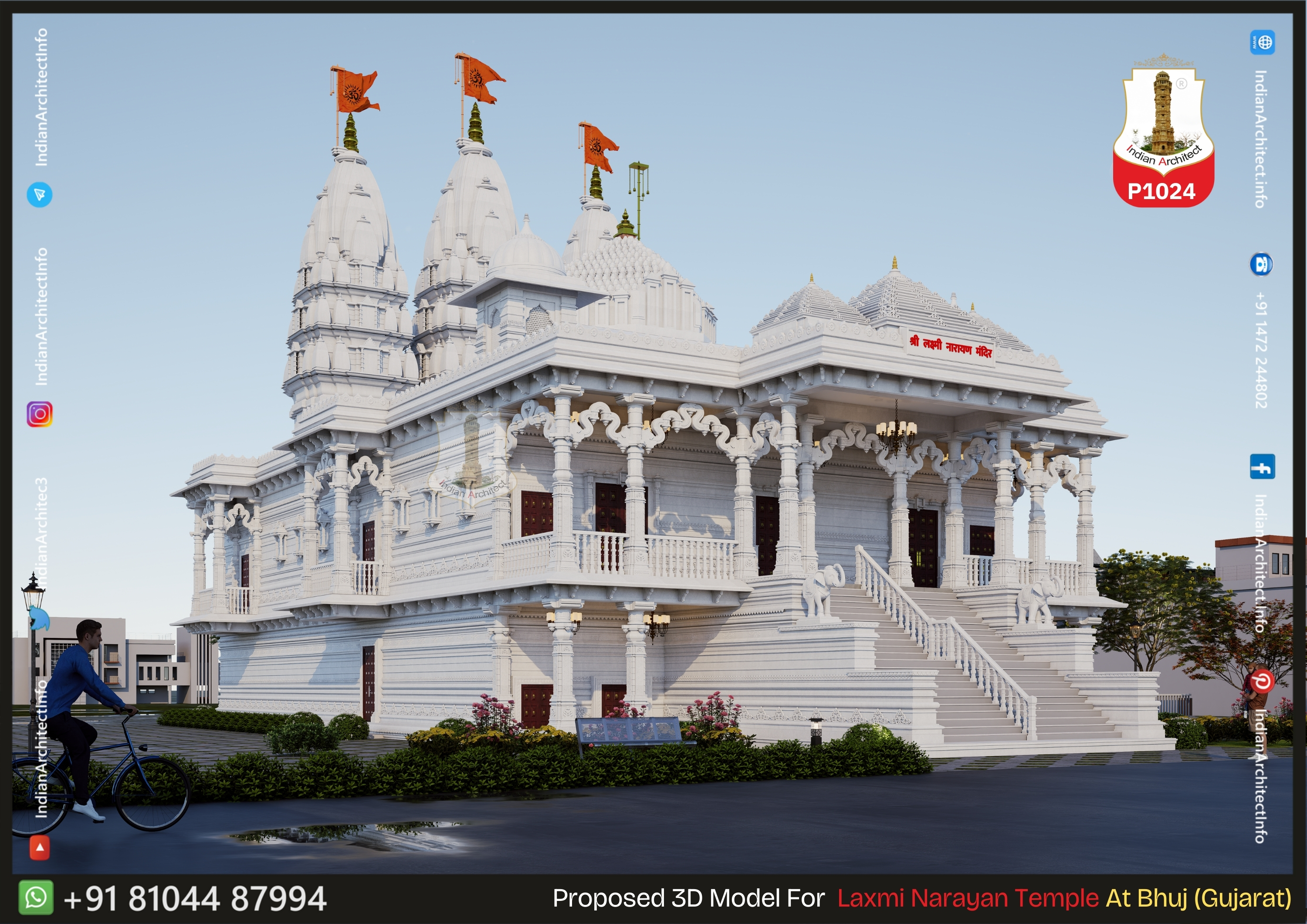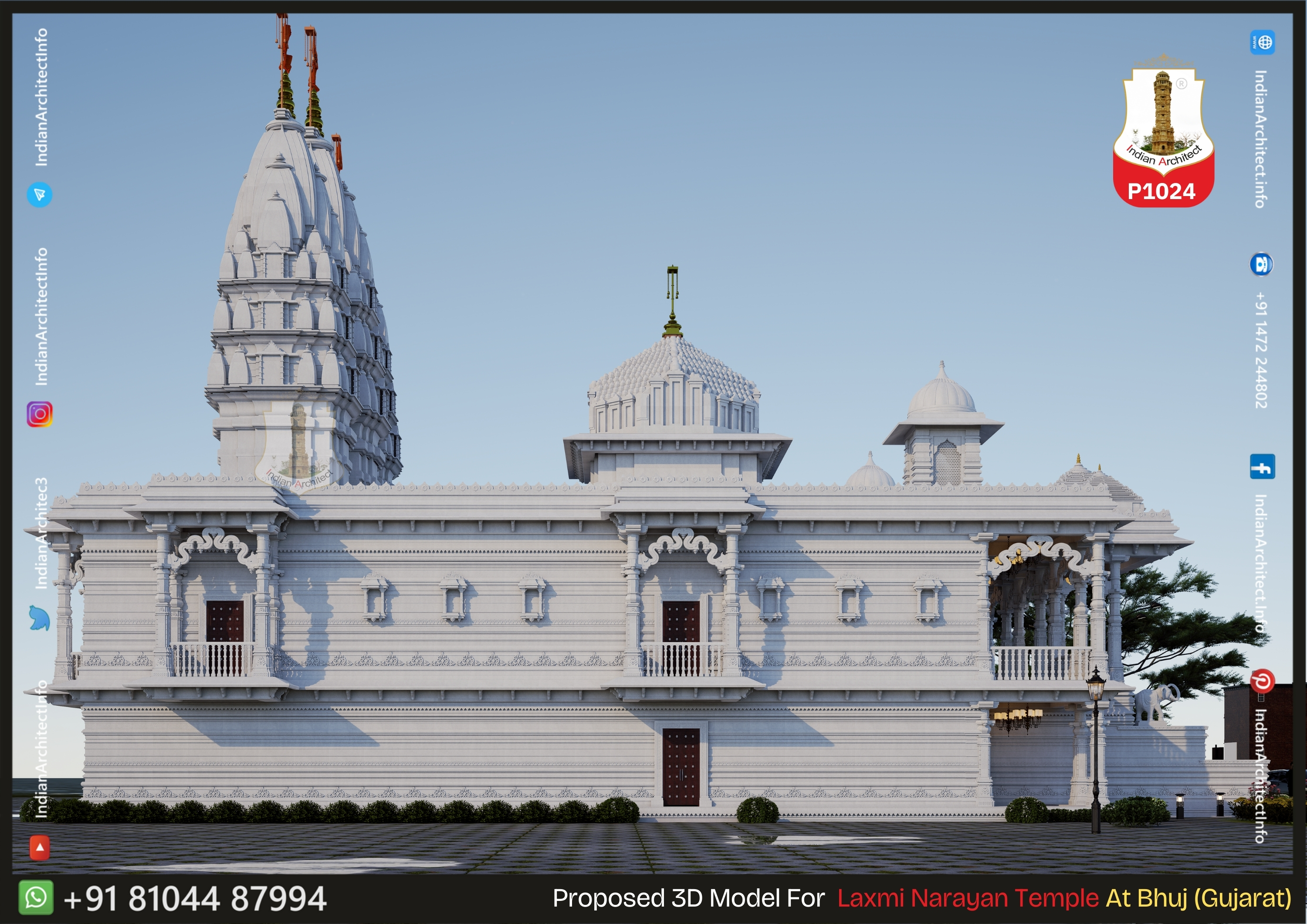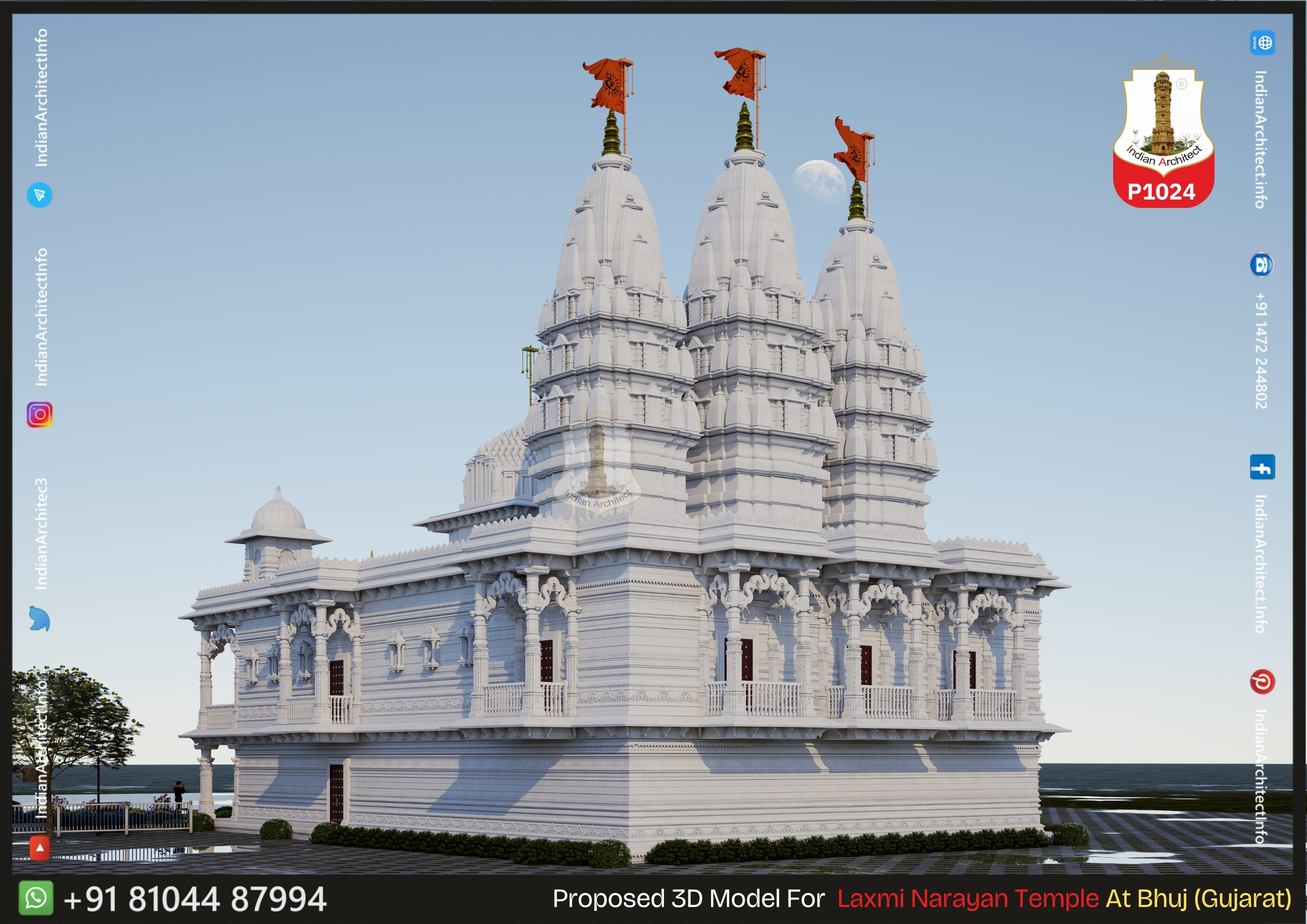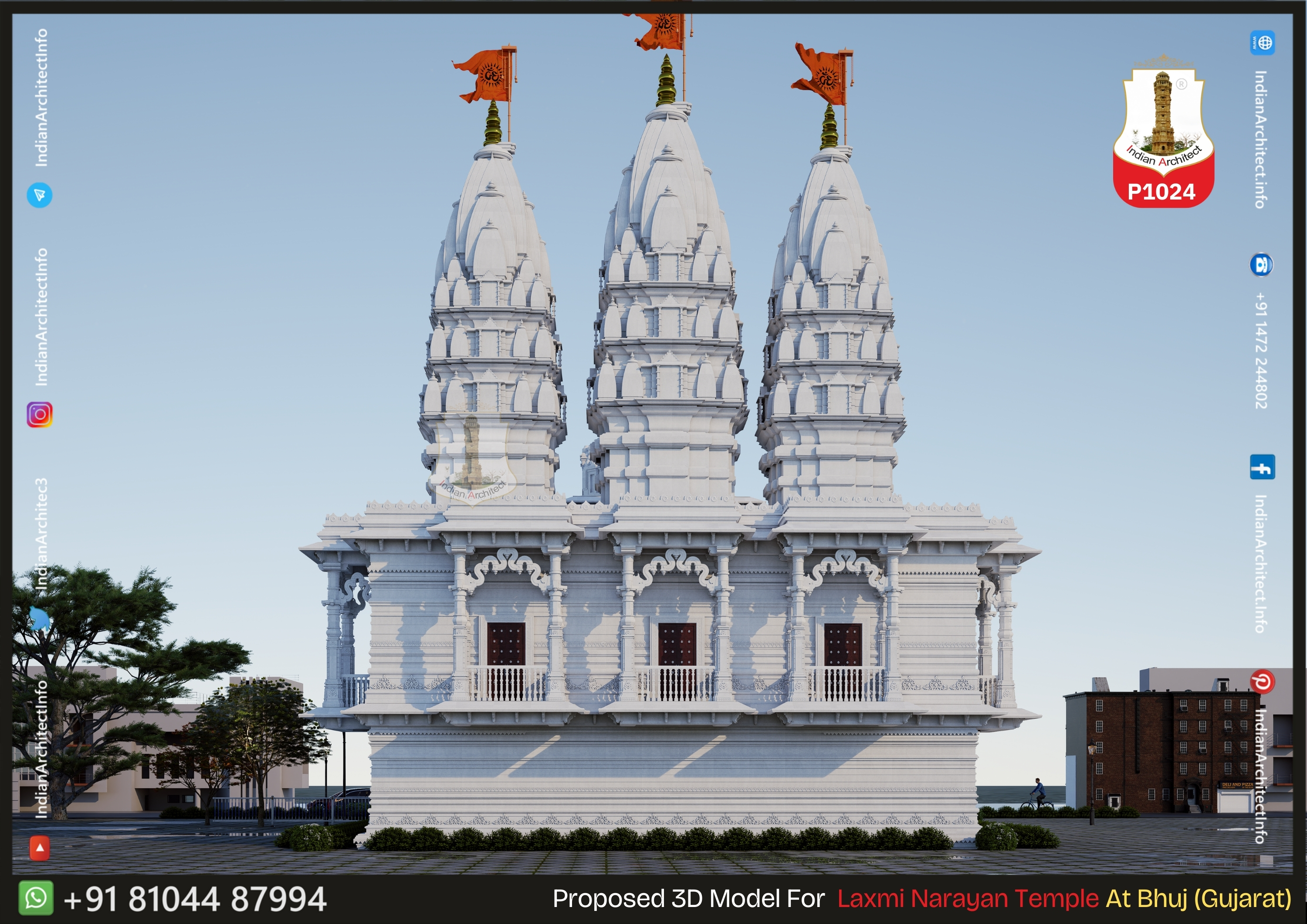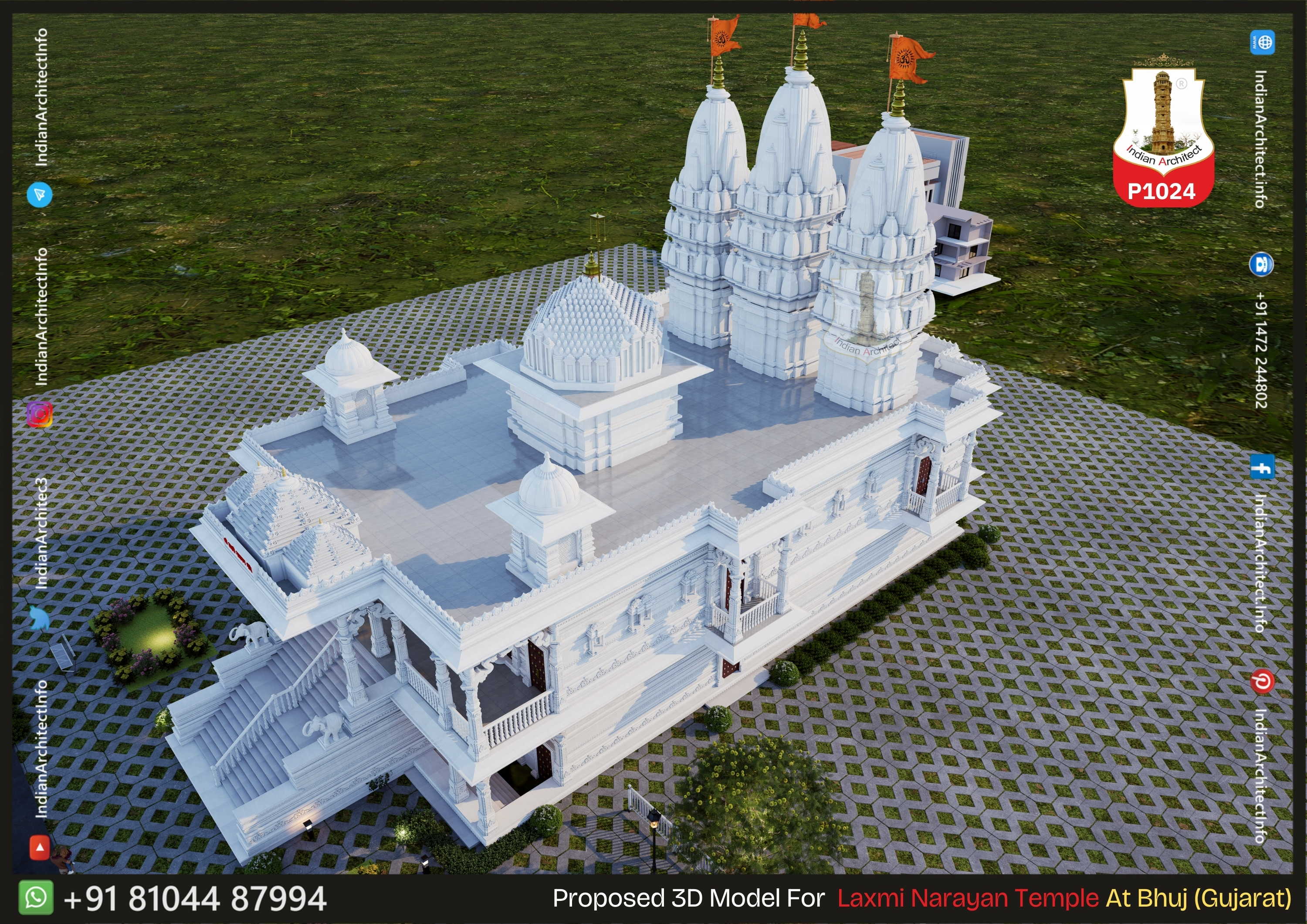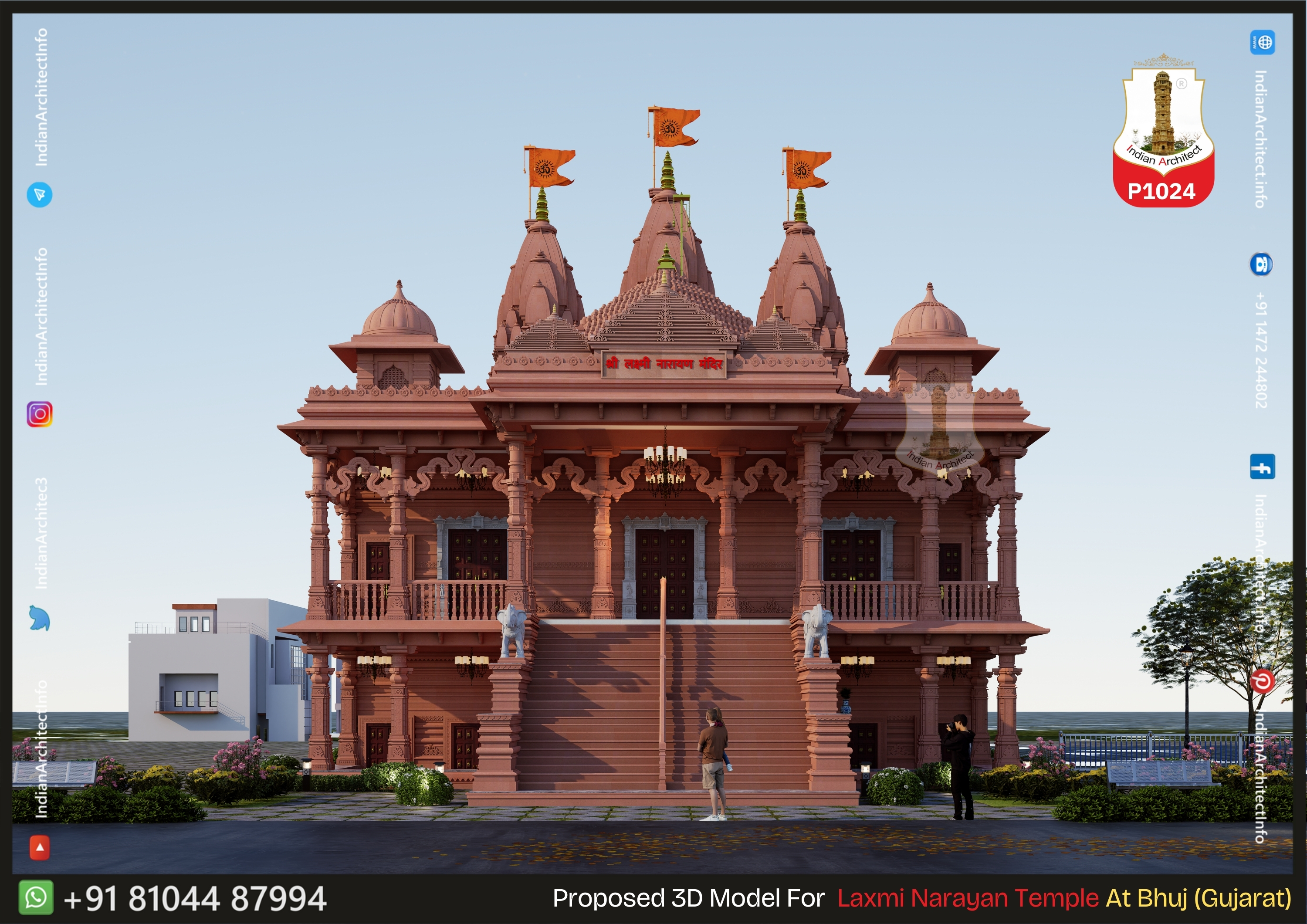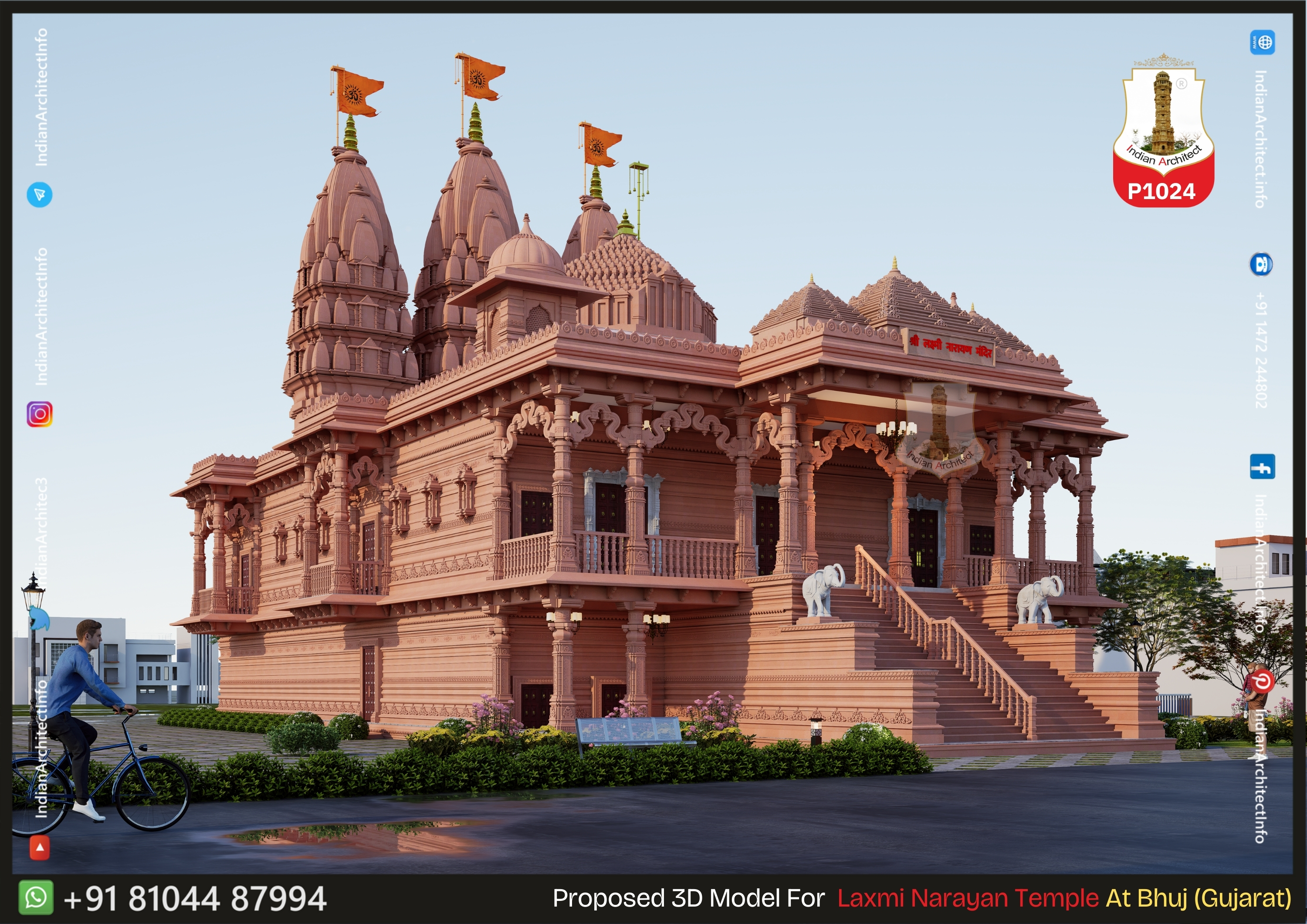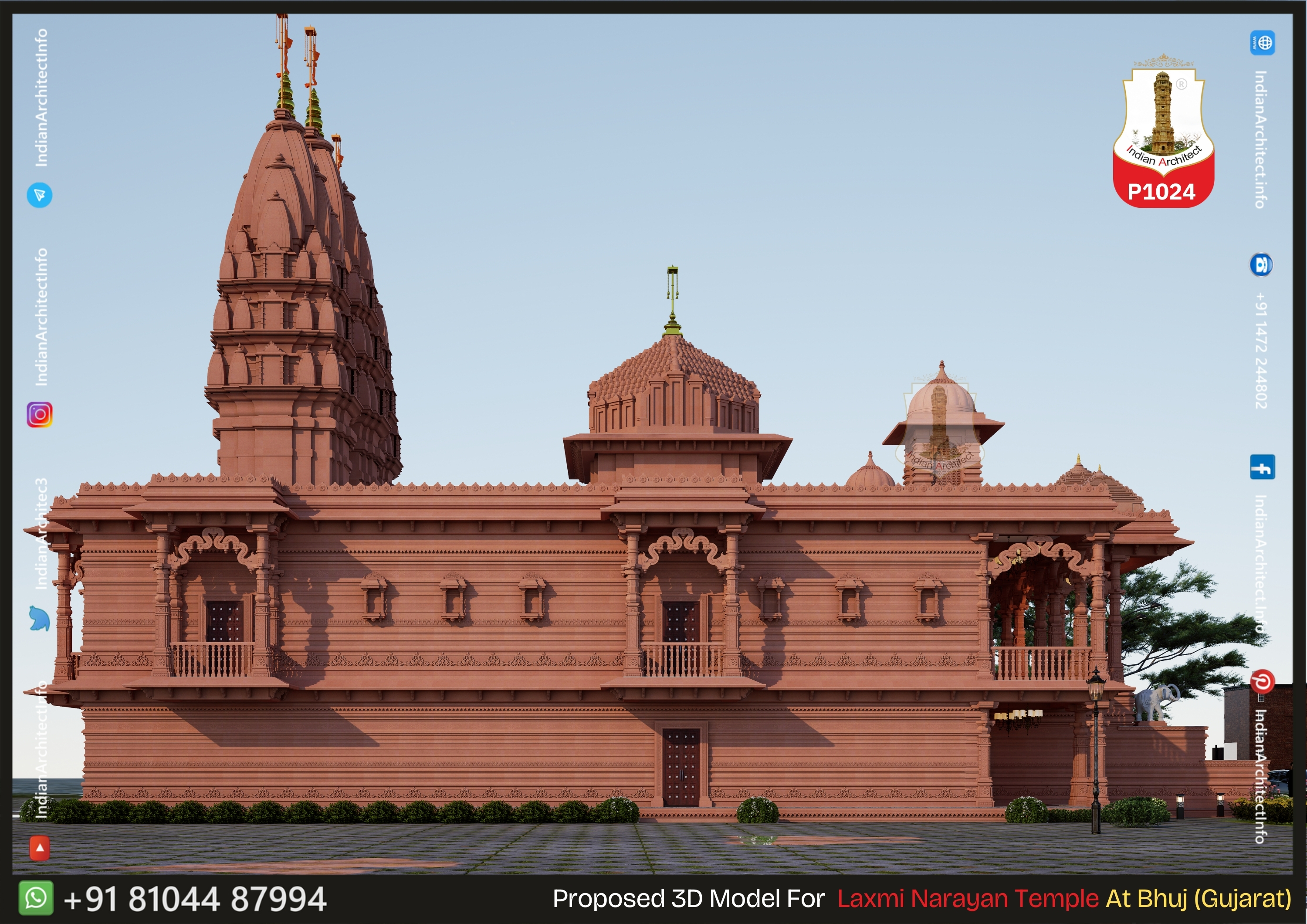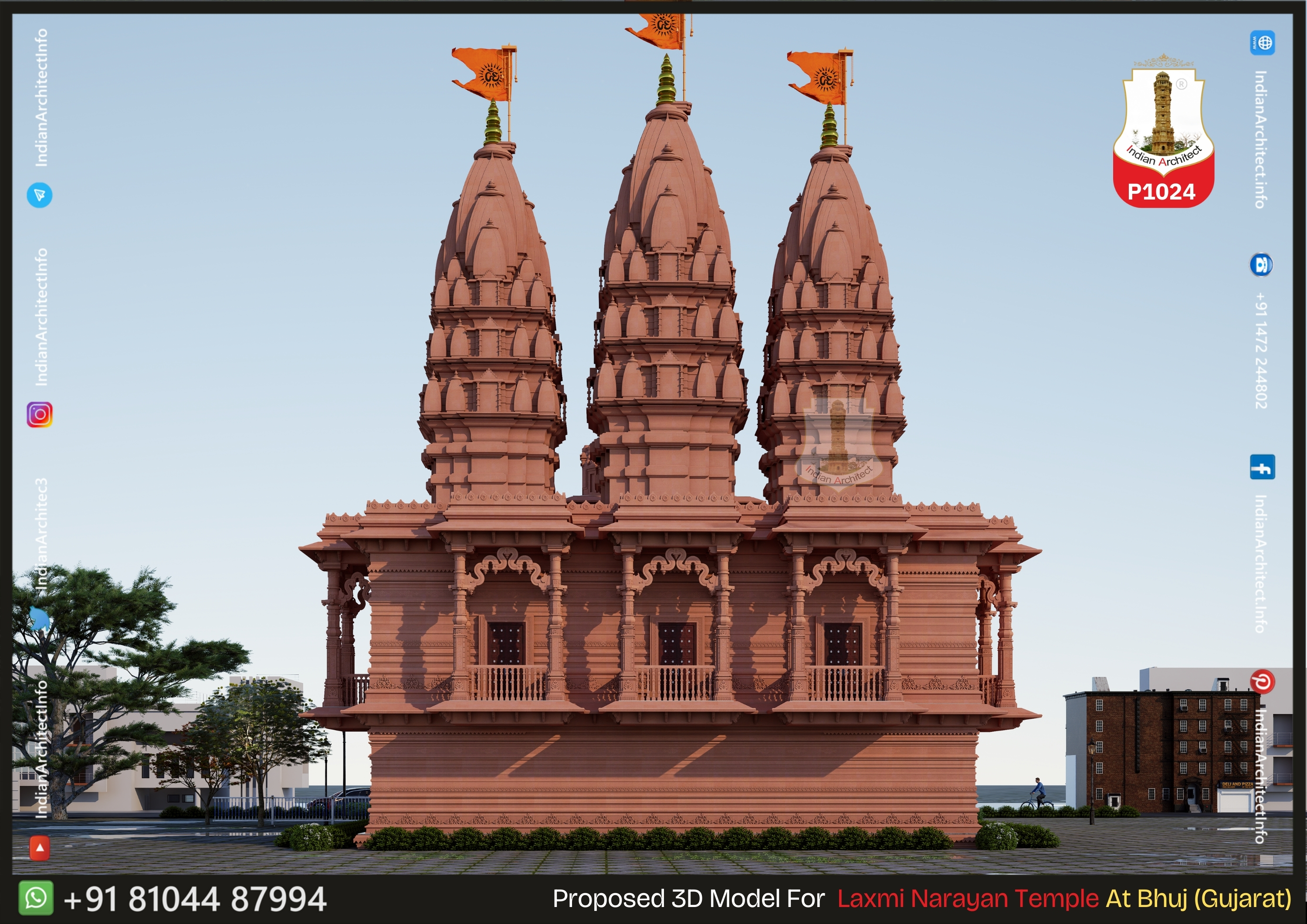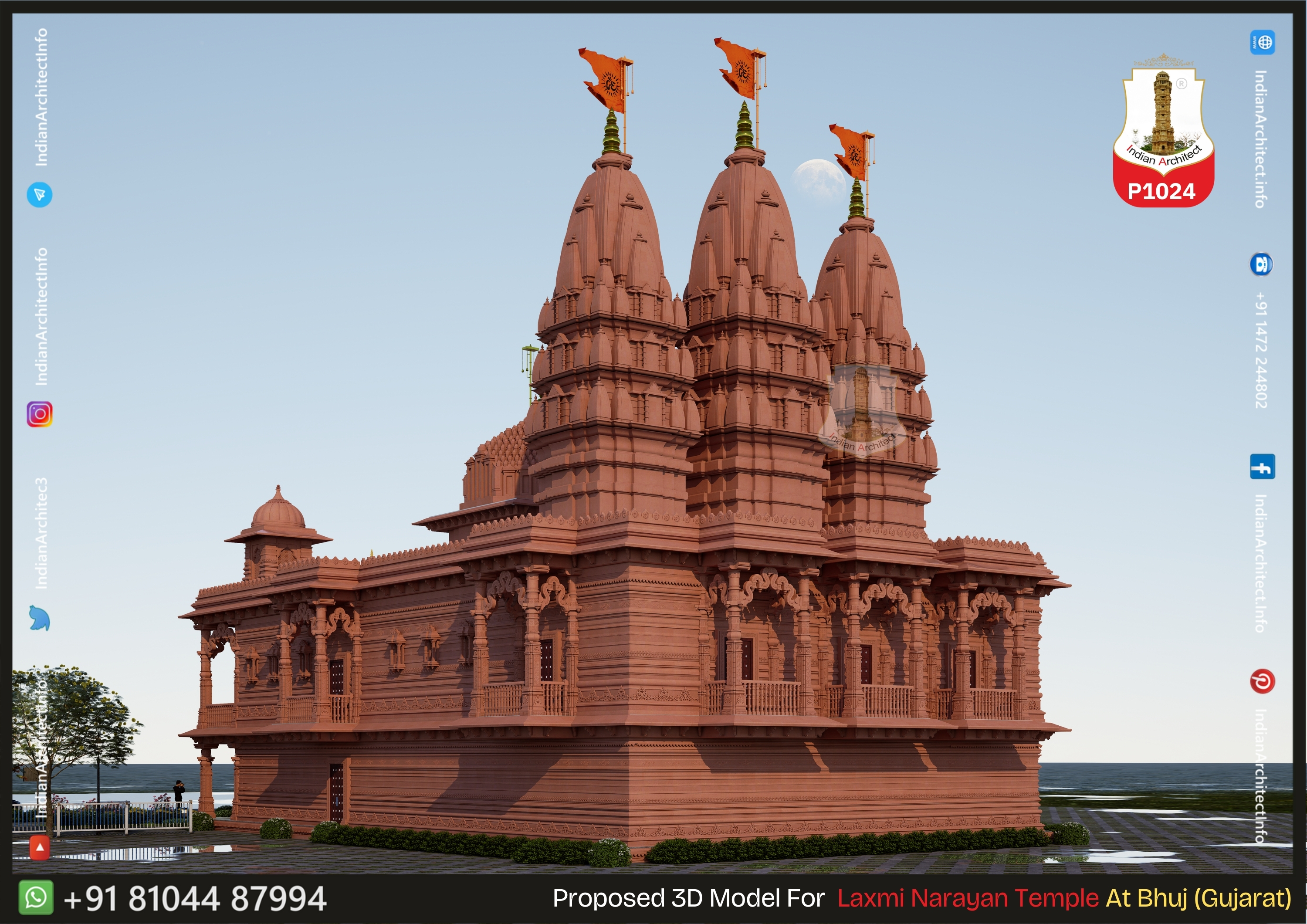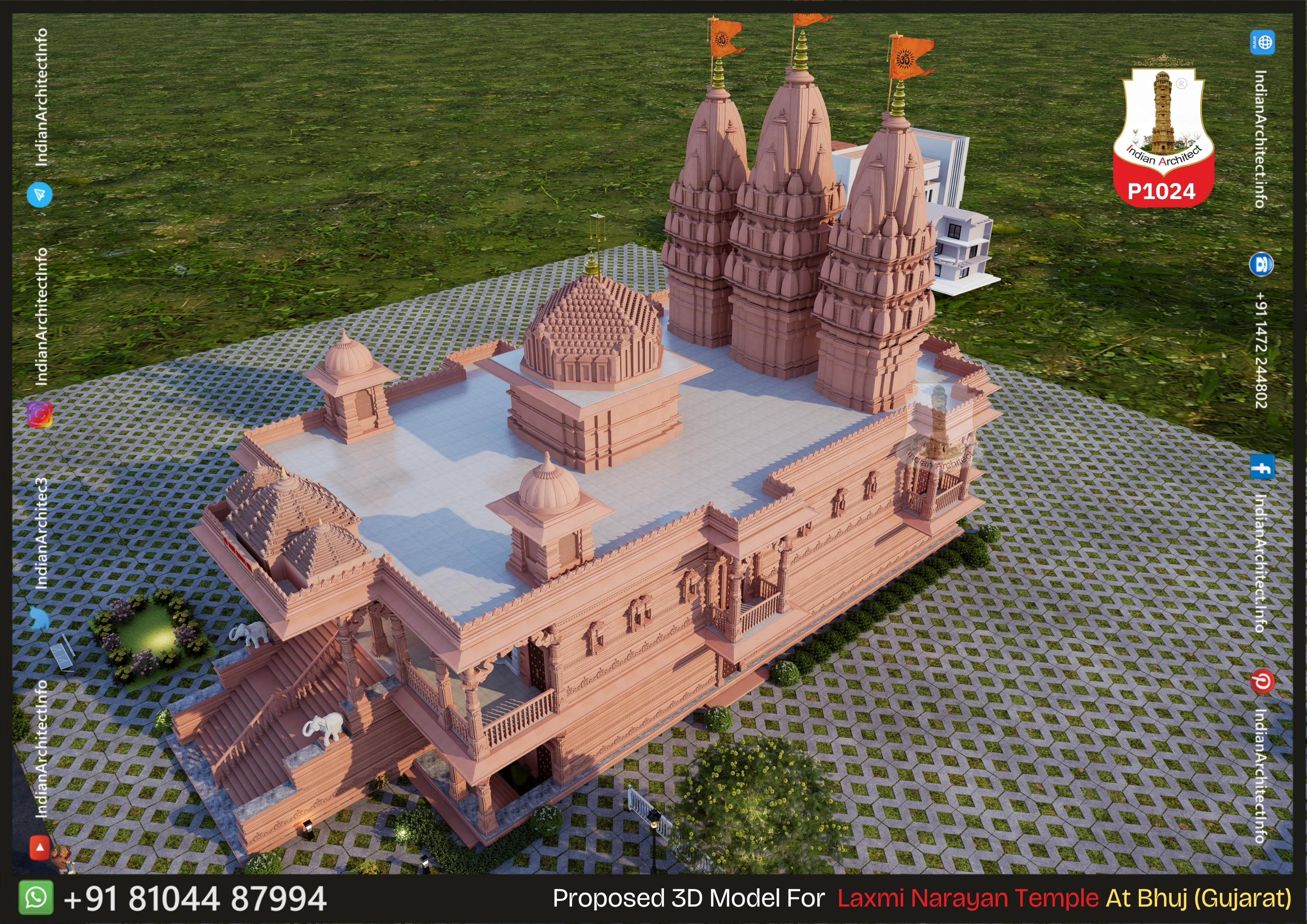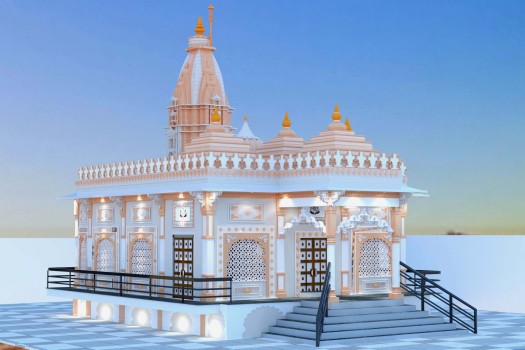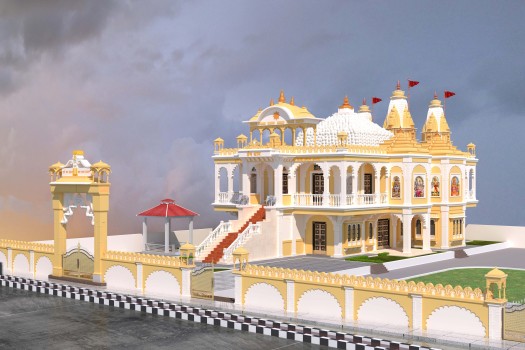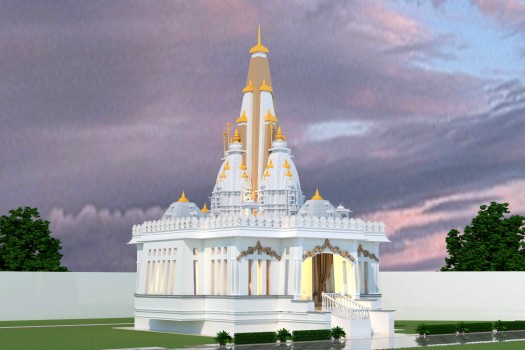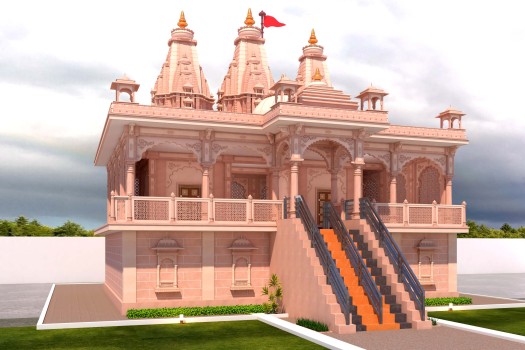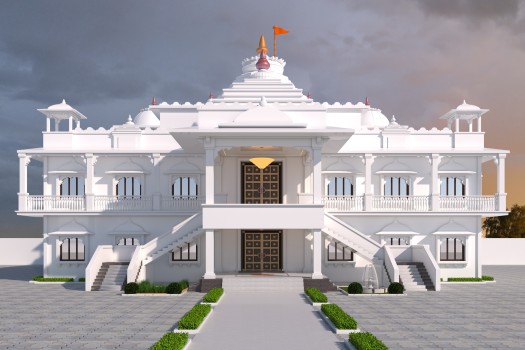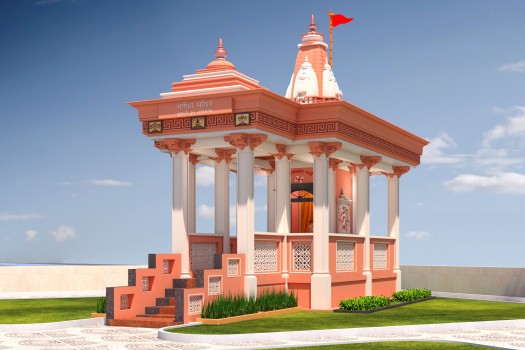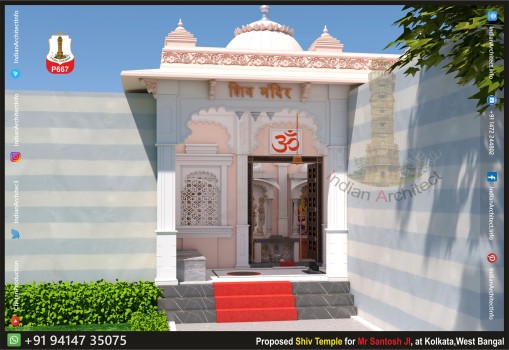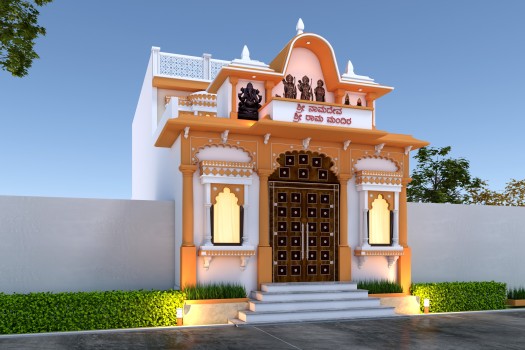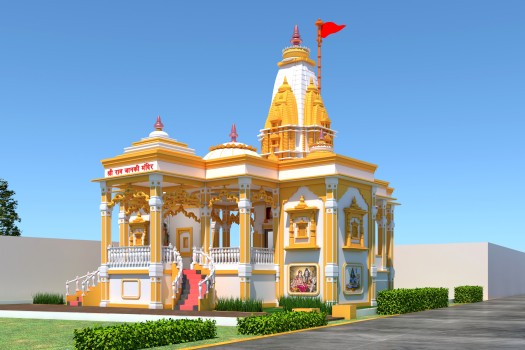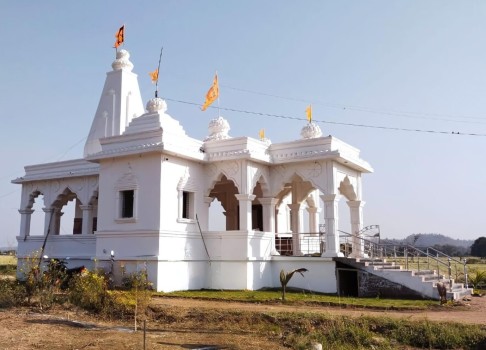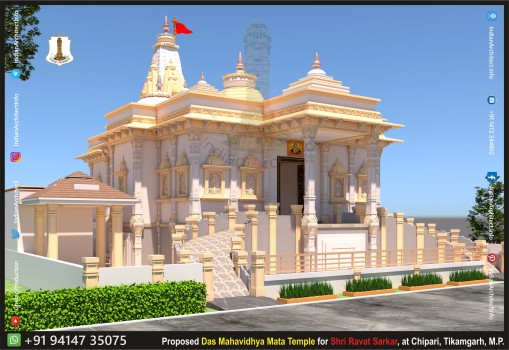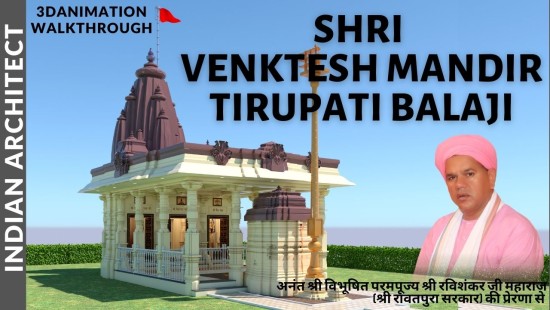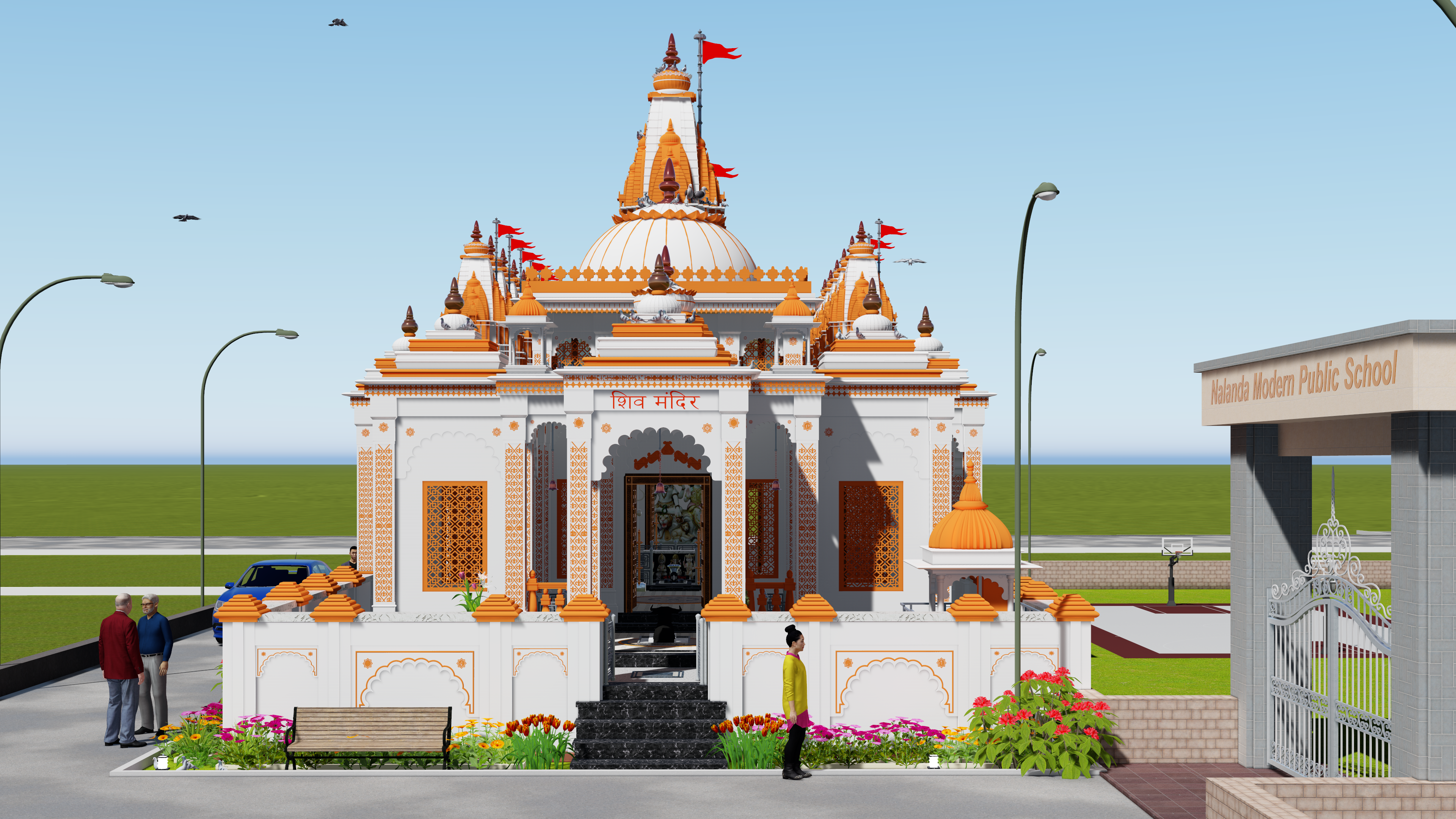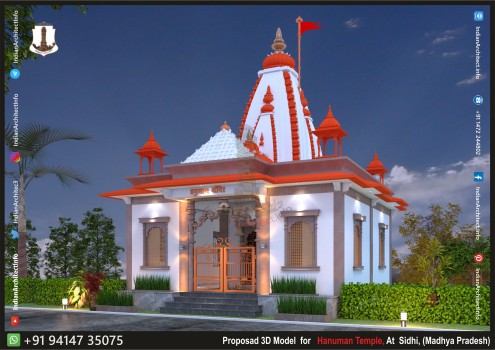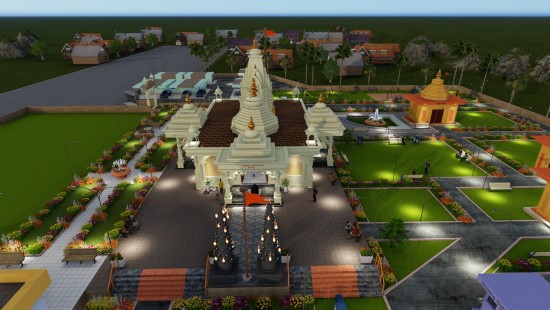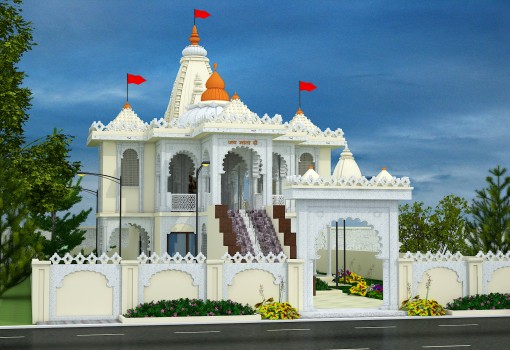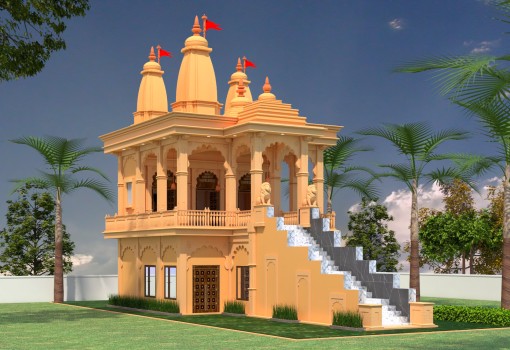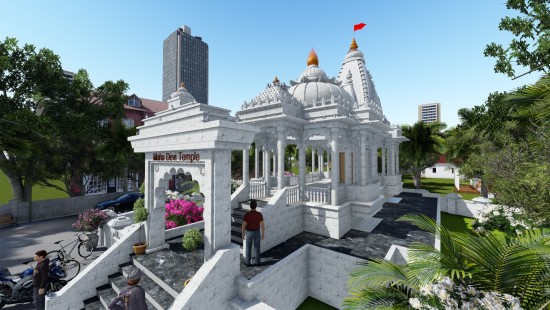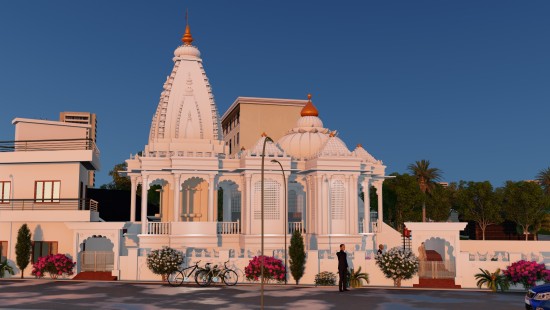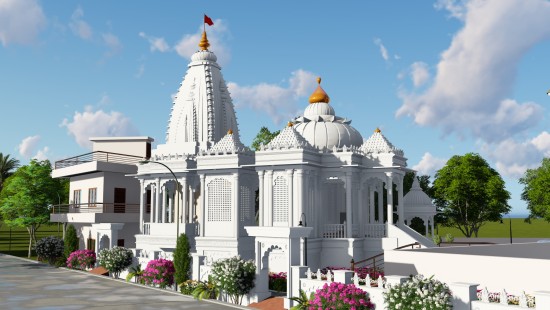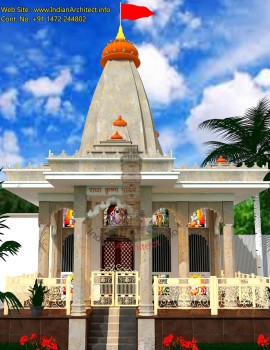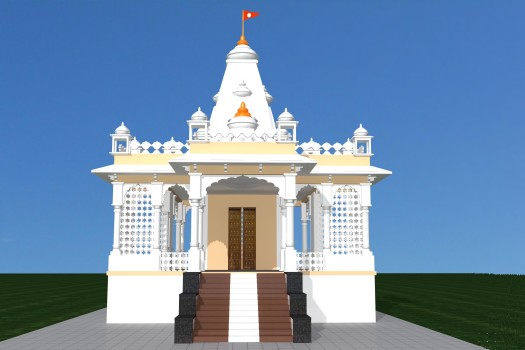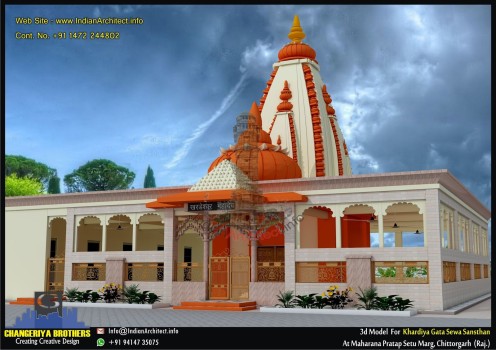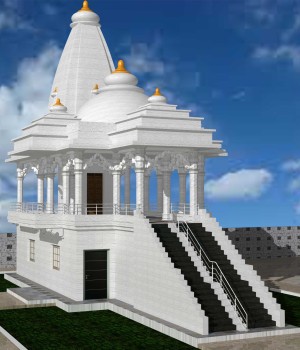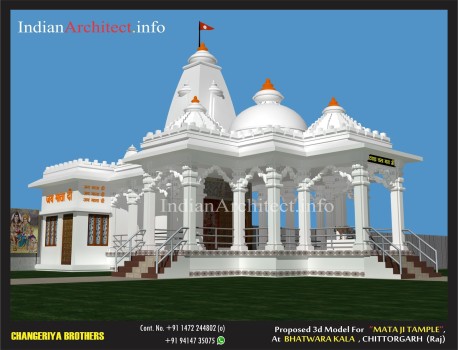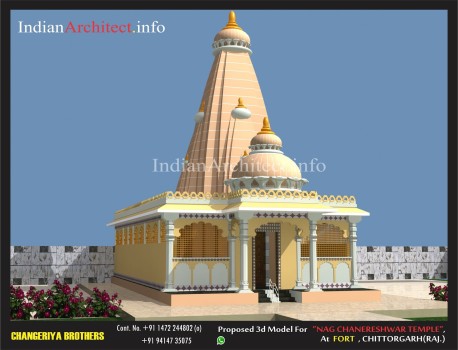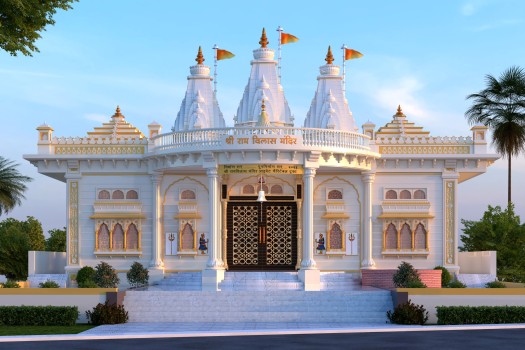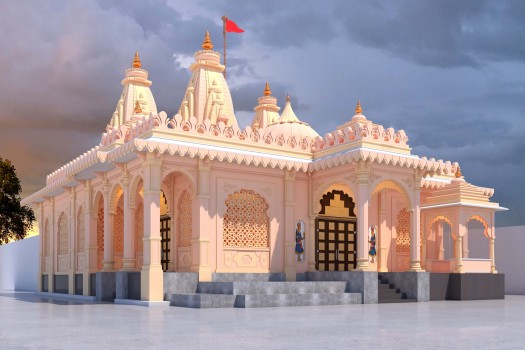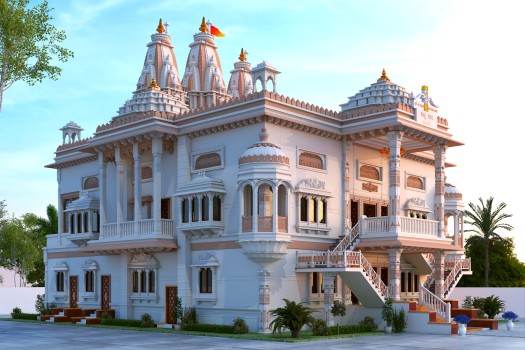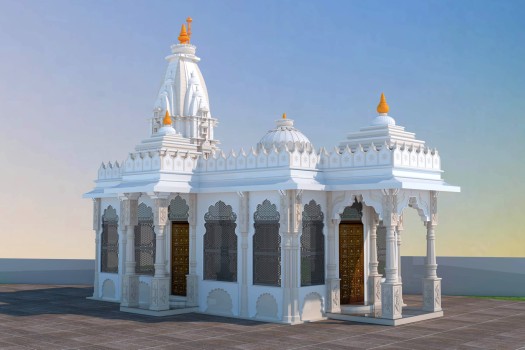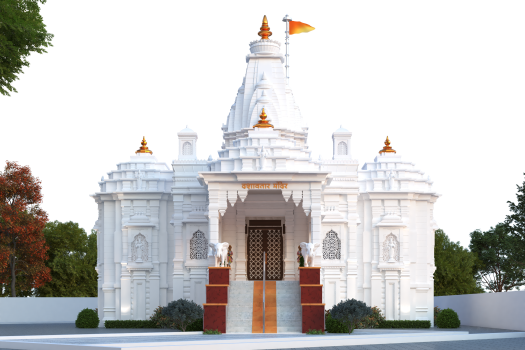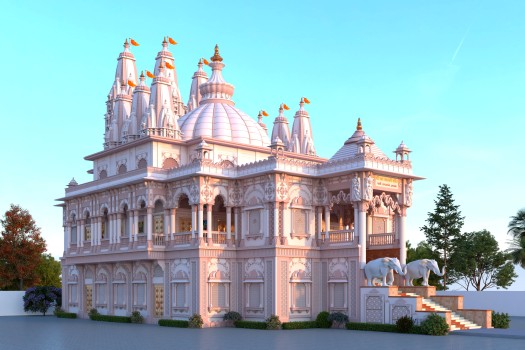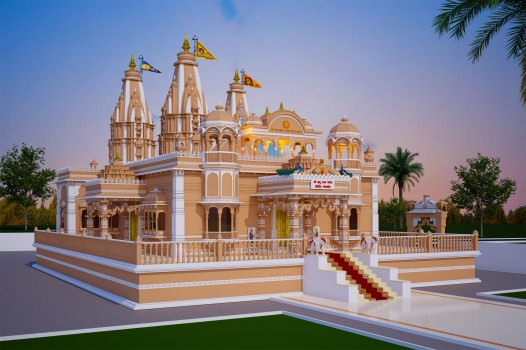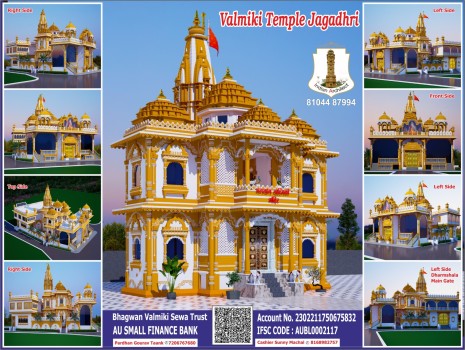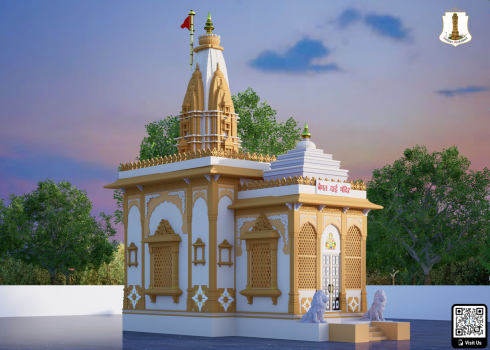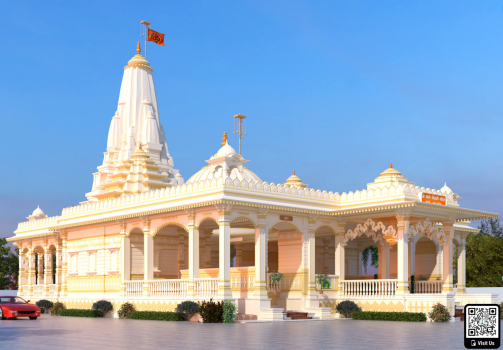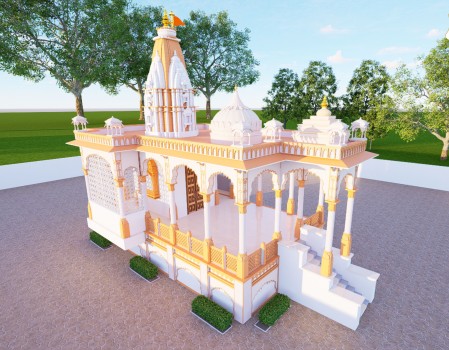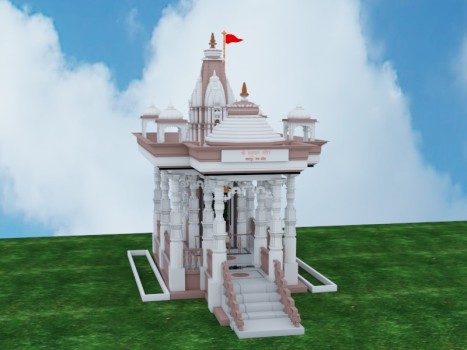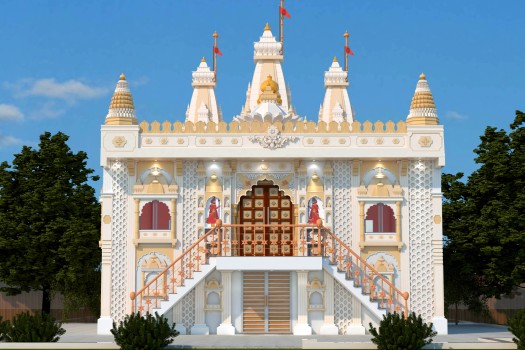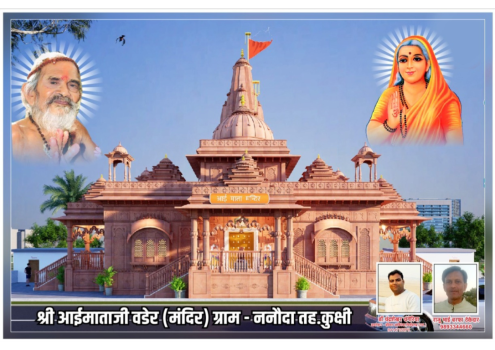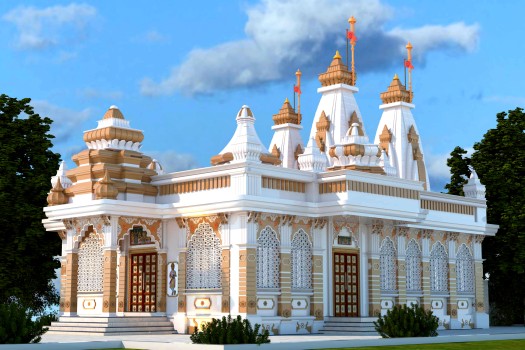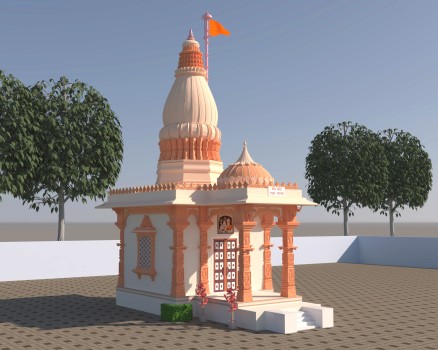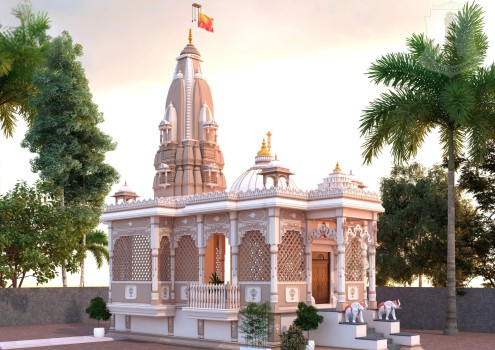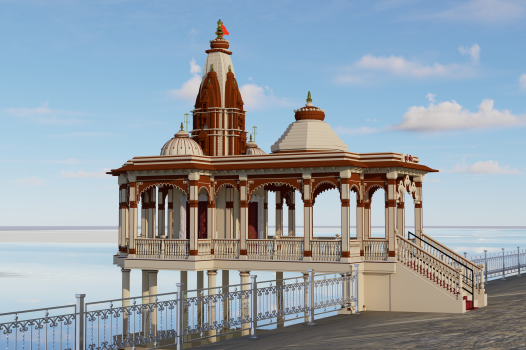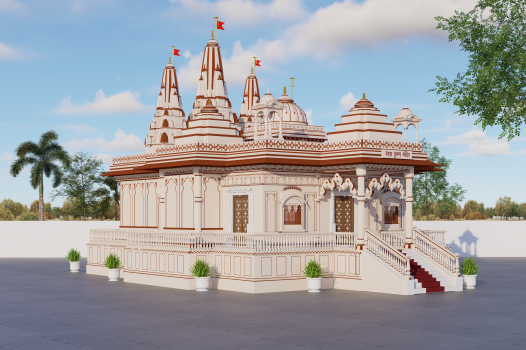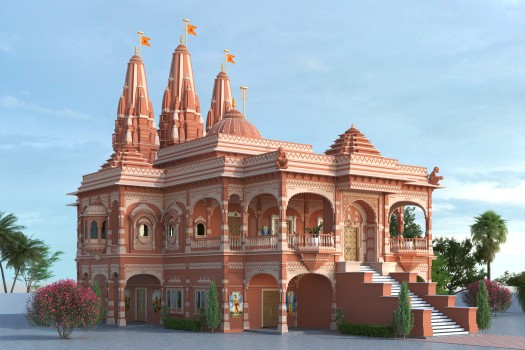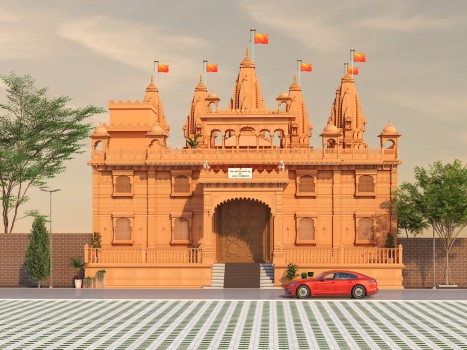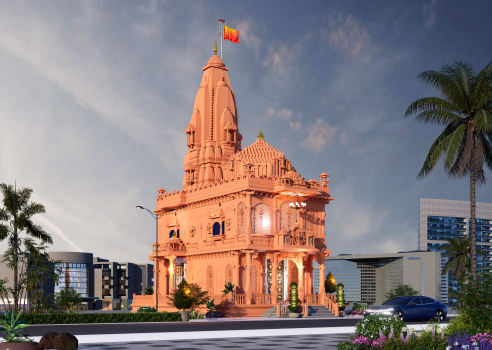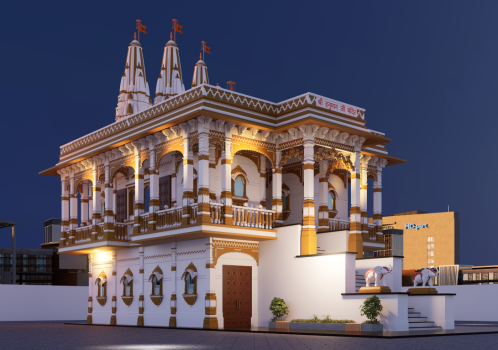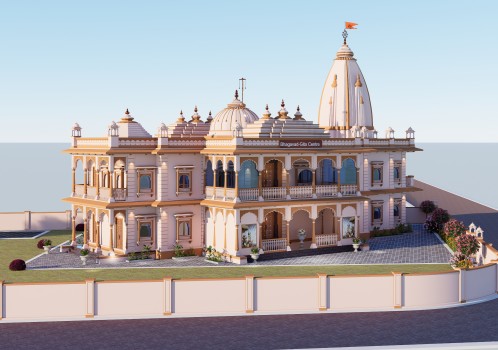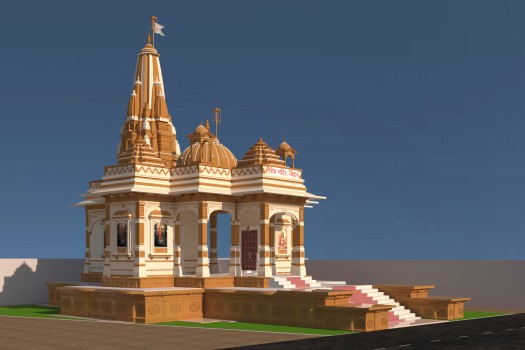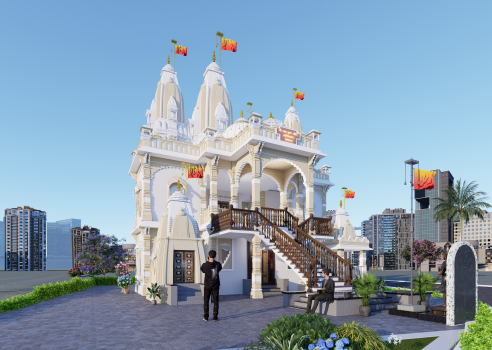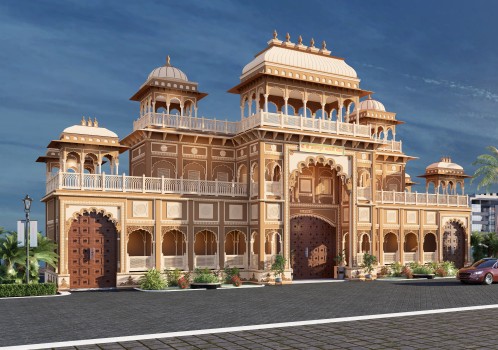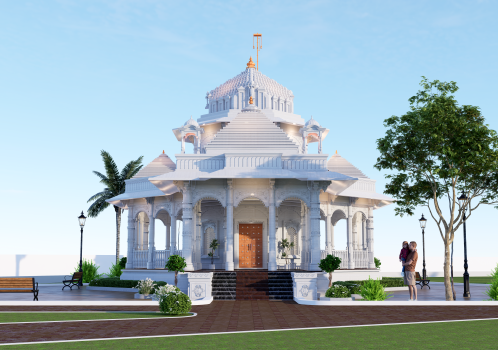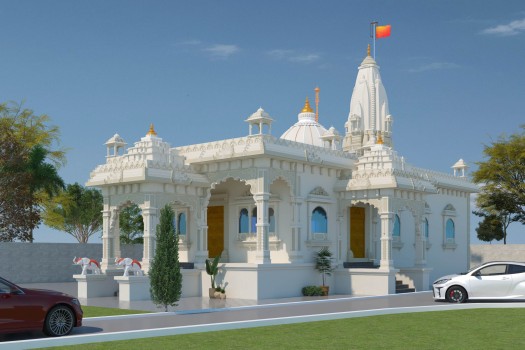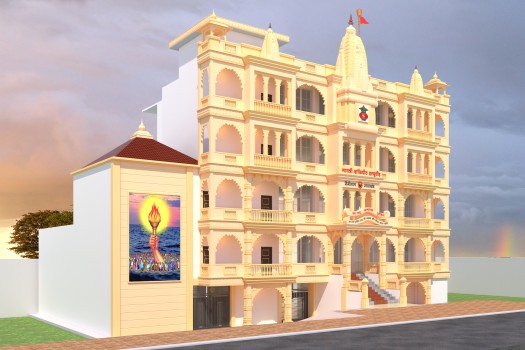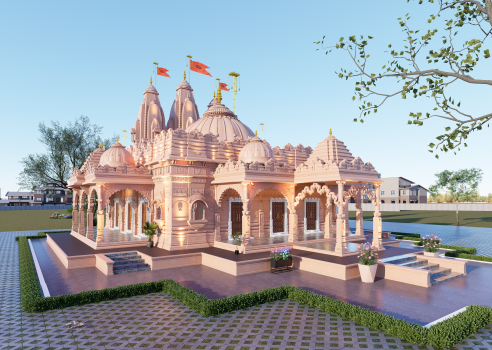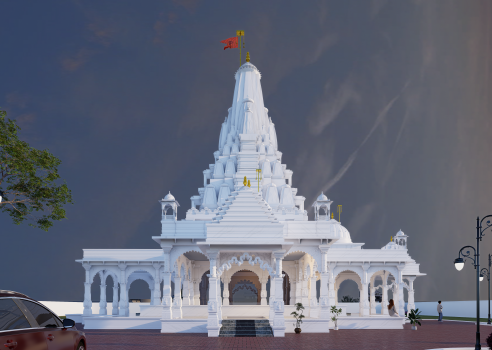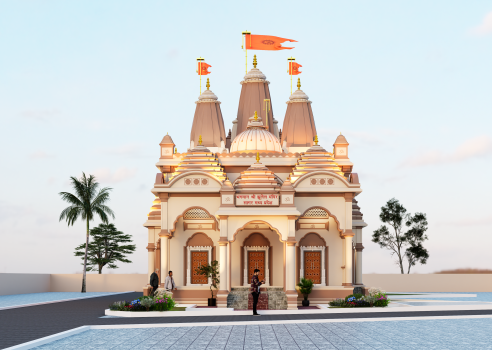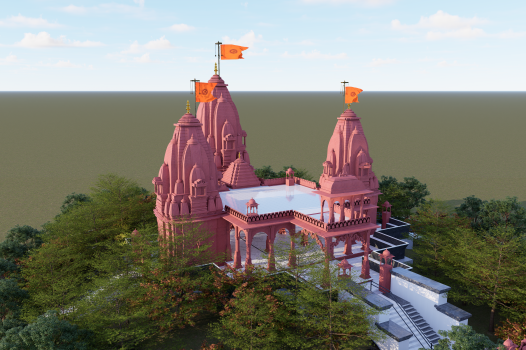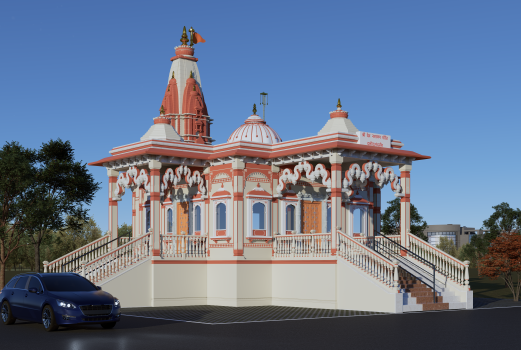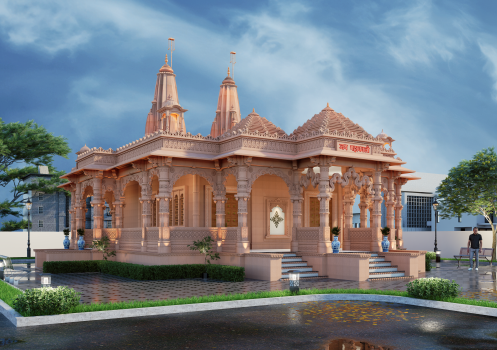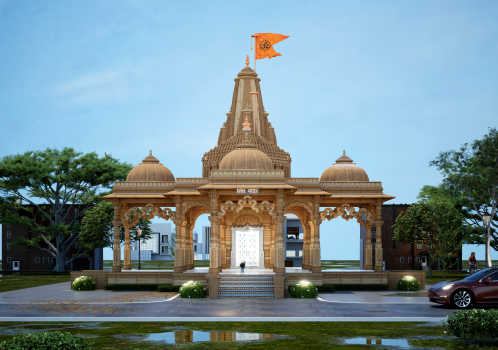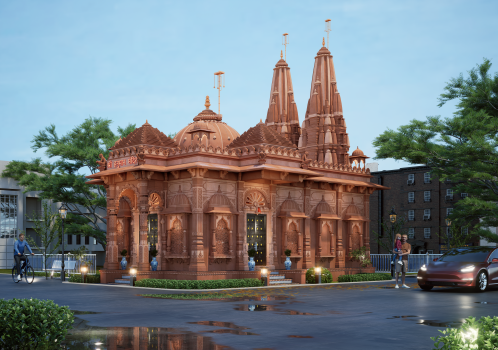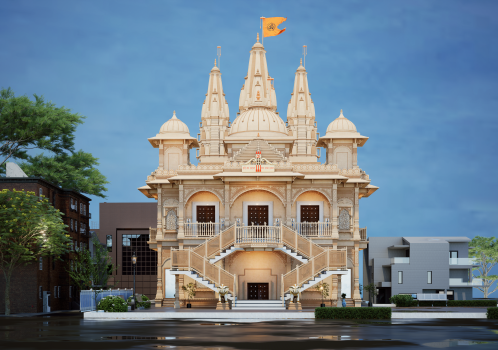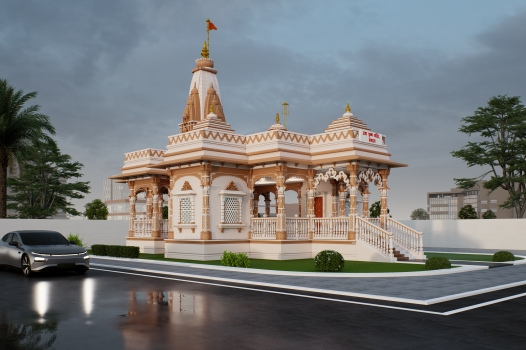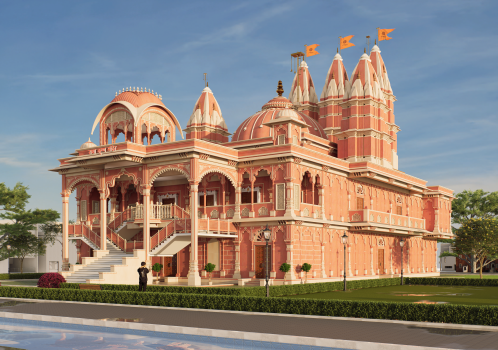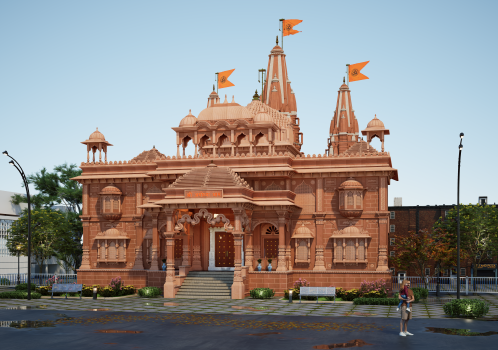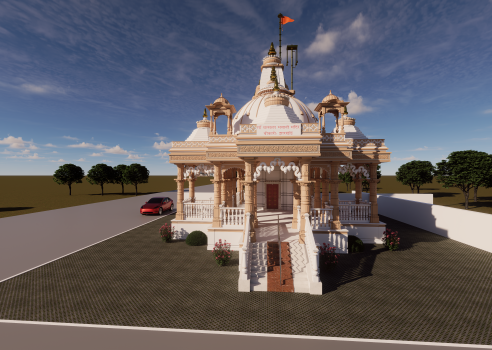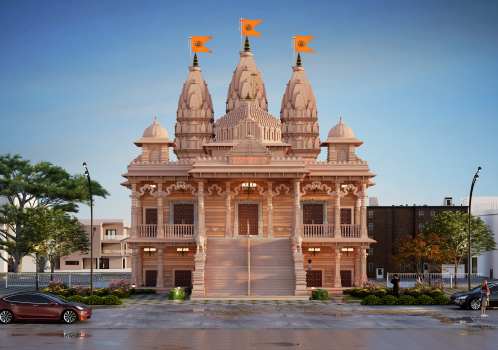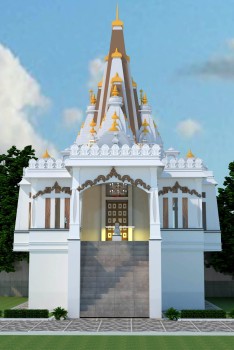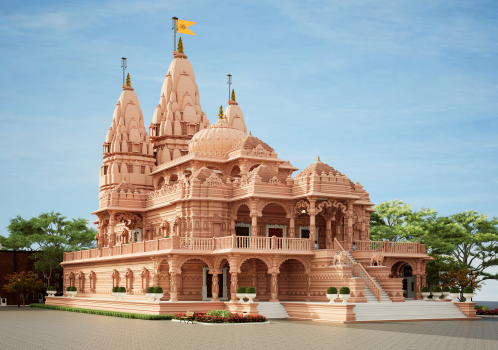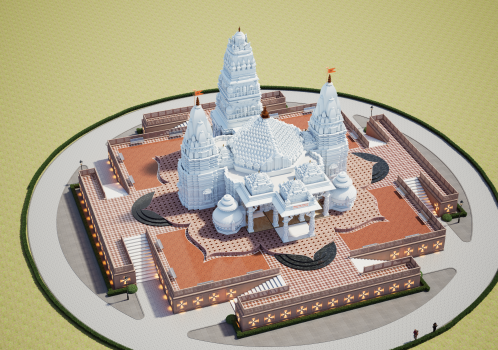
Triple Shikhara: The temple features three prominent Shikharas (spires). The central one is the tallest, symbolizing the mountain peak (Meru), while the flanking ones provide a balanced, symmetrical aesthetic.
Amalaka and Kalash: Each spire is crowned with a traditional Amalaka (notched stone disk) and a golden Kalash (finial), signifying spiritual completion.
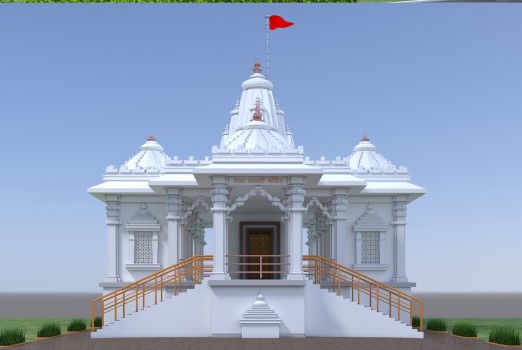
Dhwaja (Flags): Saffron-colored flags (Dhwaja) with the 'Om' symbol are hoisted atop each spire, representing victory and divine presence.
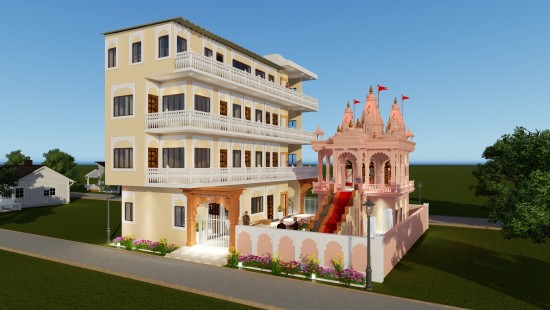
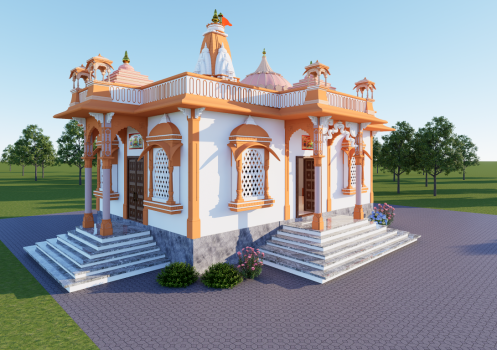
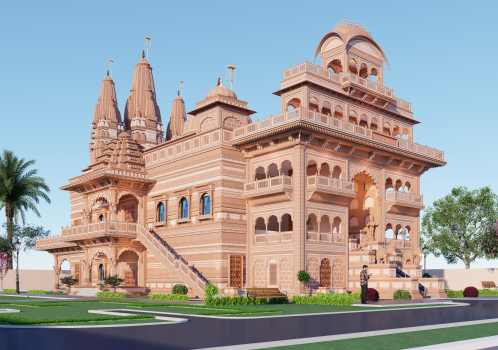
Material & Texture: The exterior showcases a Pink Sandstone finish, giving it a soft, regal appearance reminiscent of the famous temples in Rajasthan and Gujarat.
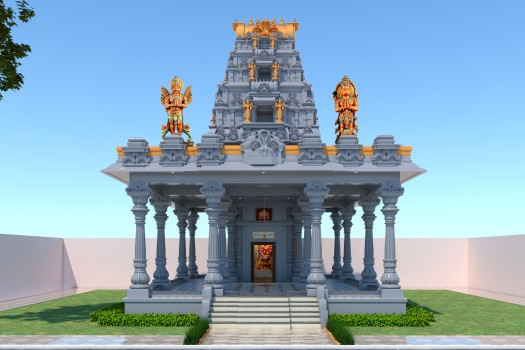
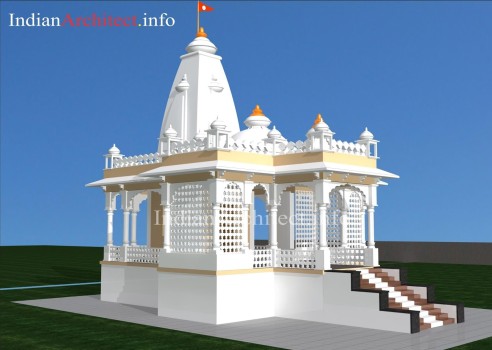
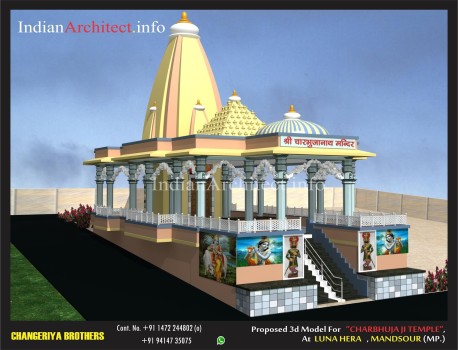
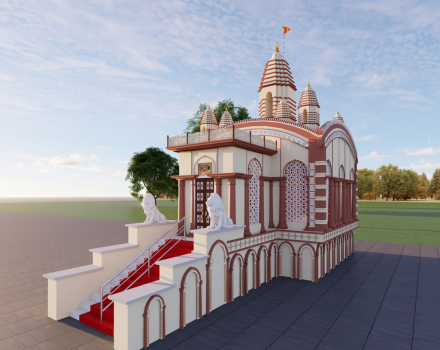
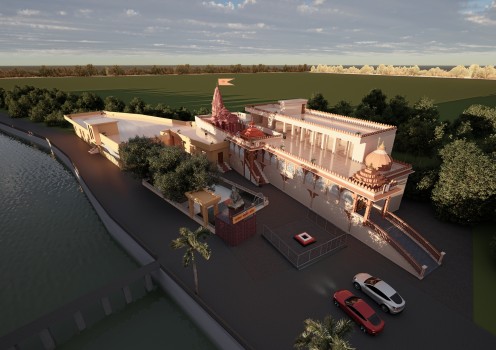
Elevated Plinth (Jagati): The temple is built on a high raised platform, accessible by a grand, wide staircase that adds a sense of monumentality to the entrance.
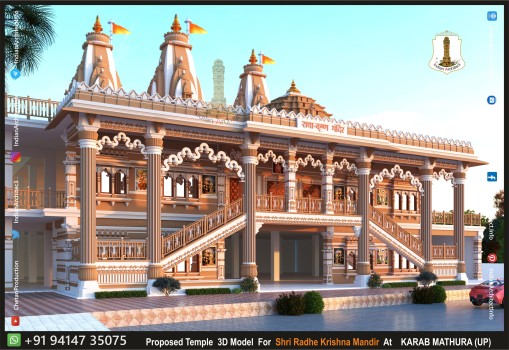
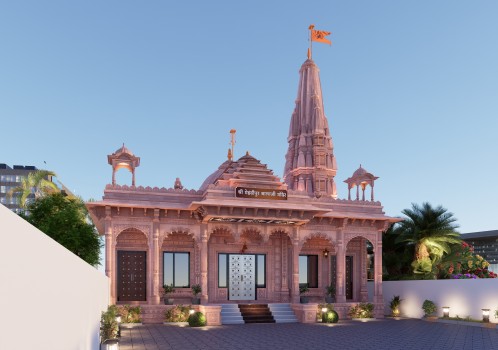
Ornate Pillars: The entrance porch (Mandapa) is supported by heavily carved pillars featuring traditional motifs and tiered bases.
Toranas and Arches: Exquisite arched Toranas connect the pillars, displaying fine craftsmanship that reflects classical Indian heritage.
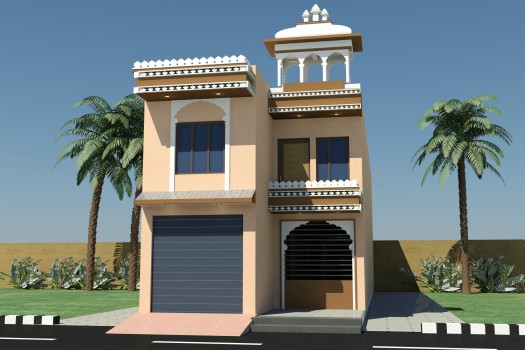
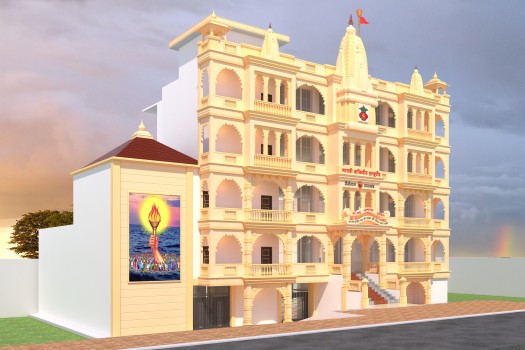
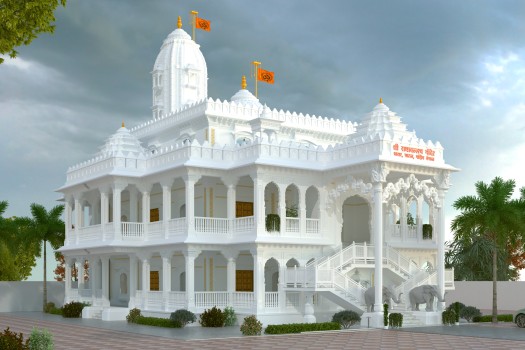
Two-Tier Structure: The design incorporates a double-story layout with decorative balconies and balustrades (railings) on both levels.
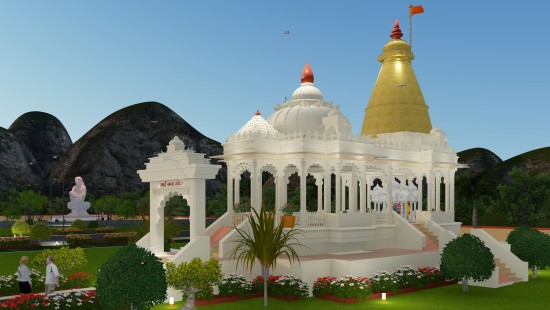
Chhatris: Miniature domed pavilions or Chhatris are placed on the corners of the mid-level, adding depth and architectural variety to the facade.
Main Doorway: The central entrance features dark wooden doors adorned with golden brass studs, a classic element of traditional temple sanctums.
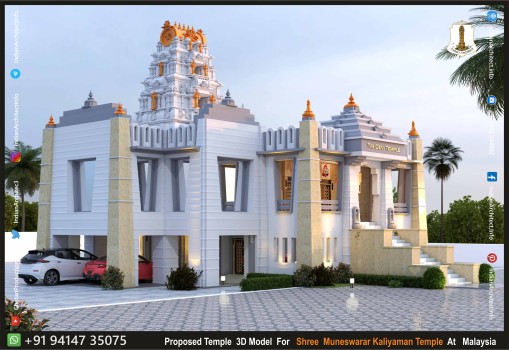
Inscribed Frieze: The name "Shri Laxmi Narayan Mandir" is elegantly inscribed on the lintel above the main entrance porch.
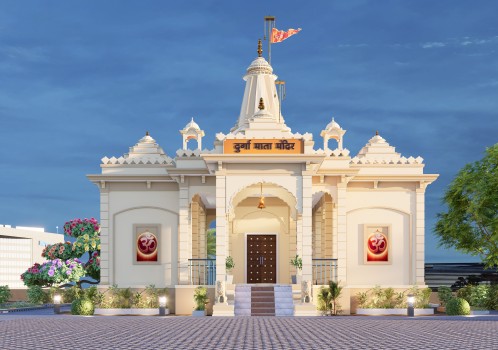
Exterior Lighting: The facade is equipped with ornamental chandeliers and warm wall-mounted lamps, designed to enhance the temple's features during the evening.
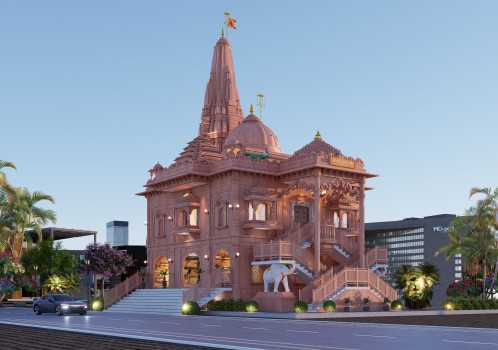
Sculptural Elements: Small elephant statues and guardian figures are placed at the base of the stairs, symbolizing strength and protection.
Landscape Integration: The temple is surrounded by a manicured lawn, flowering shrubs, and modern street lighting, blending traditional divinity with contemporary urban planning.
Project Description :
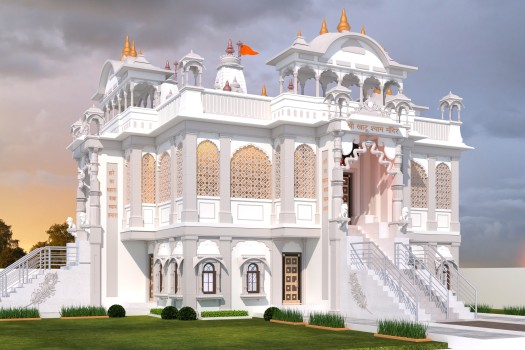
Architectural Style: The structure predominantly follows the Nagara style of North Indian temple architecture, characterized by its towering spires and intricate stone carvings.
Triple Shikhara: The temple features three prominent Shikharas (spires). The central one is the tallest, symbolizing the mountain peak (Meru), while the flanking ones provide a balanced, symmetrical aesthetic.
Amalaka and Kalash: Each spire is crowned with a traditional Amalaka (notched stone disk) and a golden Kalash (finial), signifying spiritual completion.
Dhwaja (Flags): Saffron-colored flags (Dhwaja) with the 'Om' symbol are hoisted atop each spire, representing victory and divine presence.
Material & Texture: The exterior showcases a Pink Sandstone finish, giving it a soft, regal appearance reminiscent of the famous temples in Rajasthan and Gujarat.
Elevated Plinth (Jagati): The temple is built on a high raised platform, accessible by a grand, wide staircase that adds a sense of monumentality to the entrance.
Ornate Pillars: The entrance porch (Mandapa) is supported by heavily carved pillars featuring traditional motifs and tiered bases.
Toranas and Arches: Exquisite arched Toranas connect the pillars, displaying fine craftsmanship that reflects classical Indian heritage.
Two-Tier Structure: The design incorporates a double-story layout with decorative balconies and balustrades (railings) on both levels.
Chhatris: Miniature domed pavilions or Chhatris are placed on the corners of the mid-level, adding depth and architectural variety to the facade.
Main Doorway: The central entrance features dark wooden doors adorned with golden brass studs, a classic element of traditional temple sanctums.
Inscribed Frieze: The name "Shri Laxmi Narayan Mandir" is elegantly inscribed on the lintel above the main entrance porch.
Exterior Lighting: The facade is equipped with ornamental chandeliers and warm wall-mounted lamps, designed to enhance the temple's features during the evening.
Sculptural Elements: Small elephant statues and guardian figures are placed at the base of the stairs, symbolizing strength and protection.
Landscape Integration: The temple is surrounded by a manicured lawn, flowering shrubs, and modern street lighting, blending traditional divinity with contemporary urban planning.