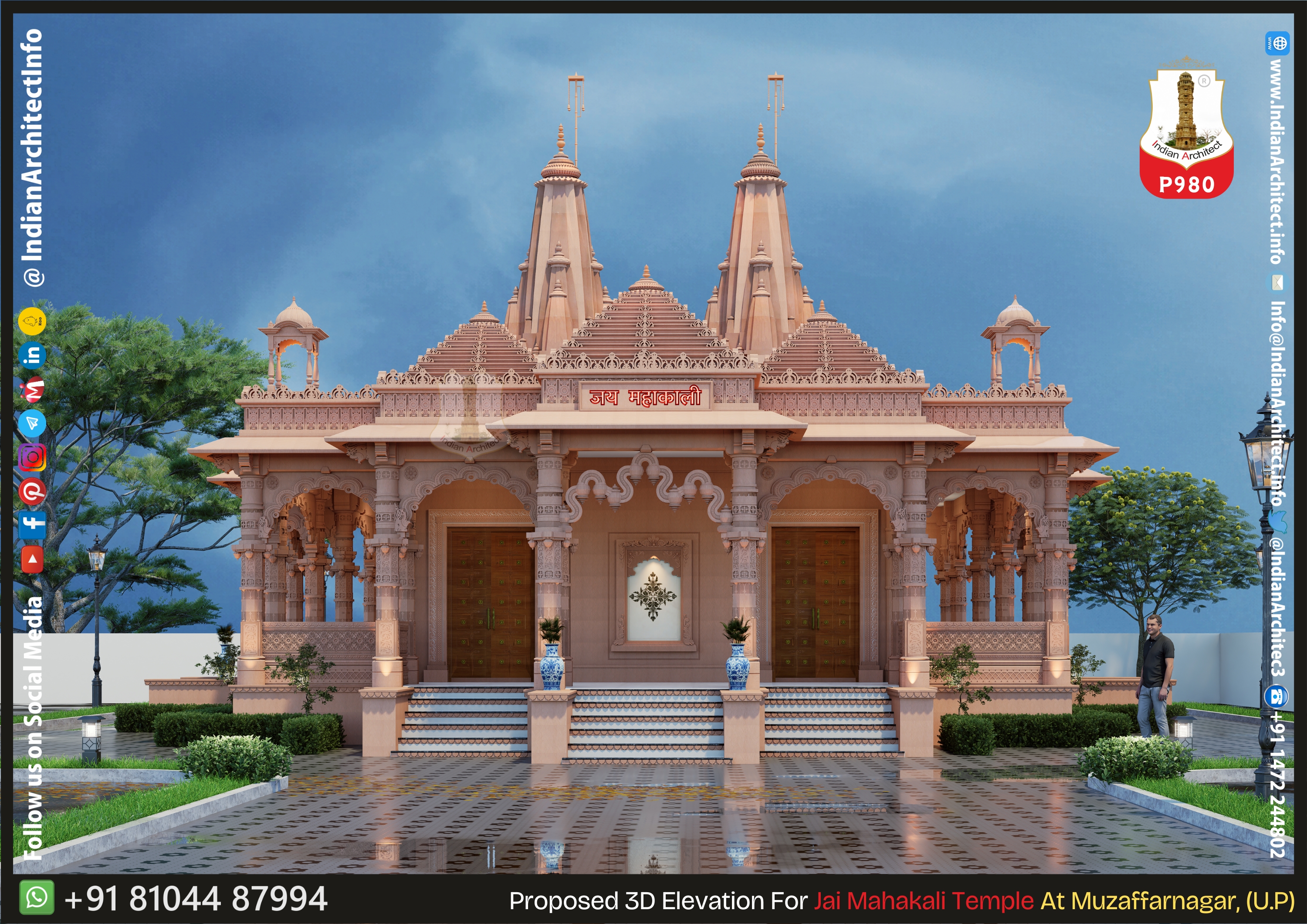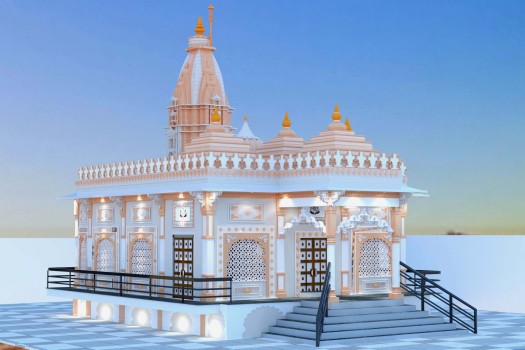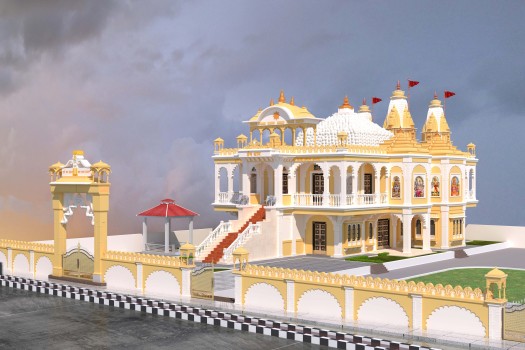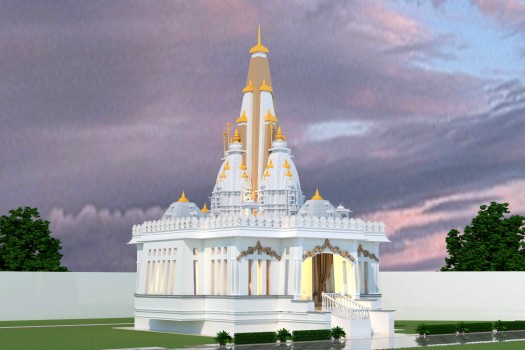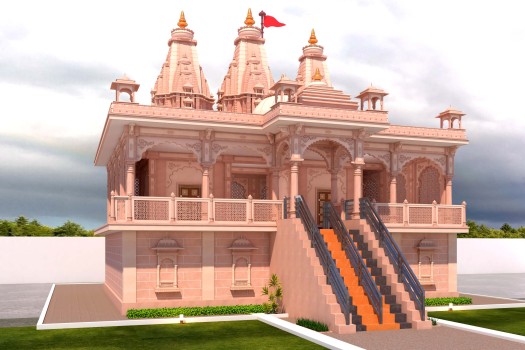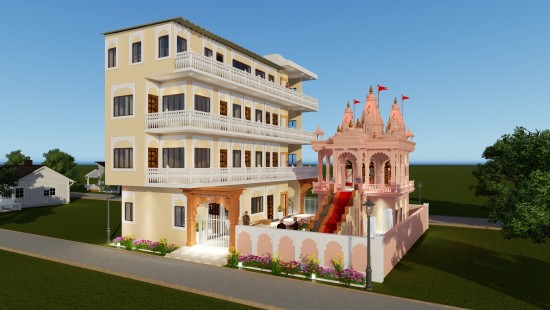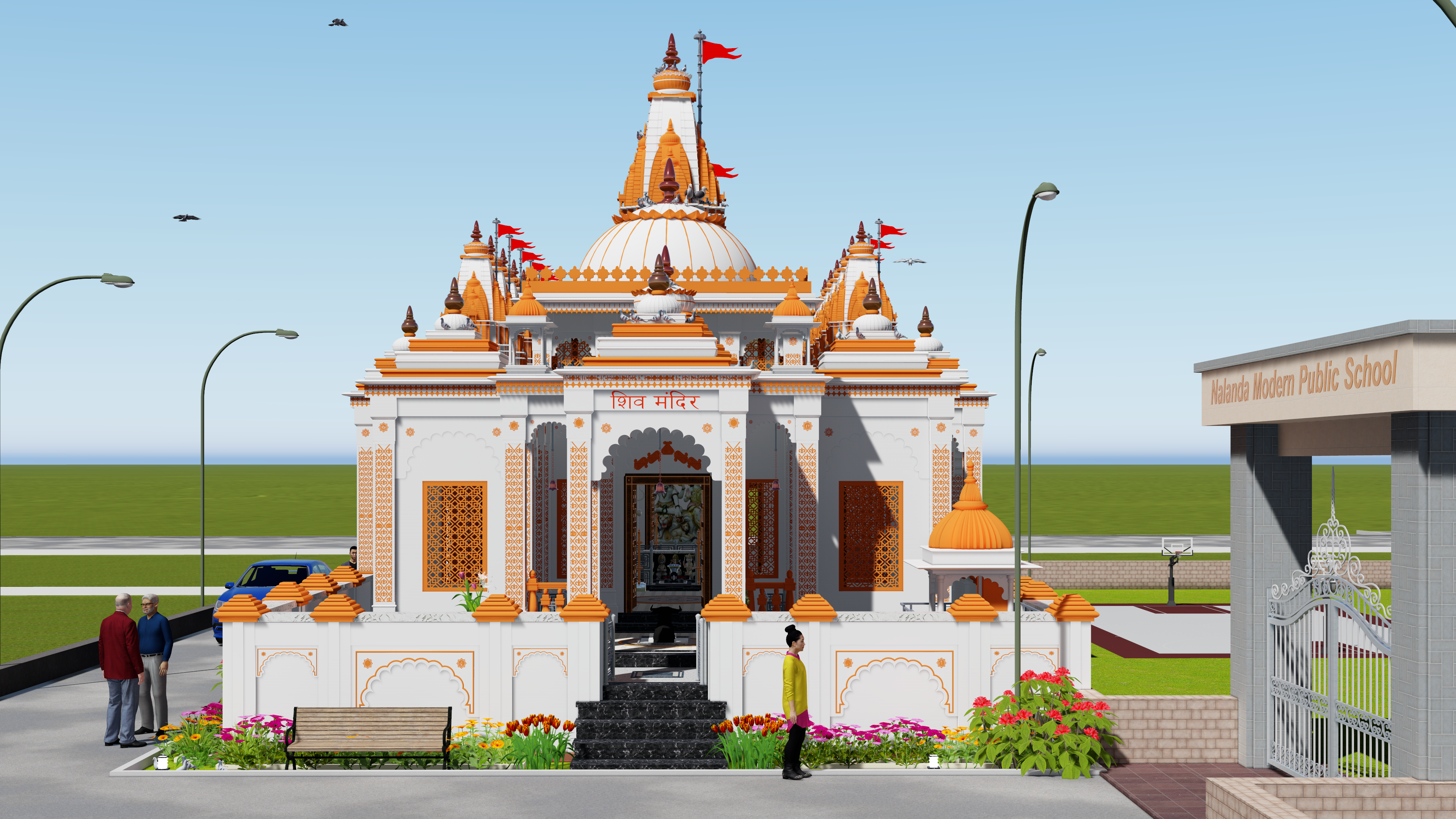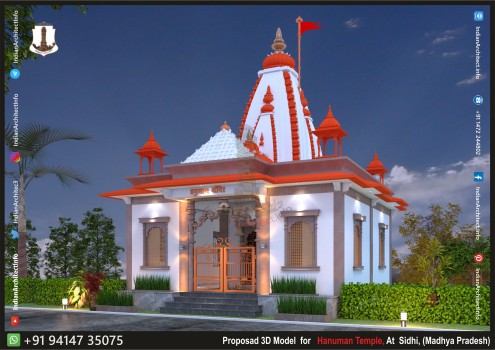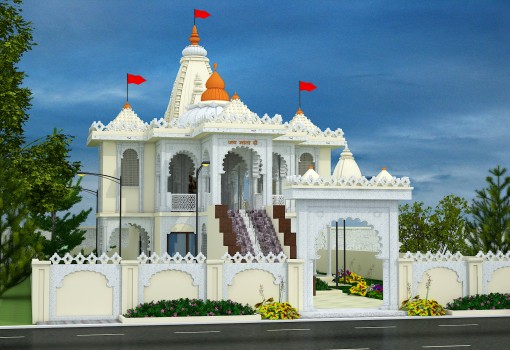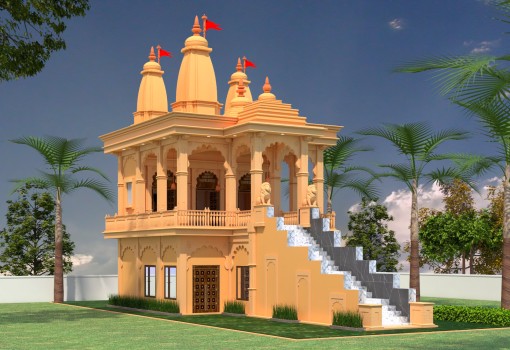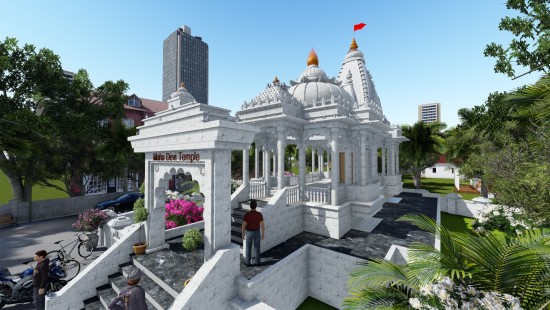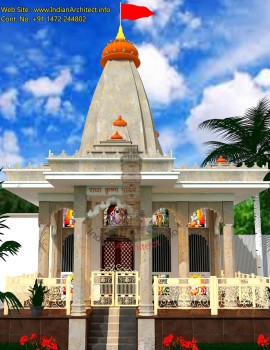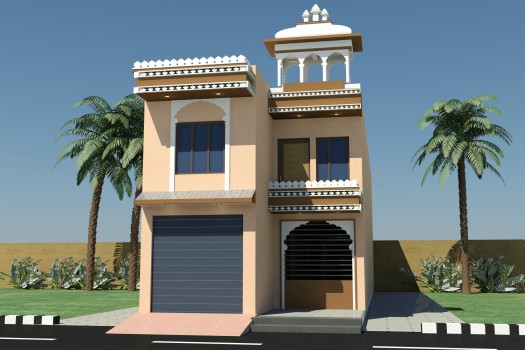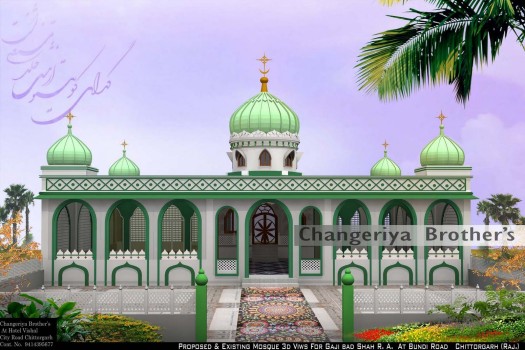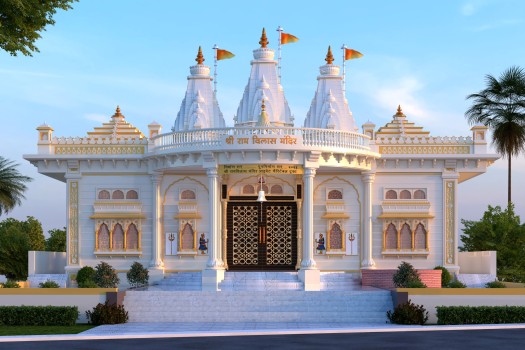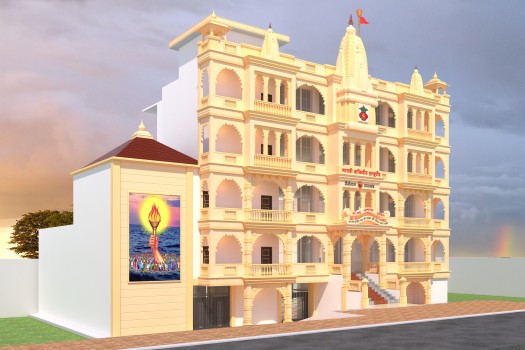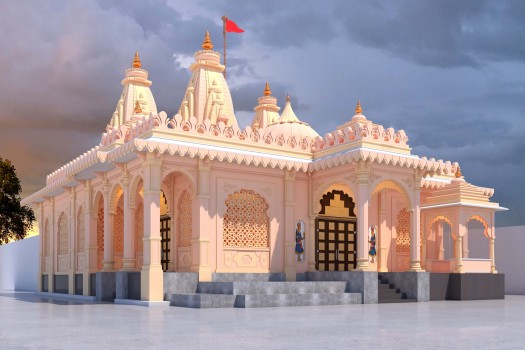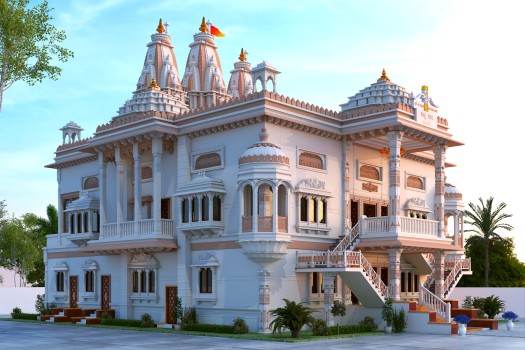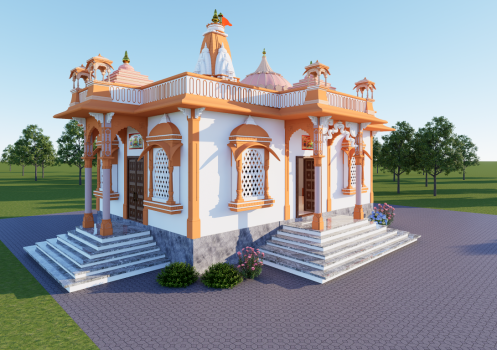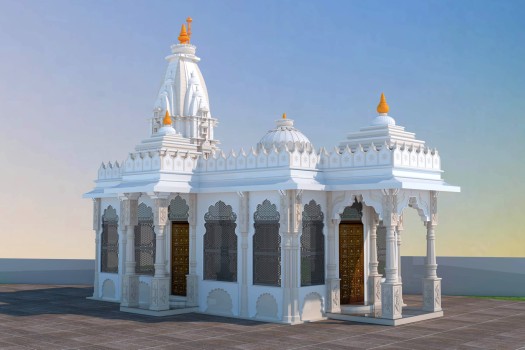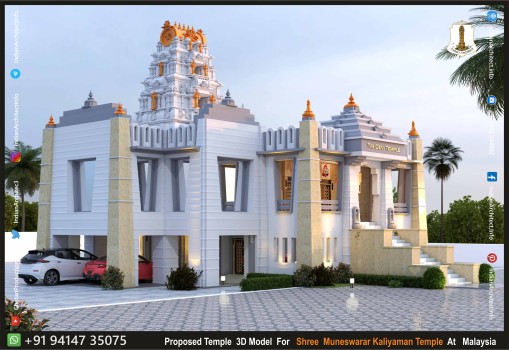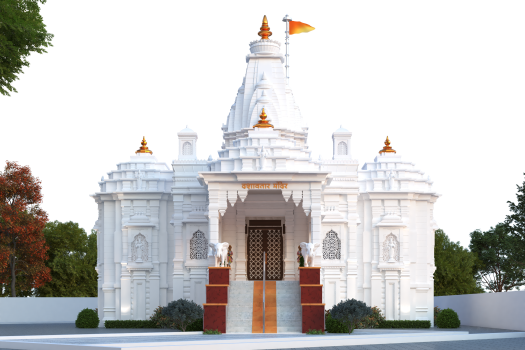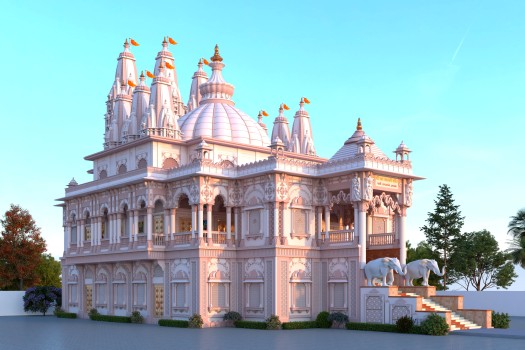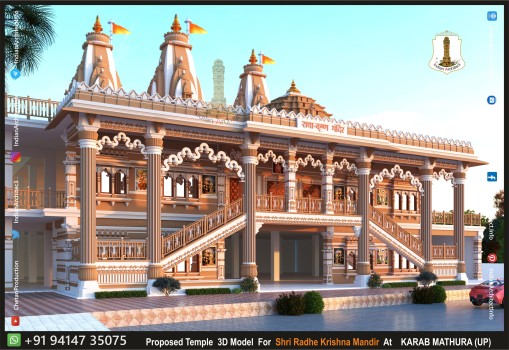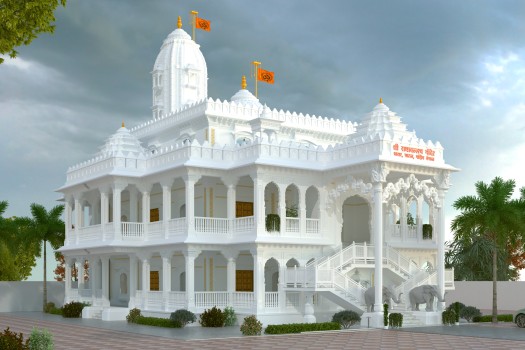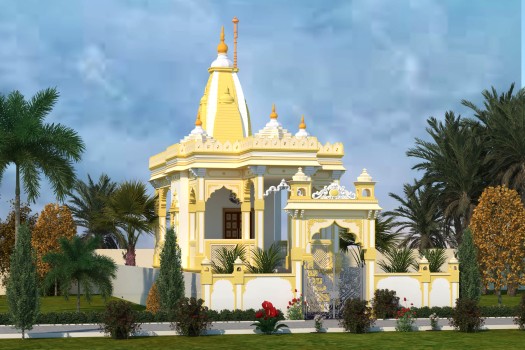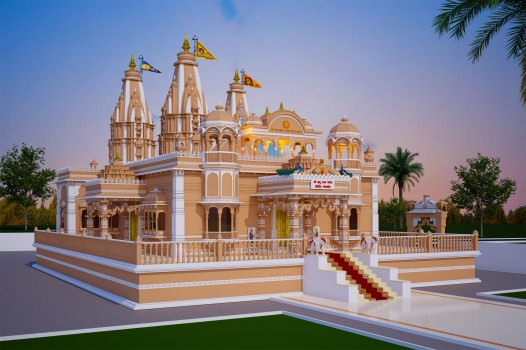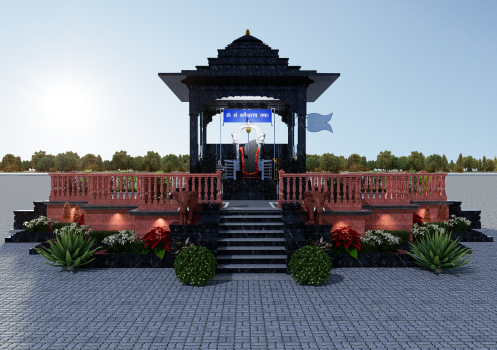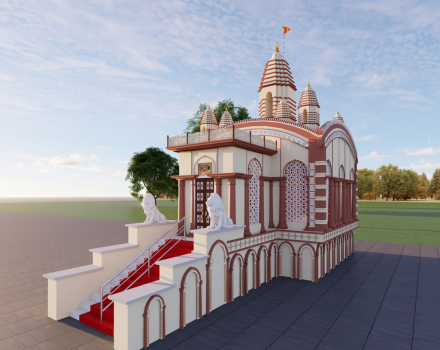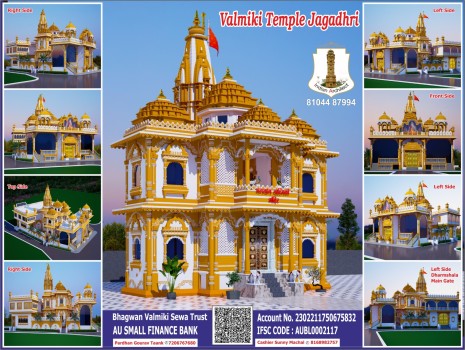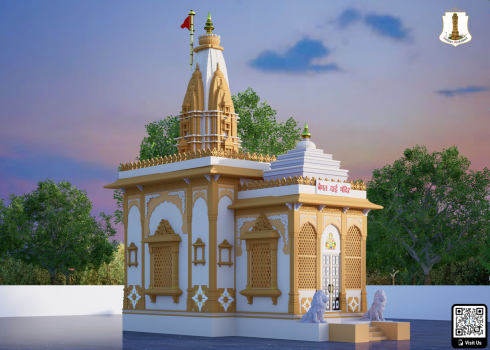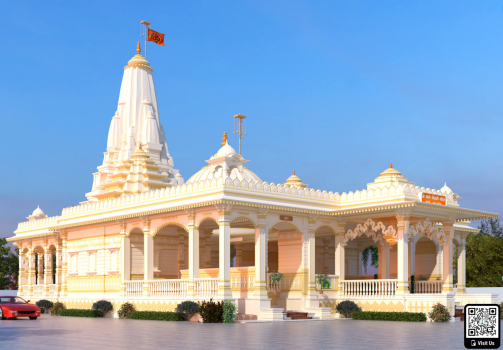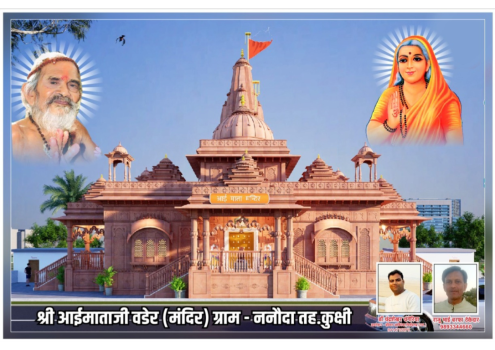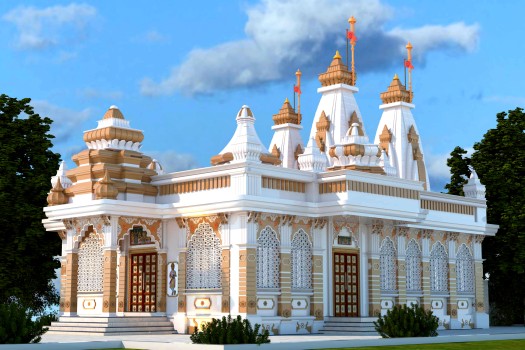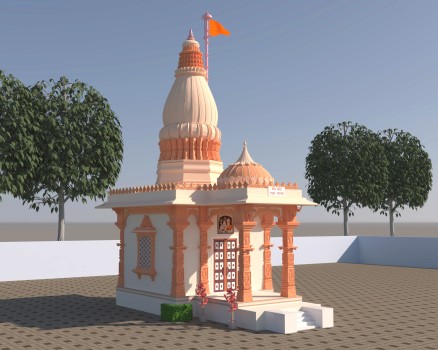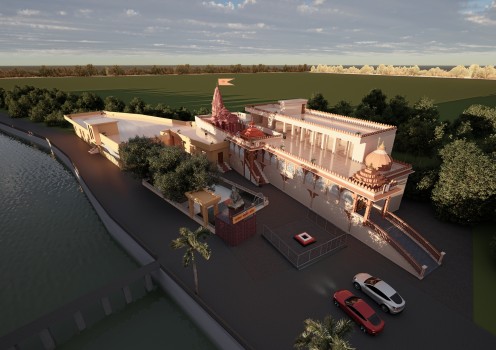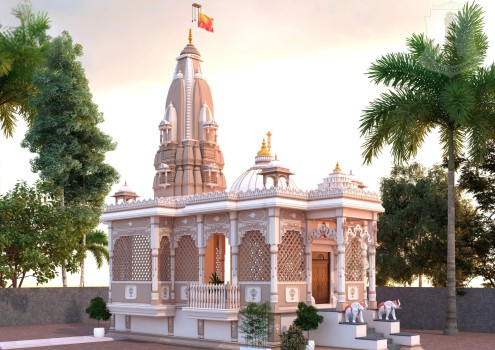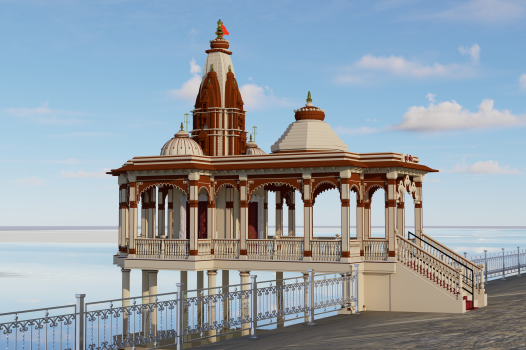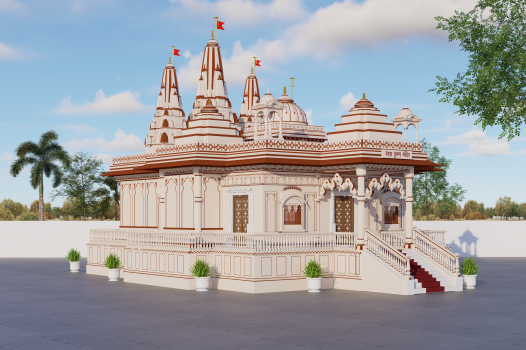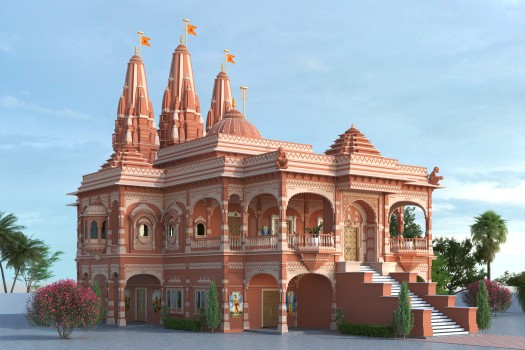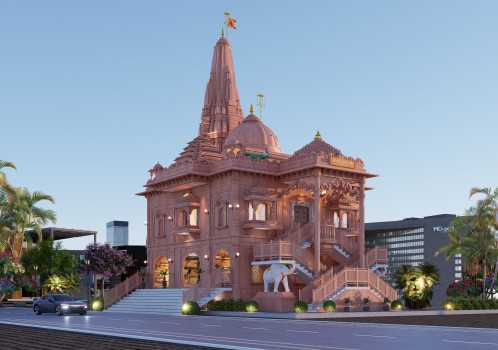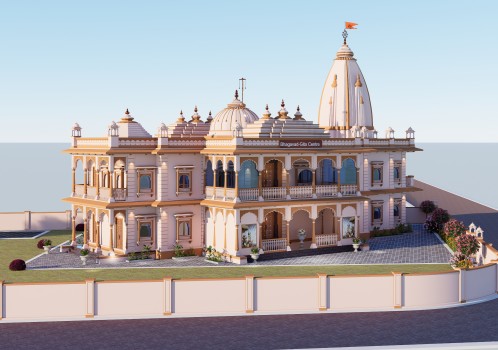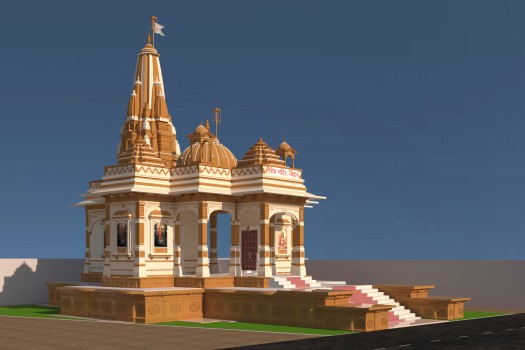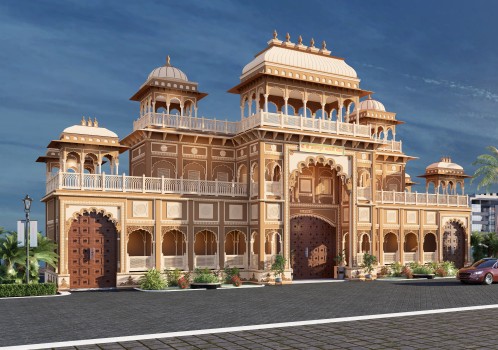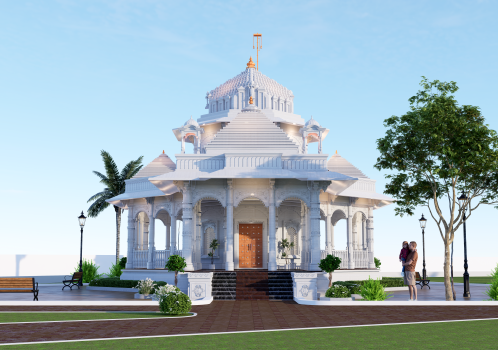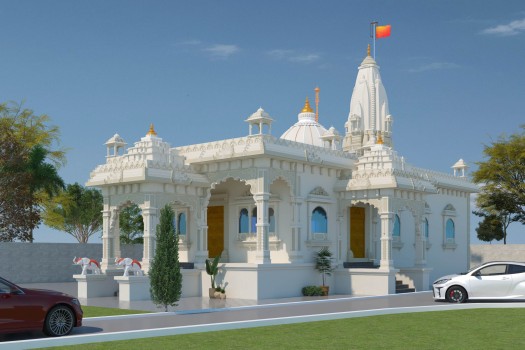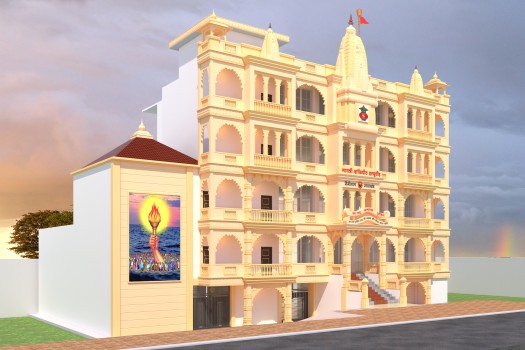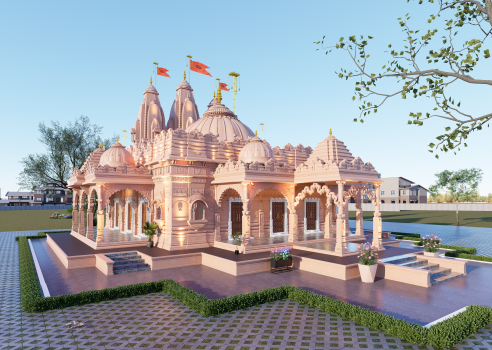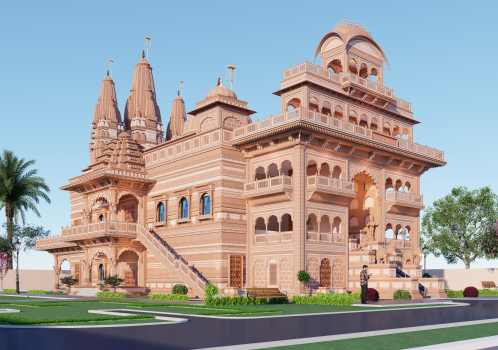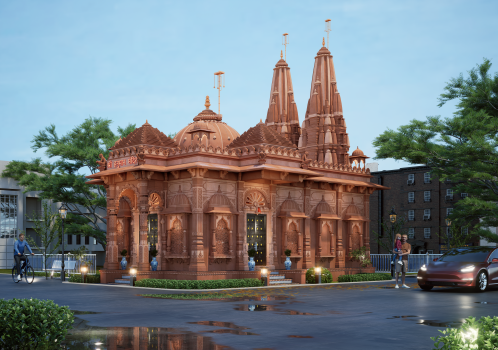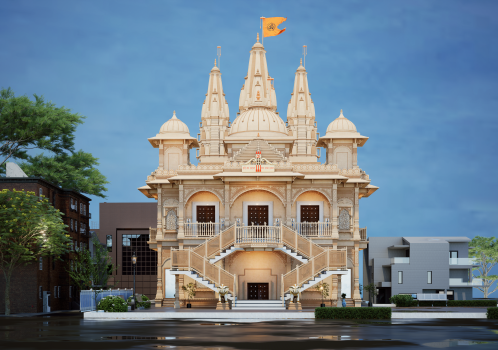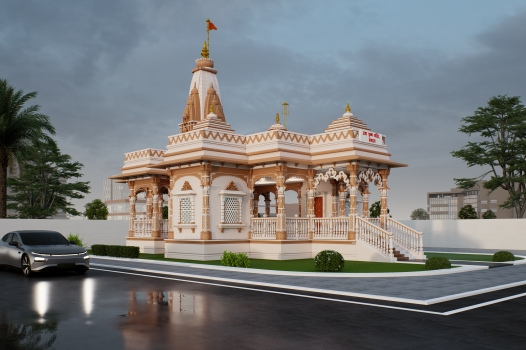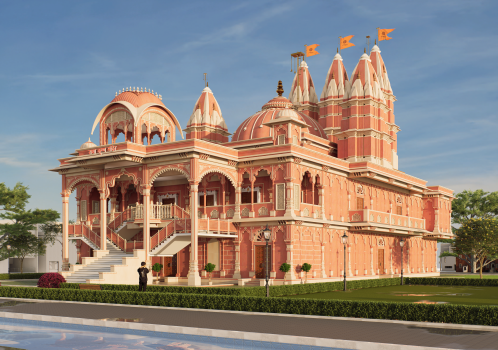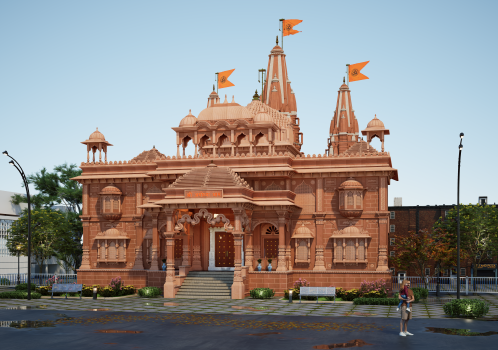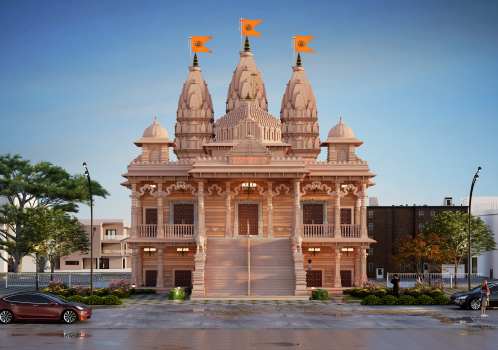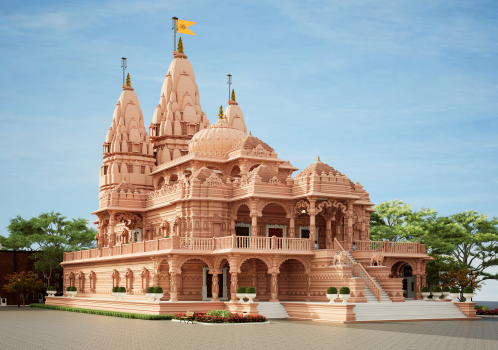
Pink Sandstone Finish: The exterior appears to be crafted from (or inspired by) Pink Sandstone, similar to the famous Bansi Pahadpur stone used in Rajasthan's heritage structures.
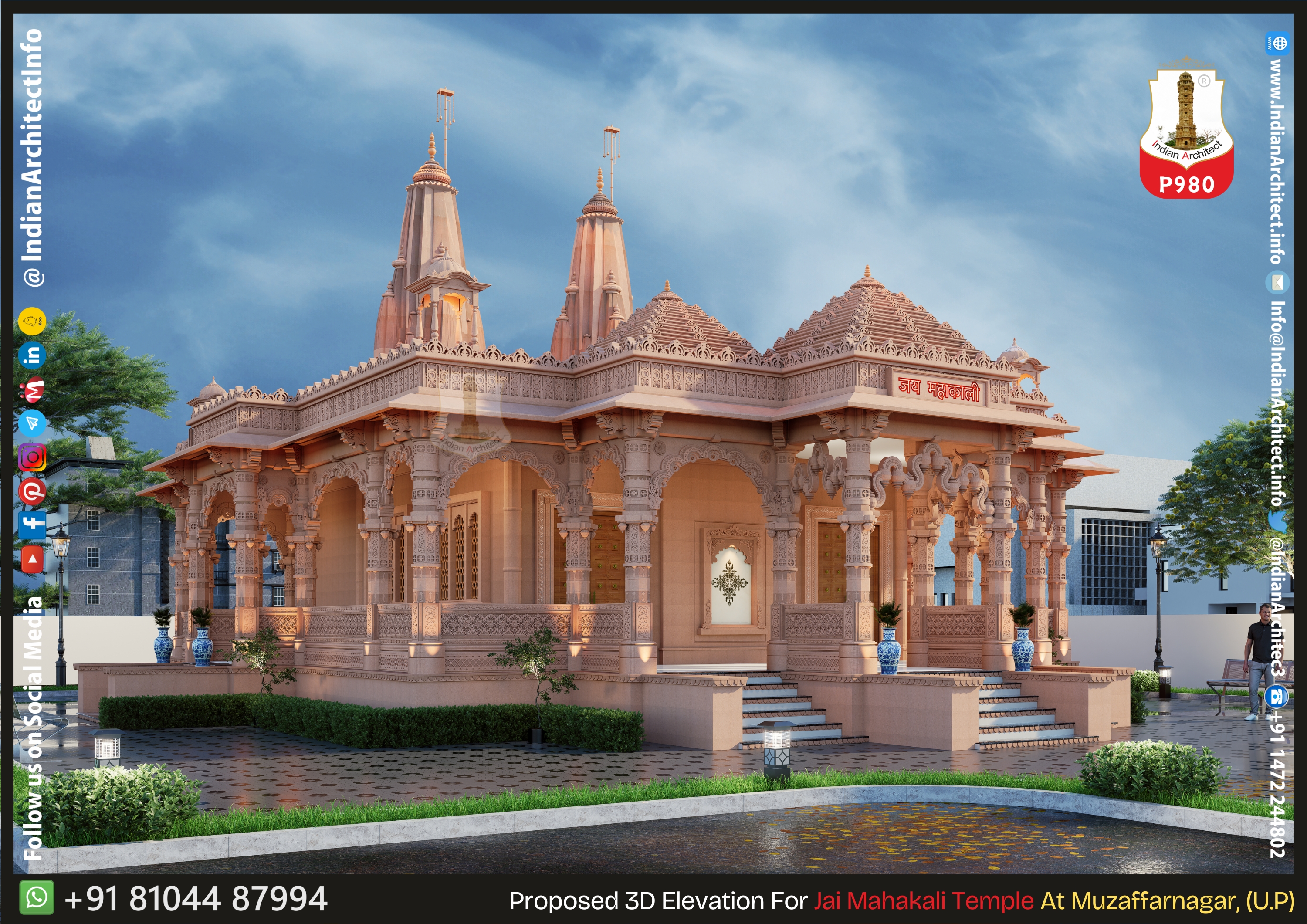
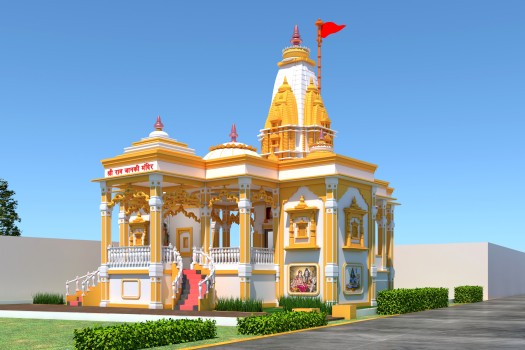
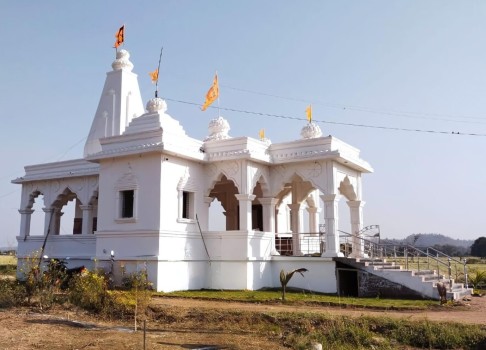
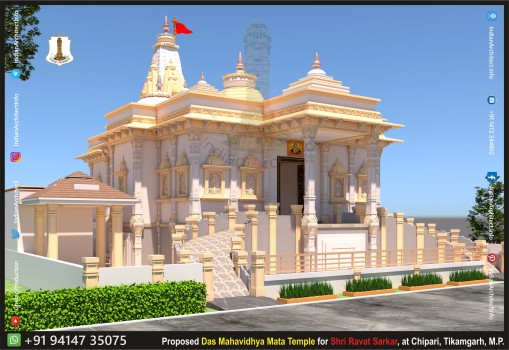
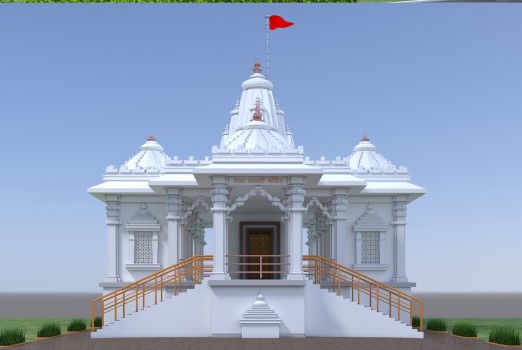
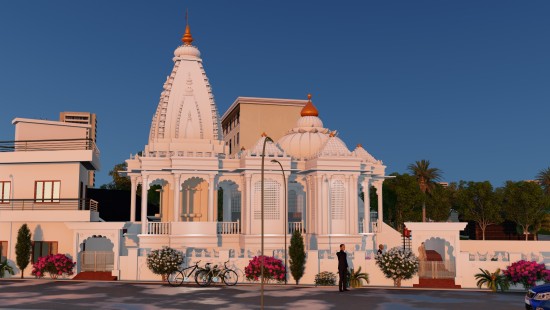
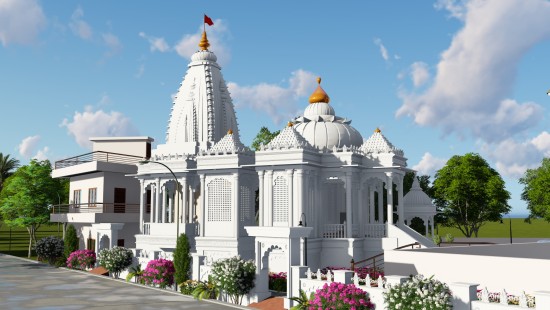
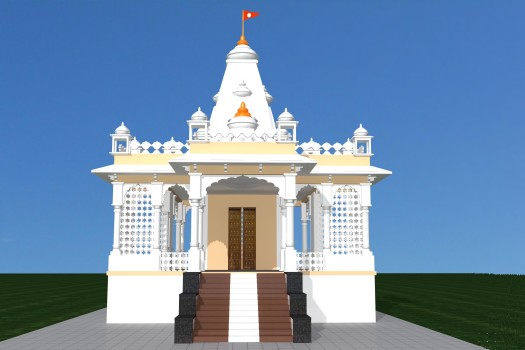
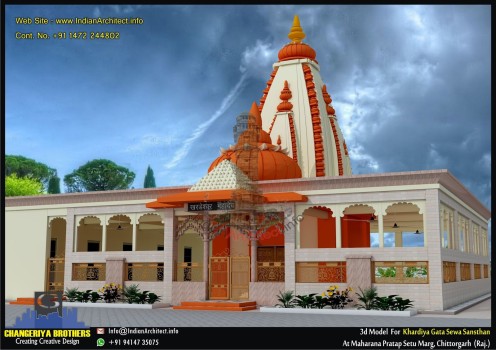
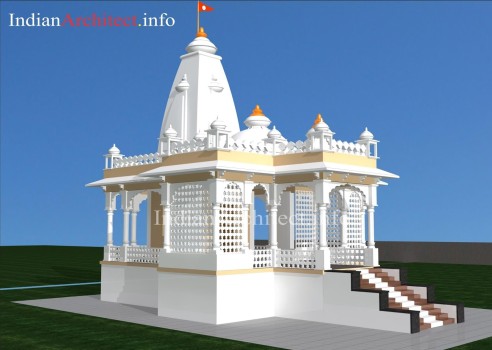
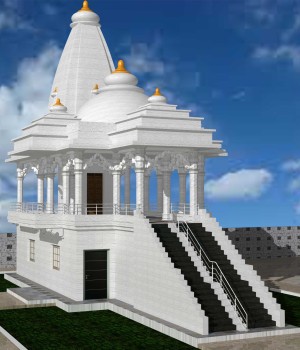
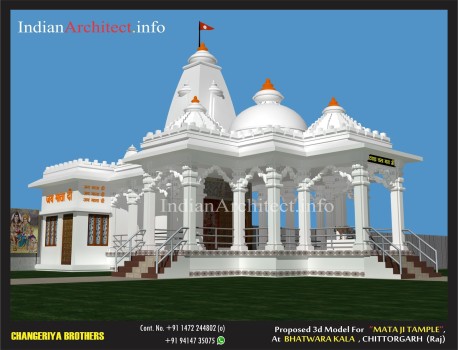
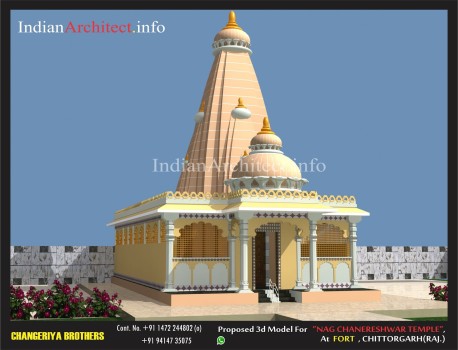
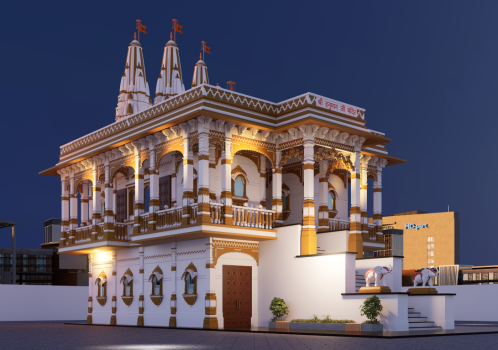
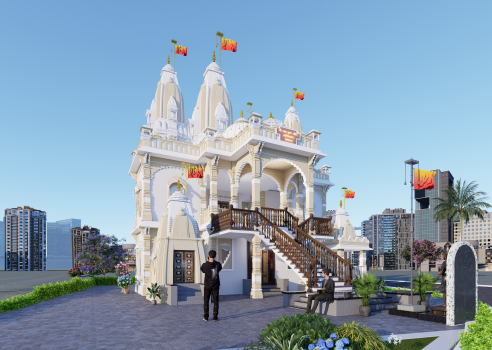
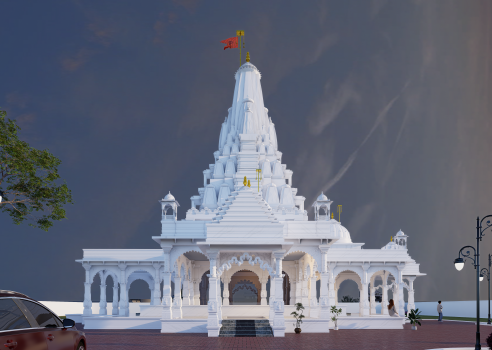
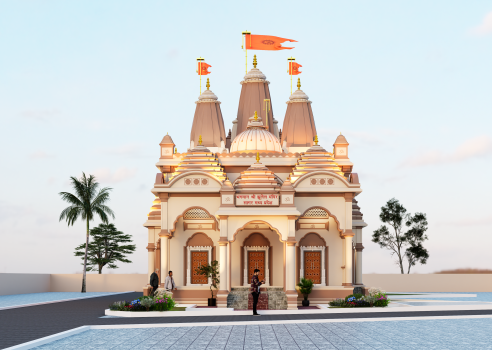
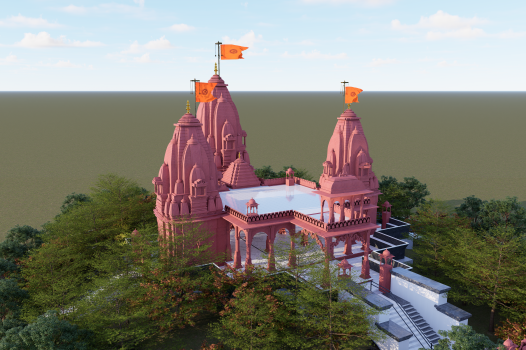
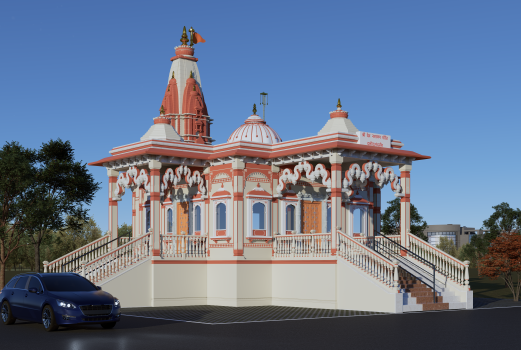
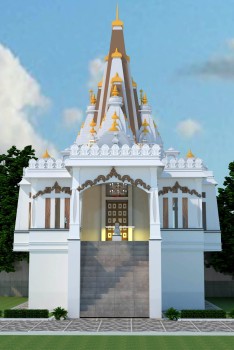
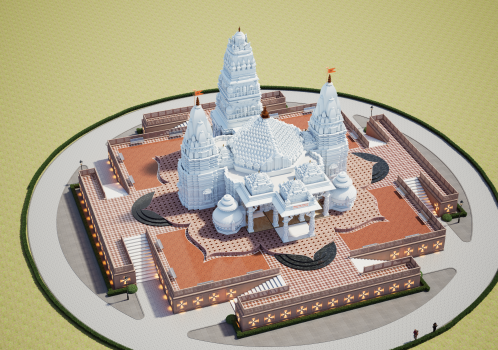
Shikhara (Spires): The temple features two prominent Shikharas at the rear, topped with traditional finials and flag-staff holders.
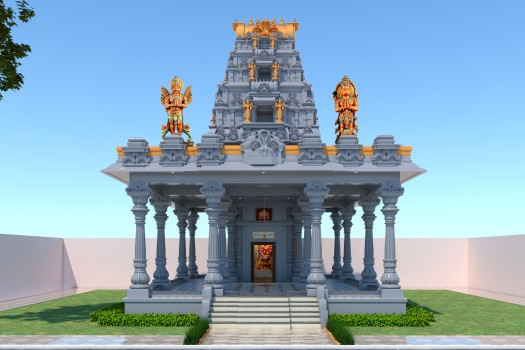
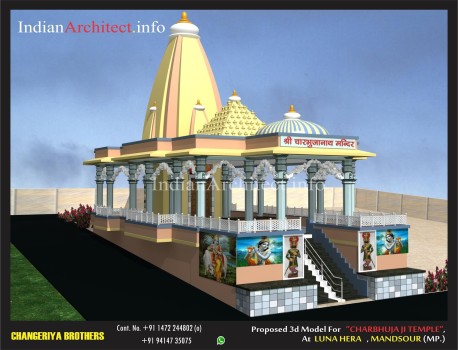
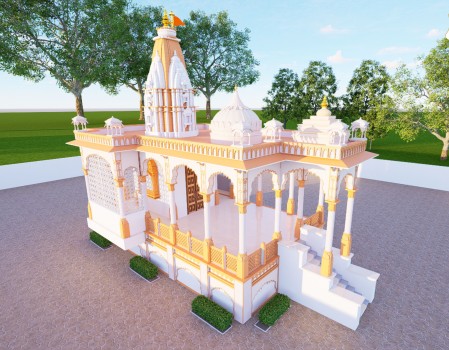
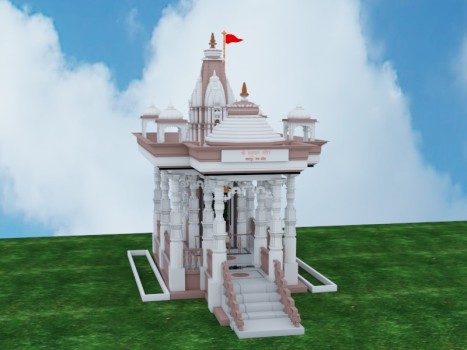
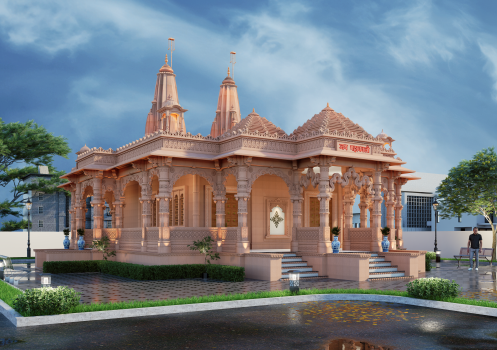
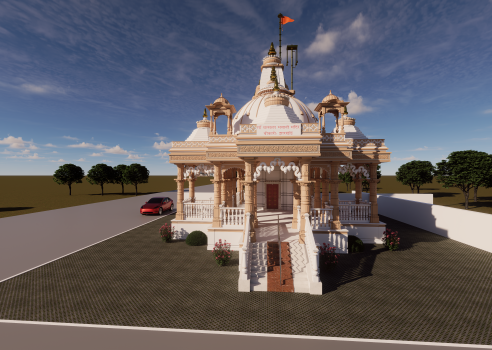
Ornate Mandap: The front portion consists of a spacious Mandap (assembly hall) supported by beautifully carved pillars.
Exquisite Carving: Every inch of the pillars and the roof edges (cornices) features high-relief traditional carvings, showcasing intricate craftsmanship.
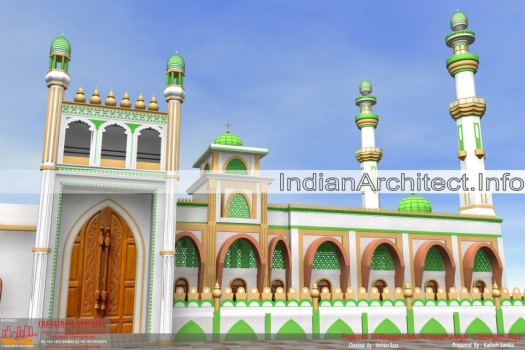
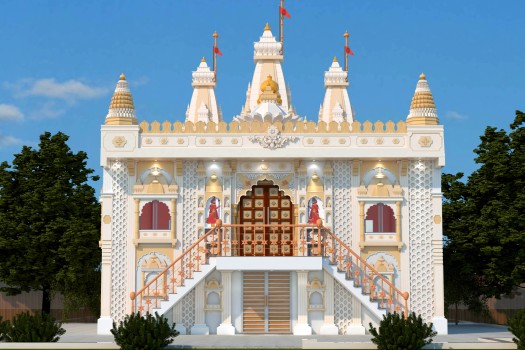
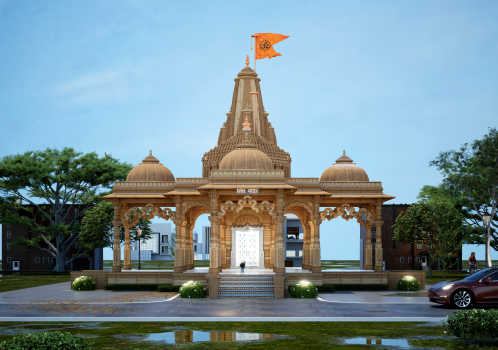
Arches and Torans: The entrance is defined by delicate floral arches (Mehraabs) that give the structure a royal and sacred aesthetic.
Symmetry: The entire building follows a strict symmetrical layout, which is a core principle of Vastu Shastra and traditional temple design.
Signage: A bold red inscription in Hindi, "जय महाकाली" (Jai Mahakali), is placed above the main entrance for clear identification.
Elevated Plinth (Jagati): The entire temple is built on an elevated platform, protecting it from ground moisture and giving it a grander appearance.
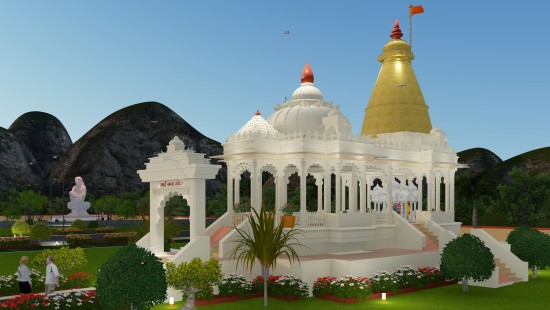
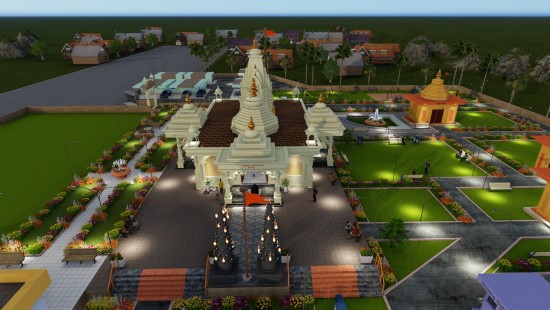
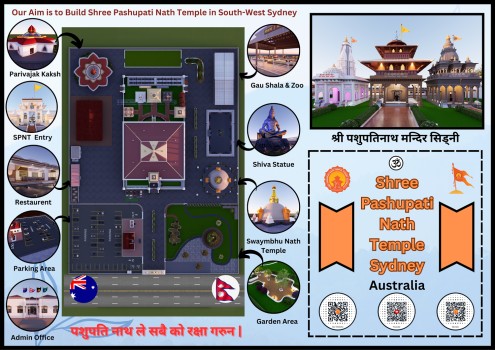
Modern Landscaping: The surroundings include neatly trimmed hedges and grass strips, blending the ancient temple look with a modern park-like setting.
Reflective Flooring: The courtyard features patterned stone tiles that have a polished, wet-look finish, reflecting the temple's beauty.
Decorative Elements: Blue and white ceramic vases are placed strategically at the entrance to add a touch of color and elegance.
Lighting Design: Modern bollard lights and lamp posts are installed along the walkways to highlight the architecture during the evening.
Jali Work: The side walls feature intricate stone latticework (Jalis), which allows for natural ventilation and soft light inside the sanctum.
Urban Integration: The background shows modern buildings and benches, suggesting this temple is designed for a modern residential township or a private estate.
Project Description :
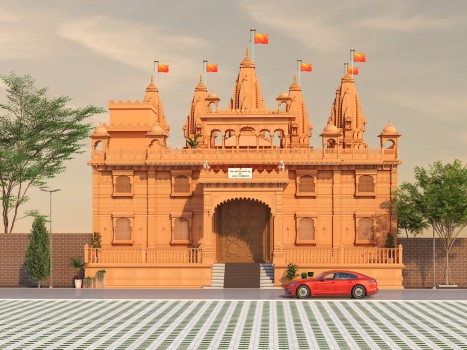
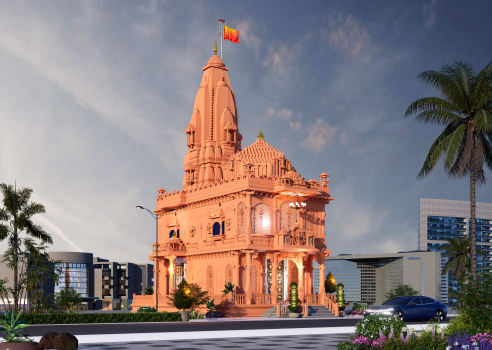
Architectural Style: The temple follows the Nagara style of North India, characterized by its towering spires and ornate stone carvings.
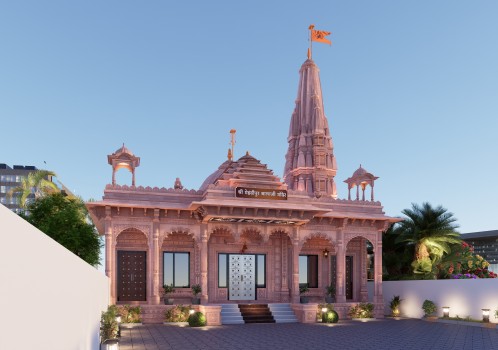
Pink Sandstone Finish: The exterior appears to be crafted from (or inspired by) Pink Sandstone, similar to the famous Bansi Pahadpur stone used in Rajasthan's heritage structures.
Shikhara (Spires): The temple features two prominent Shikharas at the rear, topped with traditional finials and flag-staff holders.
Ornate Mandap: The front portion consists of a spacious Mandap (assembly hall) supported by beautifully carved pillars.
Exquisite Carving: Every inch of the pillars and the roof edges (cornices) features high-relief traditional carvings, showcasing intricate craftsmanship.
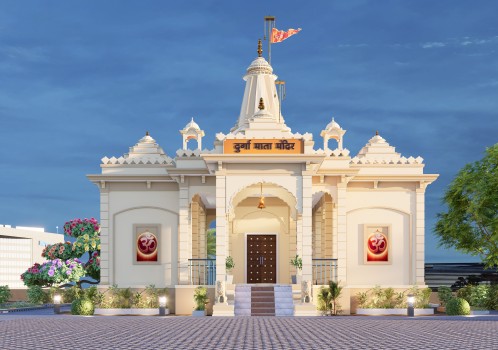
Arches and Torans: The entrance is defined by delicate floral arches (Mehraabs) that give the structure a royal and sacred aesthetic.
Symmetry: The entire building follows a strict symmetrical layout, which is a core principle of Vastu Shastra and traditional temple design.
Signage: A bold red inscription in Hindi, "जय महाकाली" (Jai Mahakali), is placed above the main entrance for clear identification.
Elevated Plinth (Jagati): The entire temple is built on an elevated platform, protecting it from ground moisture and giving it a grander appearance.
Modern Landscaping: The surroundings include neatly trimmed hedges and grass strips, blending the ancient temple look with a modern park-like setting.
Reflective Flooring: The courtyard features patterned stone tiles that have a polished, wet-look finish, reflecting the temple's beauty.
Decorative Elements: Blue and white ceramic vases are placed strategically at the entrance to add a touch of color and elegance.
Lighting Design: Modern bollard lights and lamp posts are installed along the walkways to highlight the architecture during the evening.
Jali Work: The side walls feature intricate stone latticework (Jalis), which allows for natural ventilation and soft light inside the sanctum.
Urban Integration: The background shows modern buildings and benches, suggesting this temple is designed for a modern residential township or a private estate.