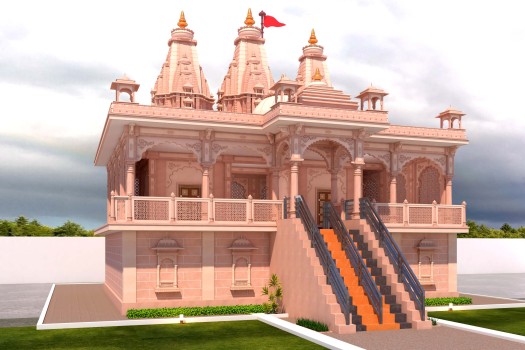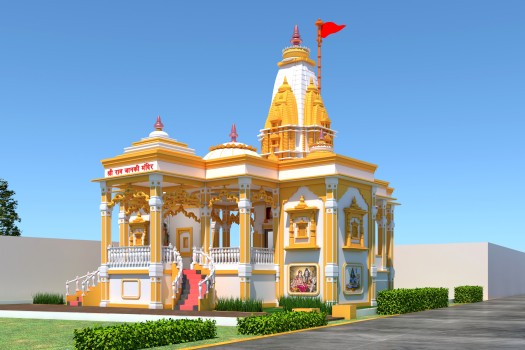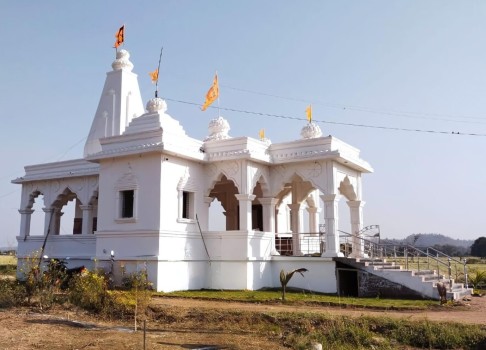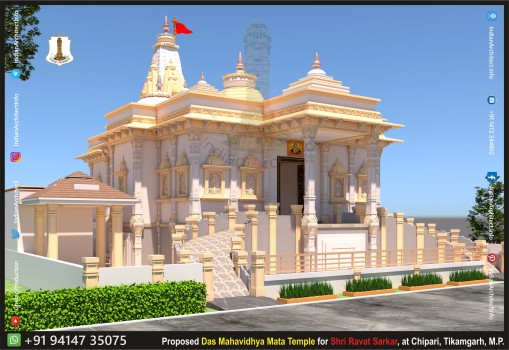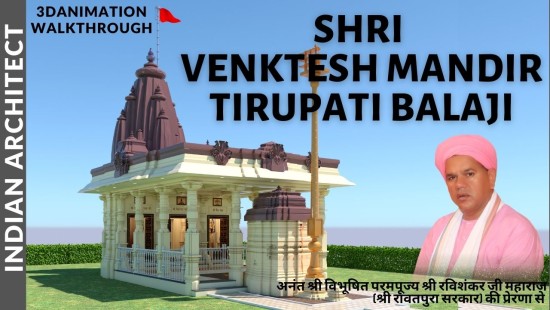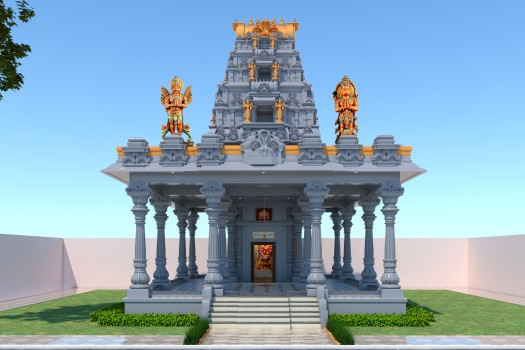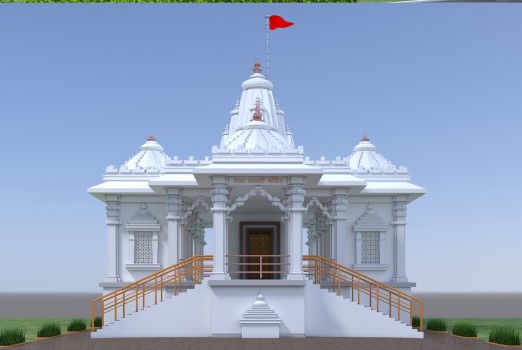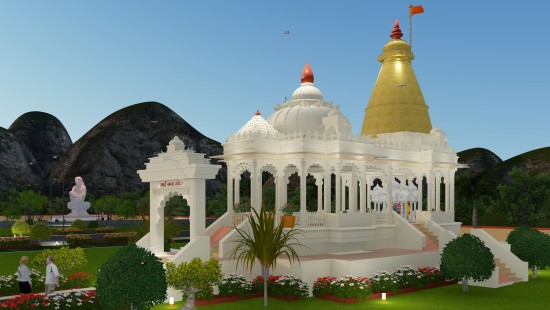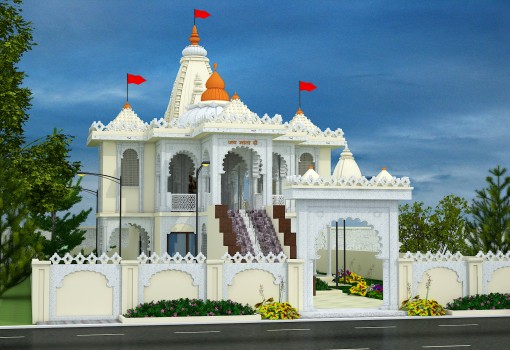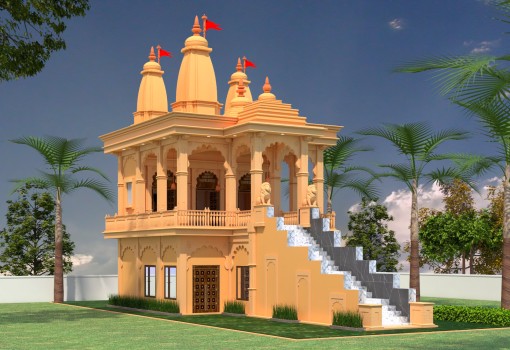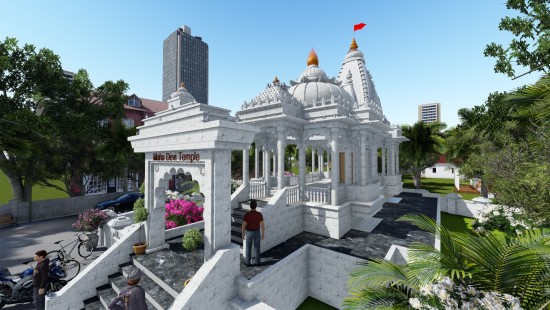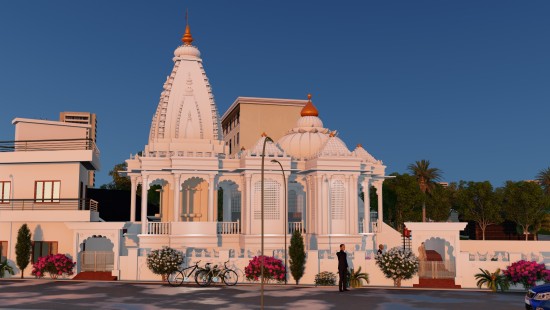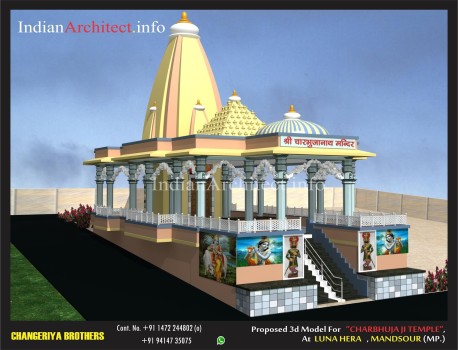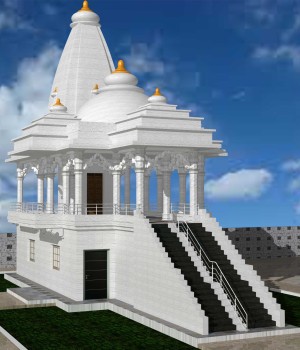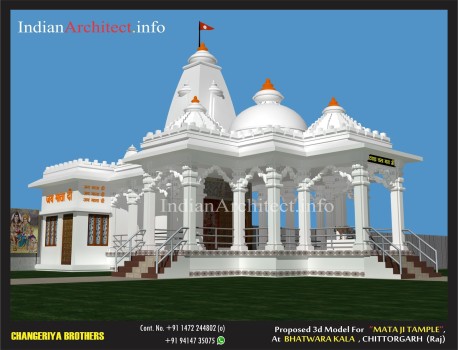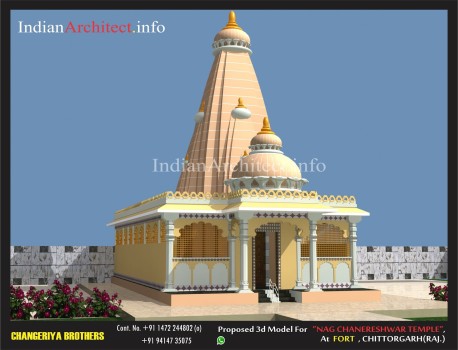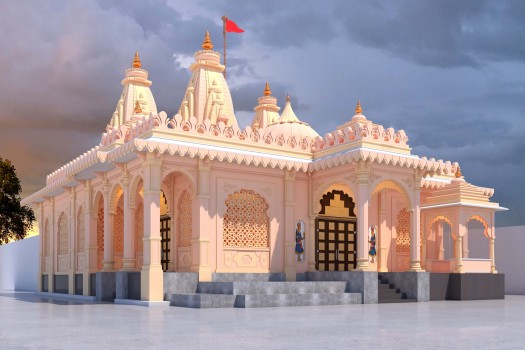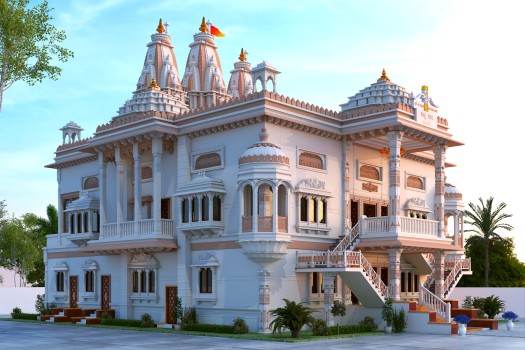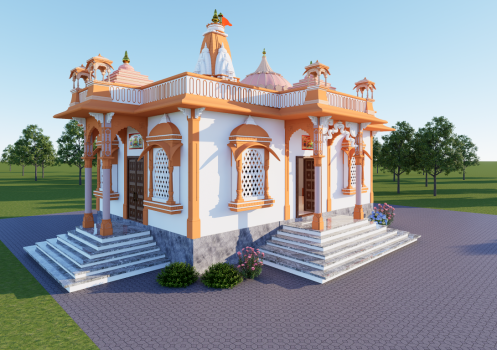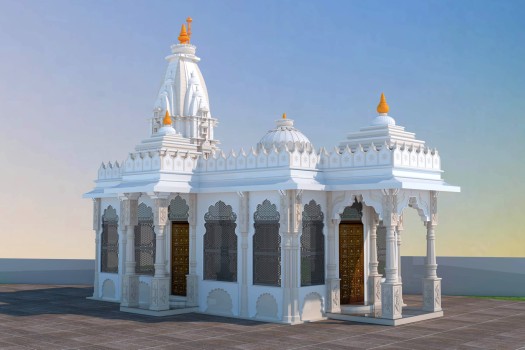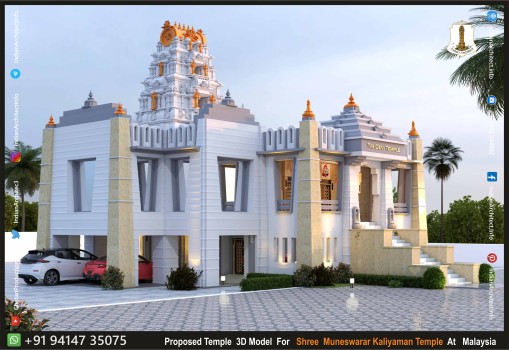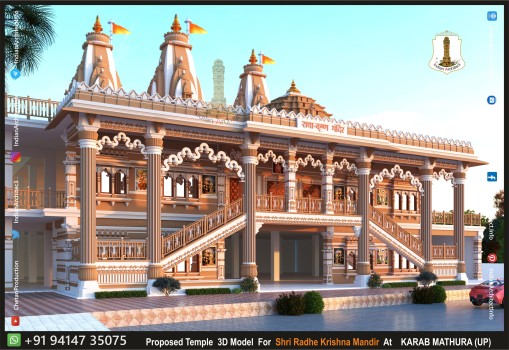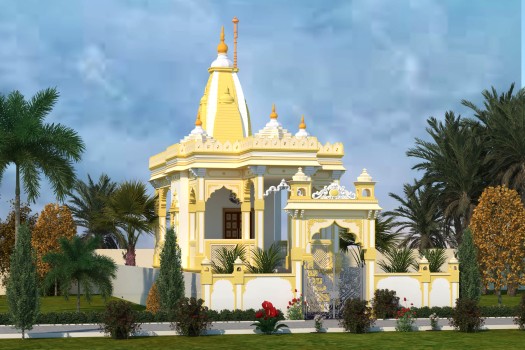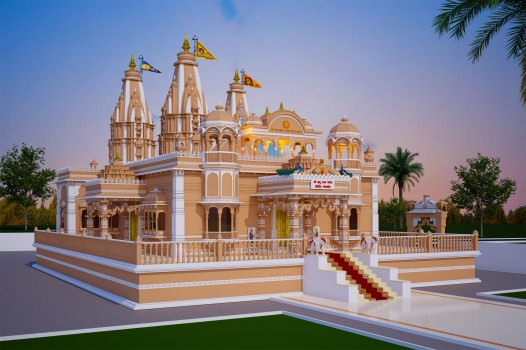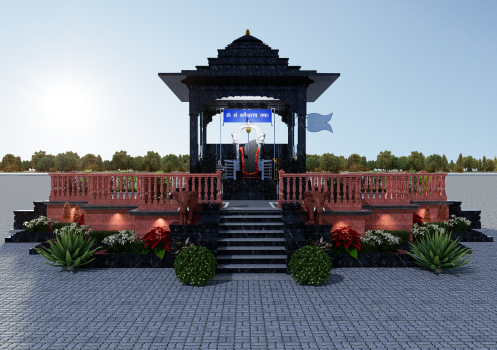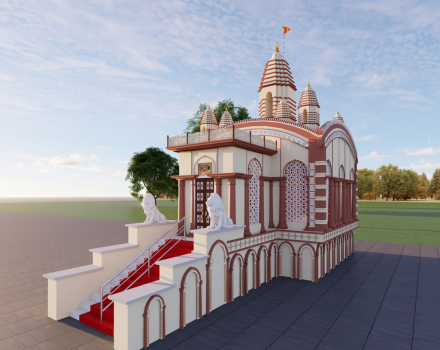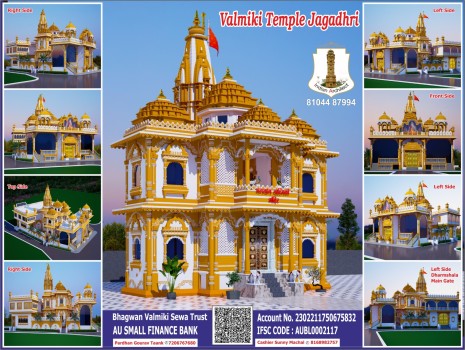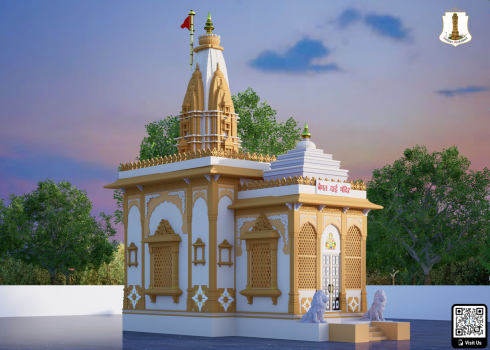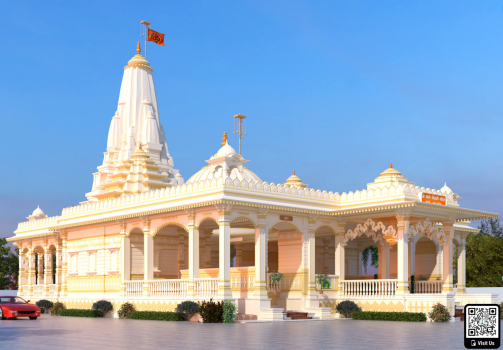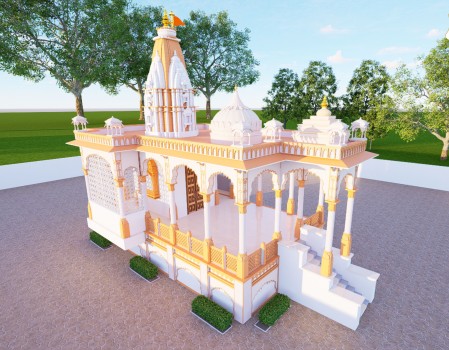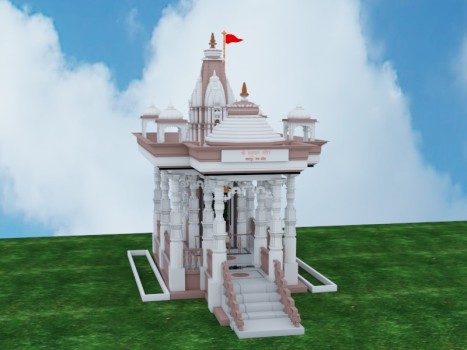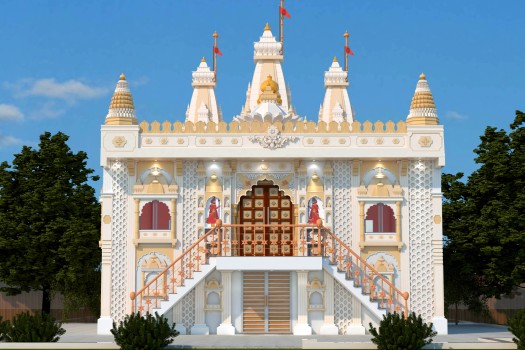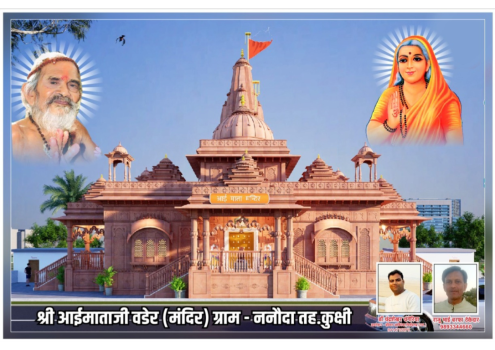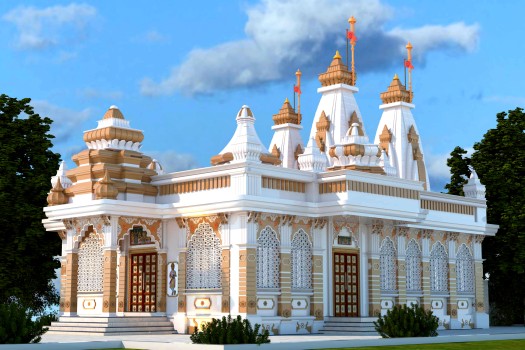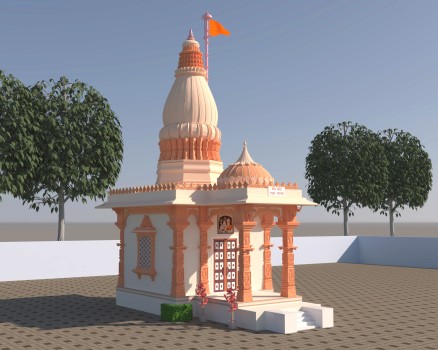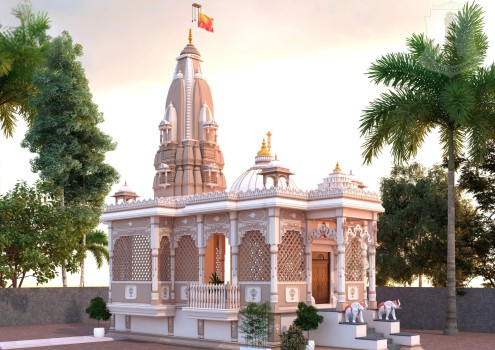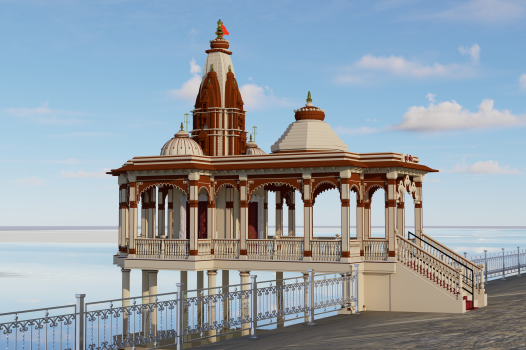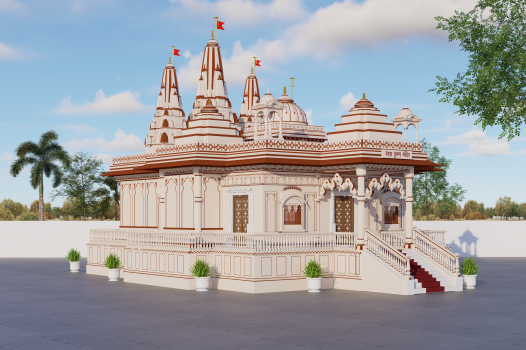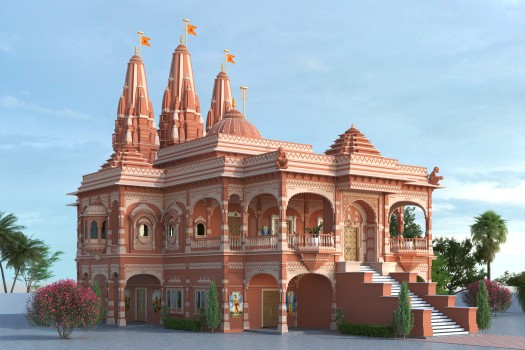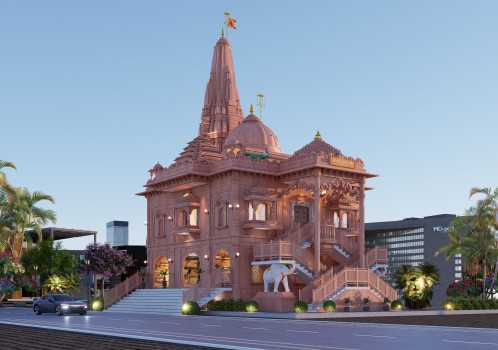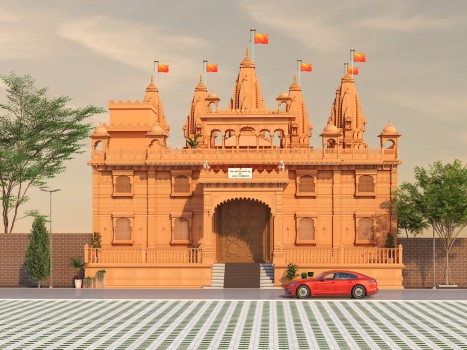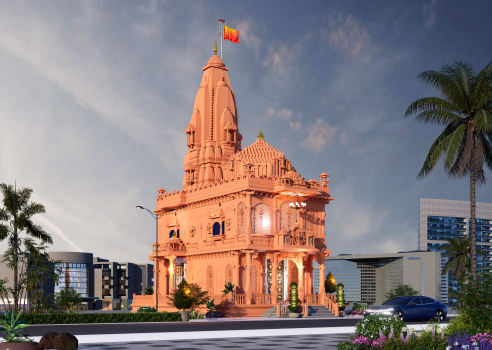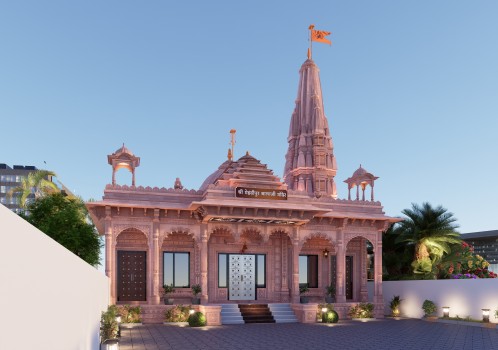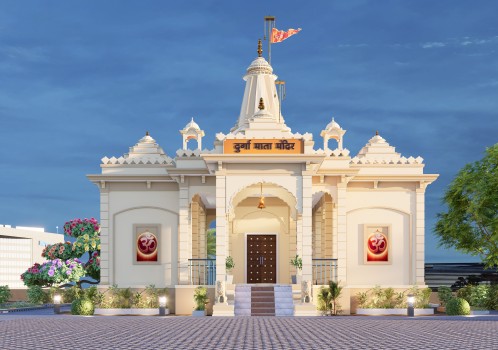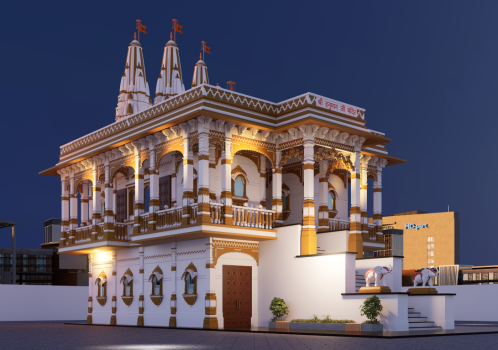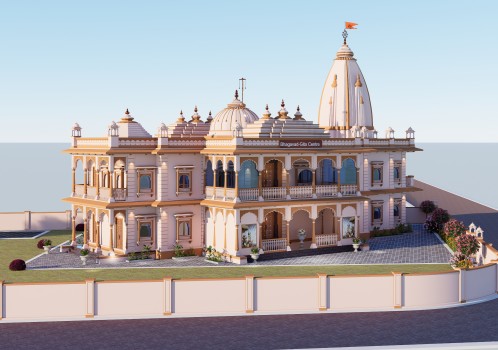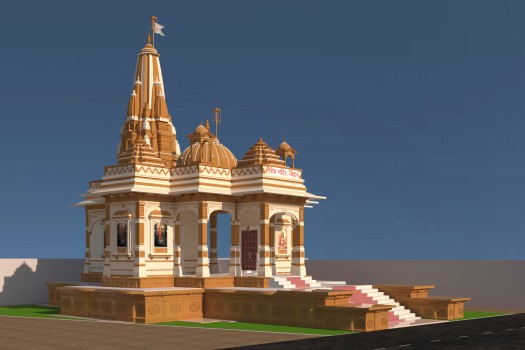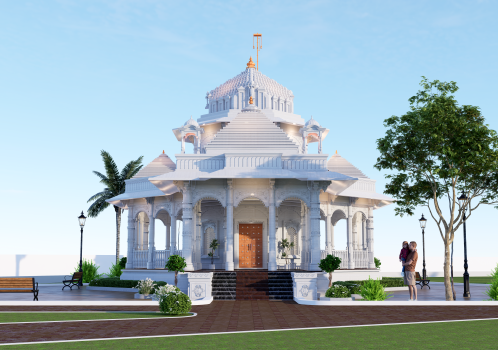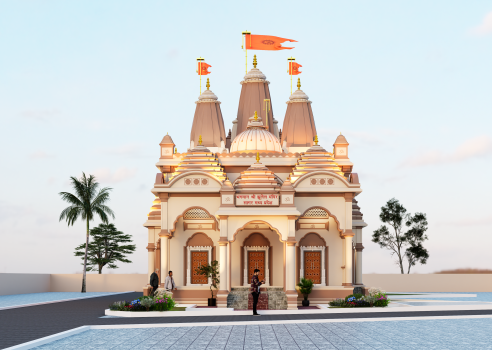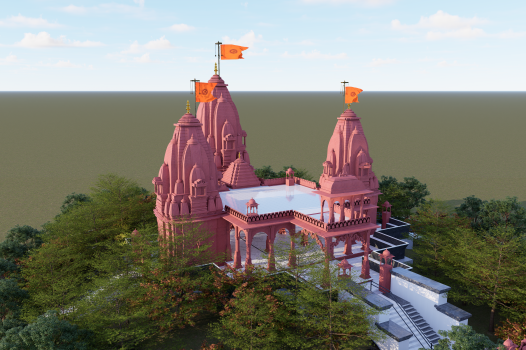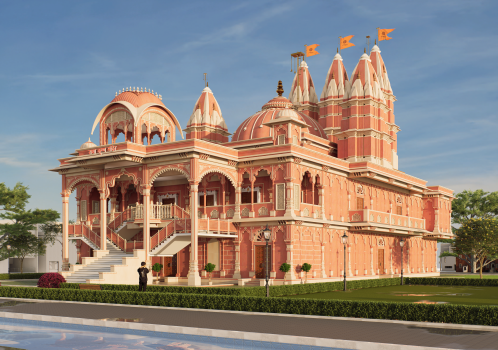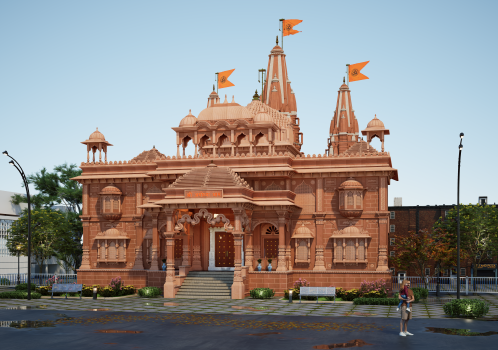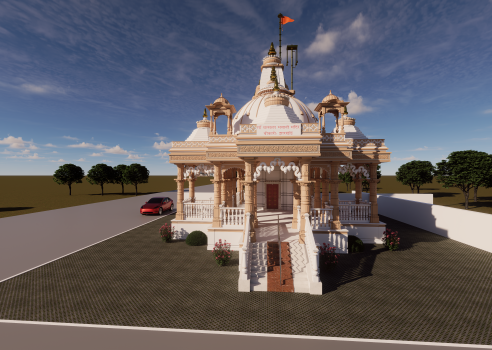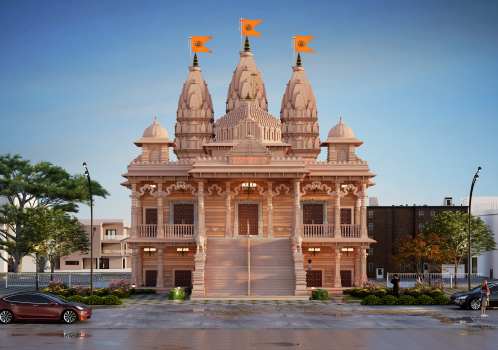
Central Shikhara (Dome): The structure features a grand, multi-layered dome with intricate horizontal carvings, symbolizing spiritual elevation.
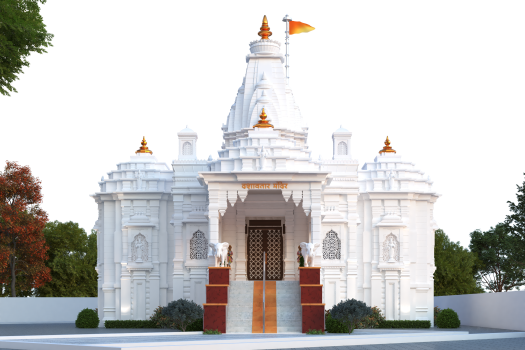
Golden Finials: At the very top, there is a golden Kalash and a flag post, which are traditional markers of a sacred space in Indian architecture.
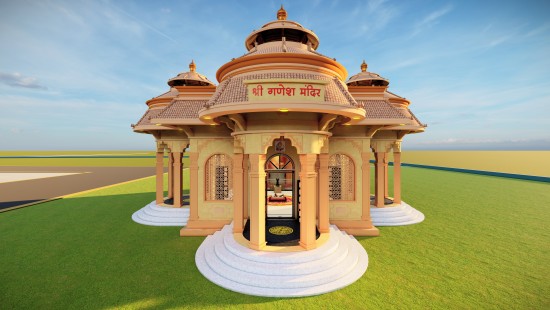
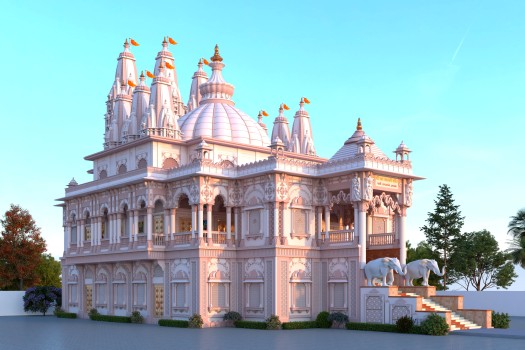
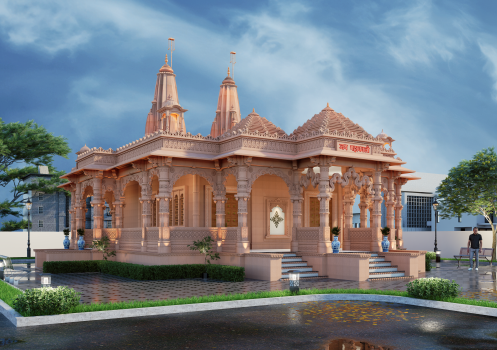
Ornate Pillars: The open pavilion (Mandap) is supported by highly detailed carved pillars that showcase traditional craftsmanship.
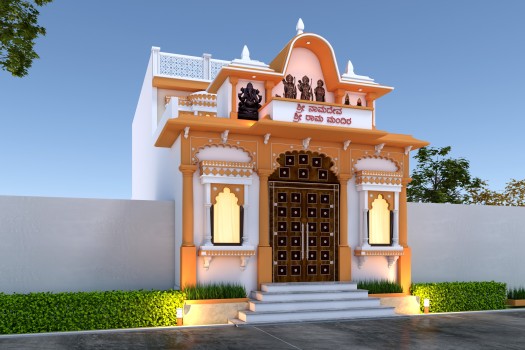
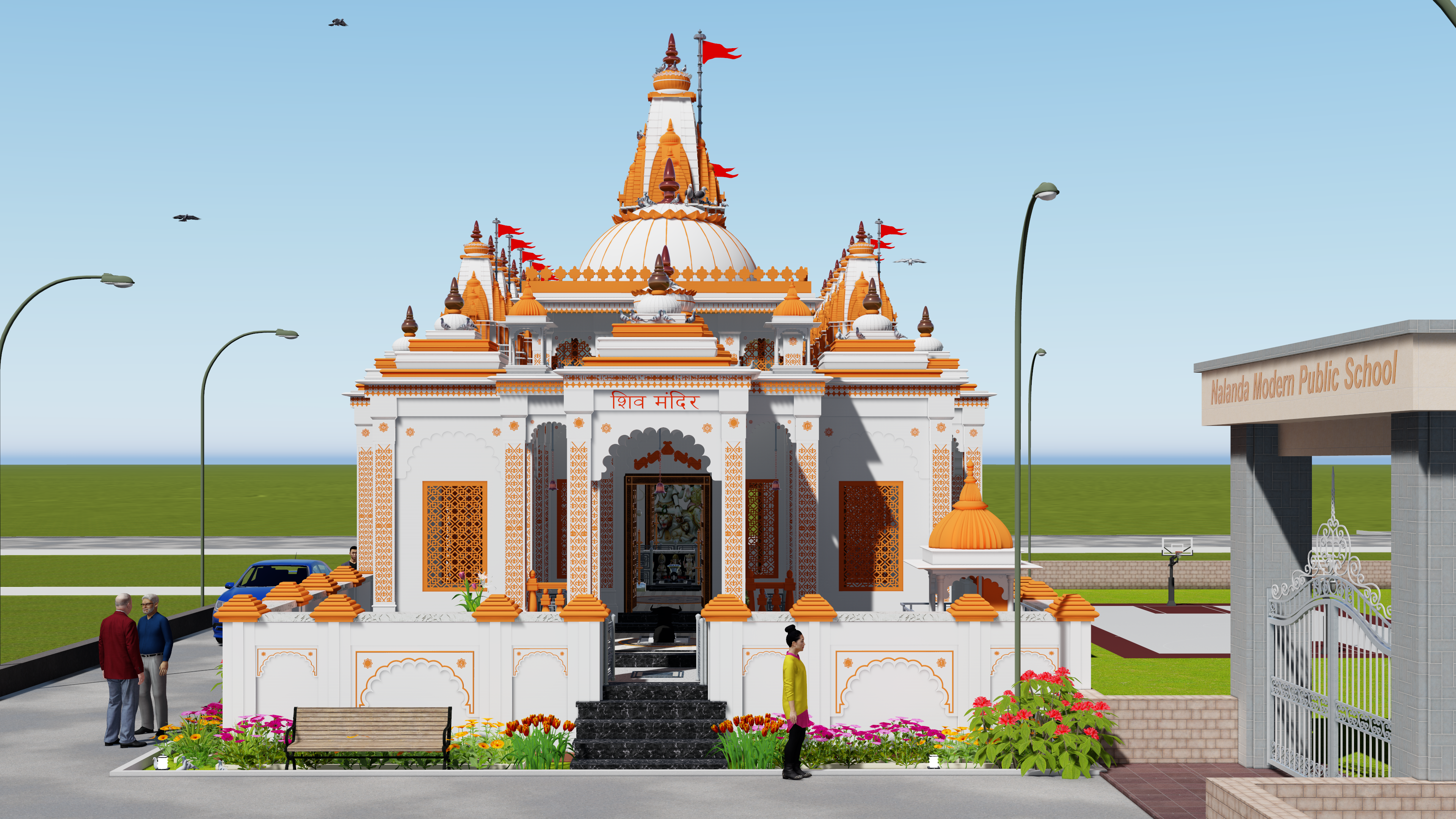
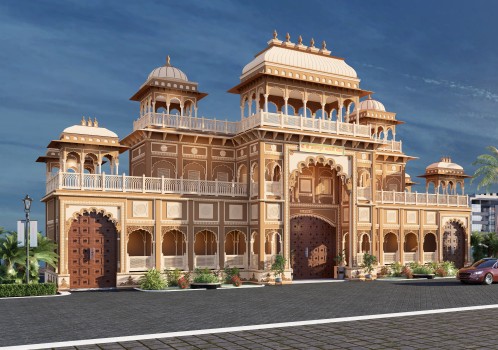
Main Entrance: The primary doorway is crafted from high-quality polished wood with brass or gold-toned studs, giving it a regal and welcoming look.
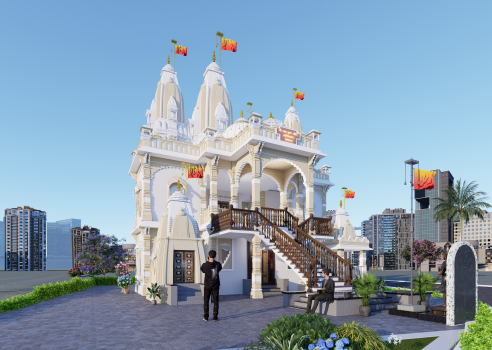
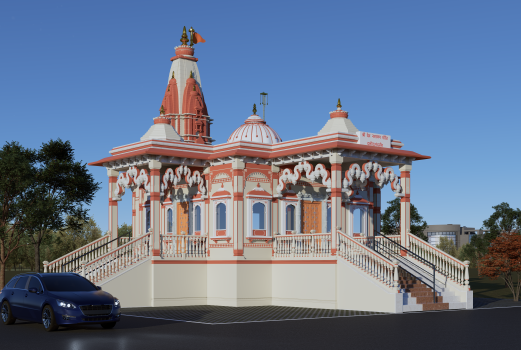
Grand Staircase: The entrance features a contrasting dark marble or granite staircase, providing a majestic approach to the elevated platform.
Open Mandapa Design: The structure follows an open-air layout, allowing for natural light and cross-ventilation, which is ideal for meditation and gatherings.
Intricate Jali Work: The walls and railings feature lattice-work (Jalis), which adds a delicate aesthetic while providing privacy and airflow.
Raised Plinth (Jagati): The entire ashram sits on a raised foundation, protecting the structure and giving it a prominent, towering presence.
Symmetry and Proportions: The design follows strict Vastu-compliant symmetry, ensuring a balanced and harmonious visual experience from all angles.
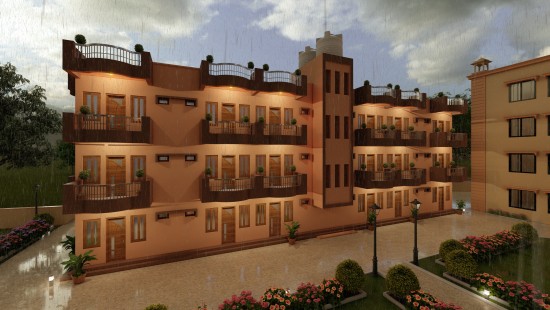
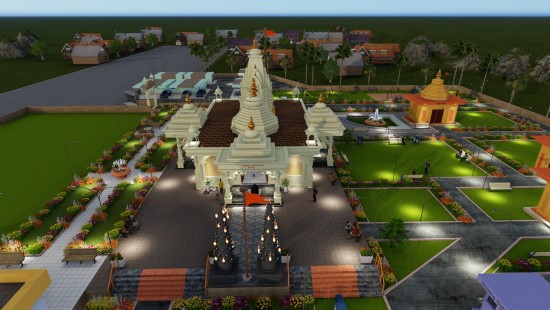
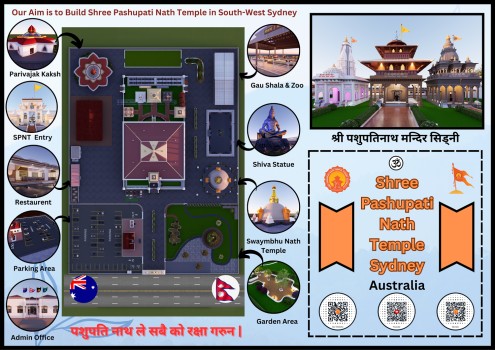
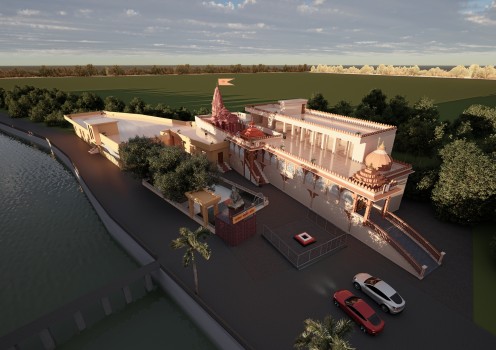
Landscaping: The surroundings include manicured lawns, decorative shrubs, and palm trees that create a serene, "Zen-like" atmosphere.
Pathways: The foreground features a patterned cobblestone or tile walkway, designed for easy circulation of visitors around the premises.
Outdoor Lighting: Modern black Victorian-style lamp posts are strategically placed to illuminate the pathways during evening hours.
Social Spaces: The inclusion of wooden benches and open green spaces suggests a focus on community interaction and peaceful reflection.
Color Palette: The dominant monochromatic white theme represents purity and peace, contrasted only by the natural greens of the garden and the dark tones of the stairs.
Project Description :
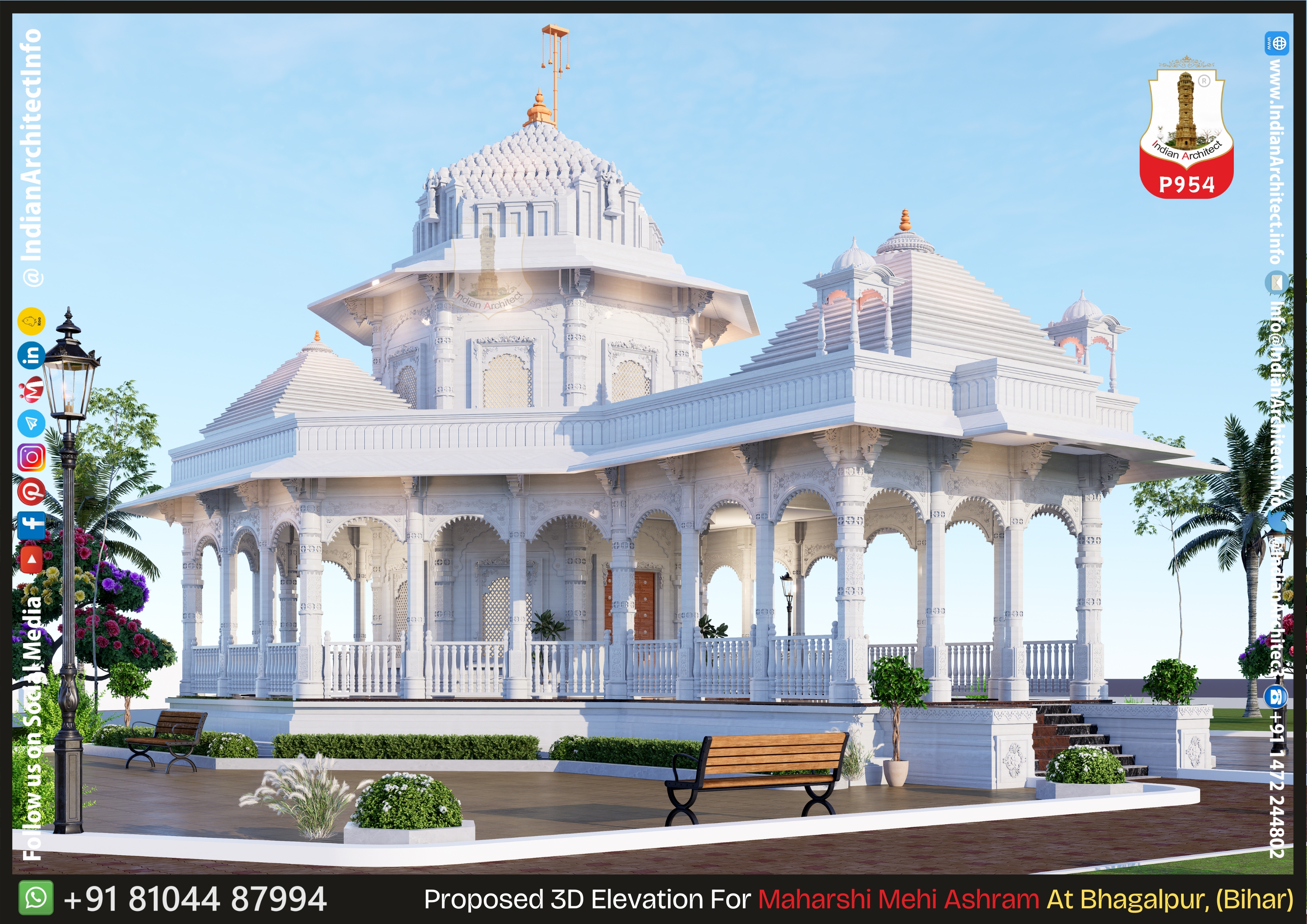
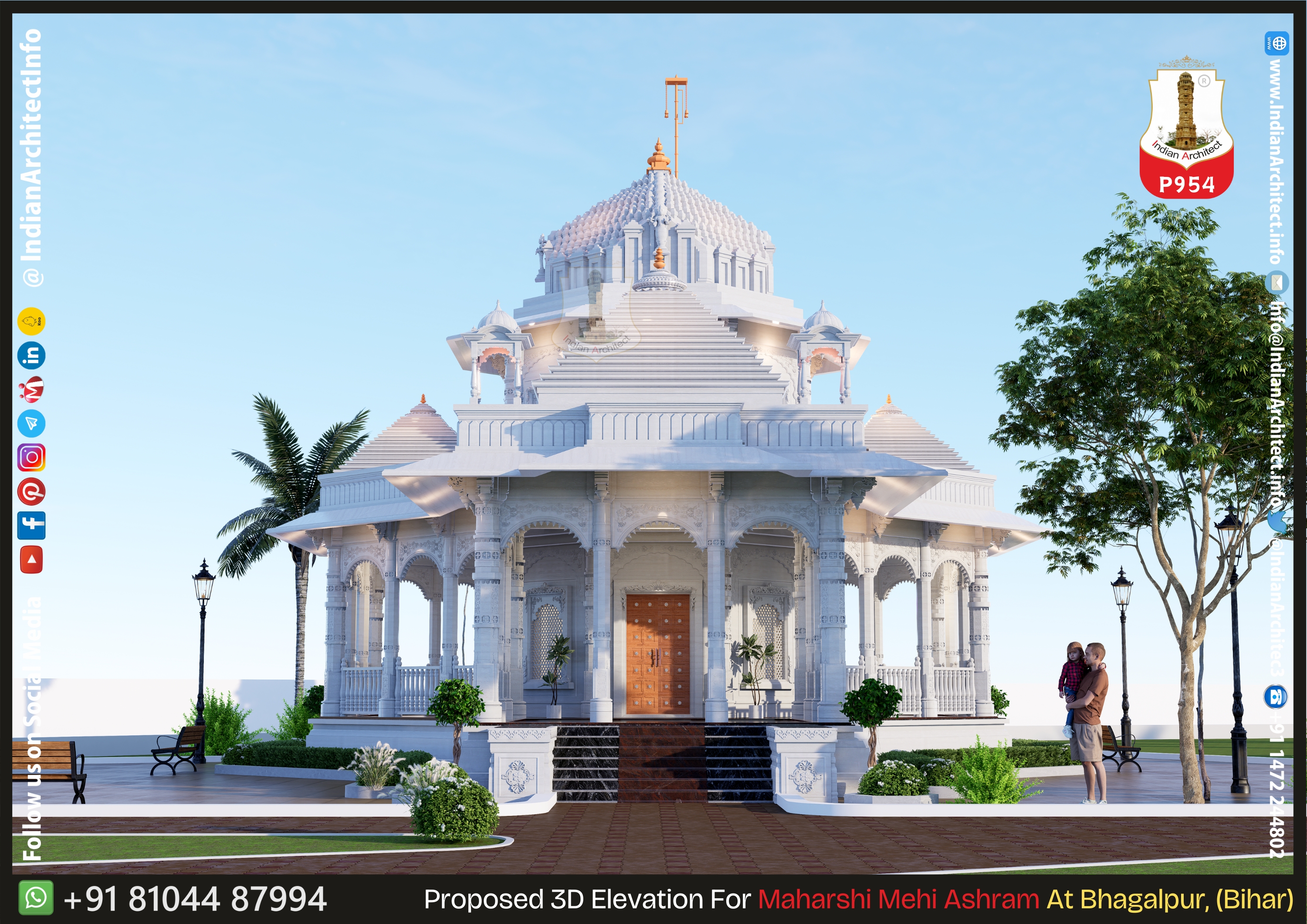
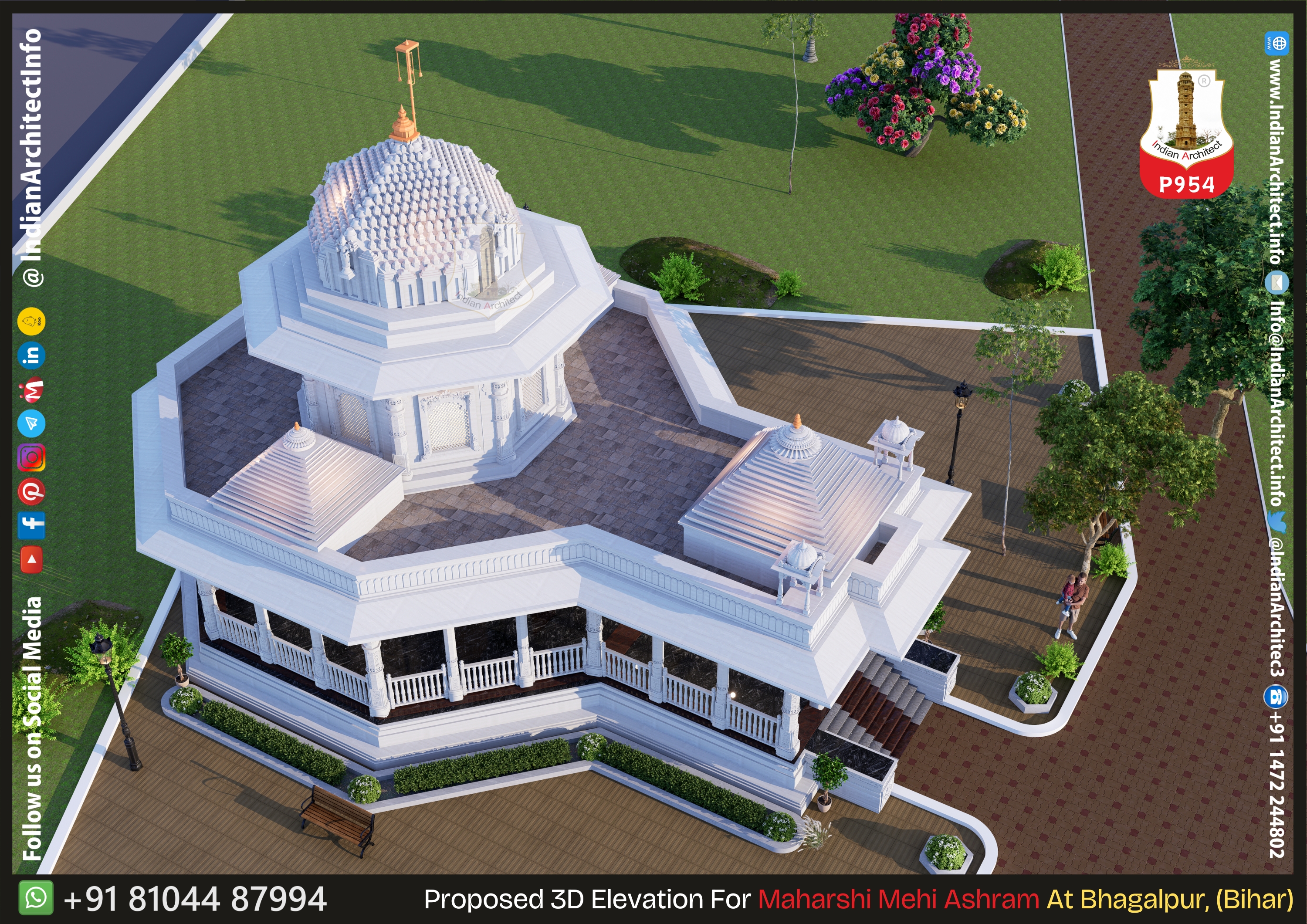
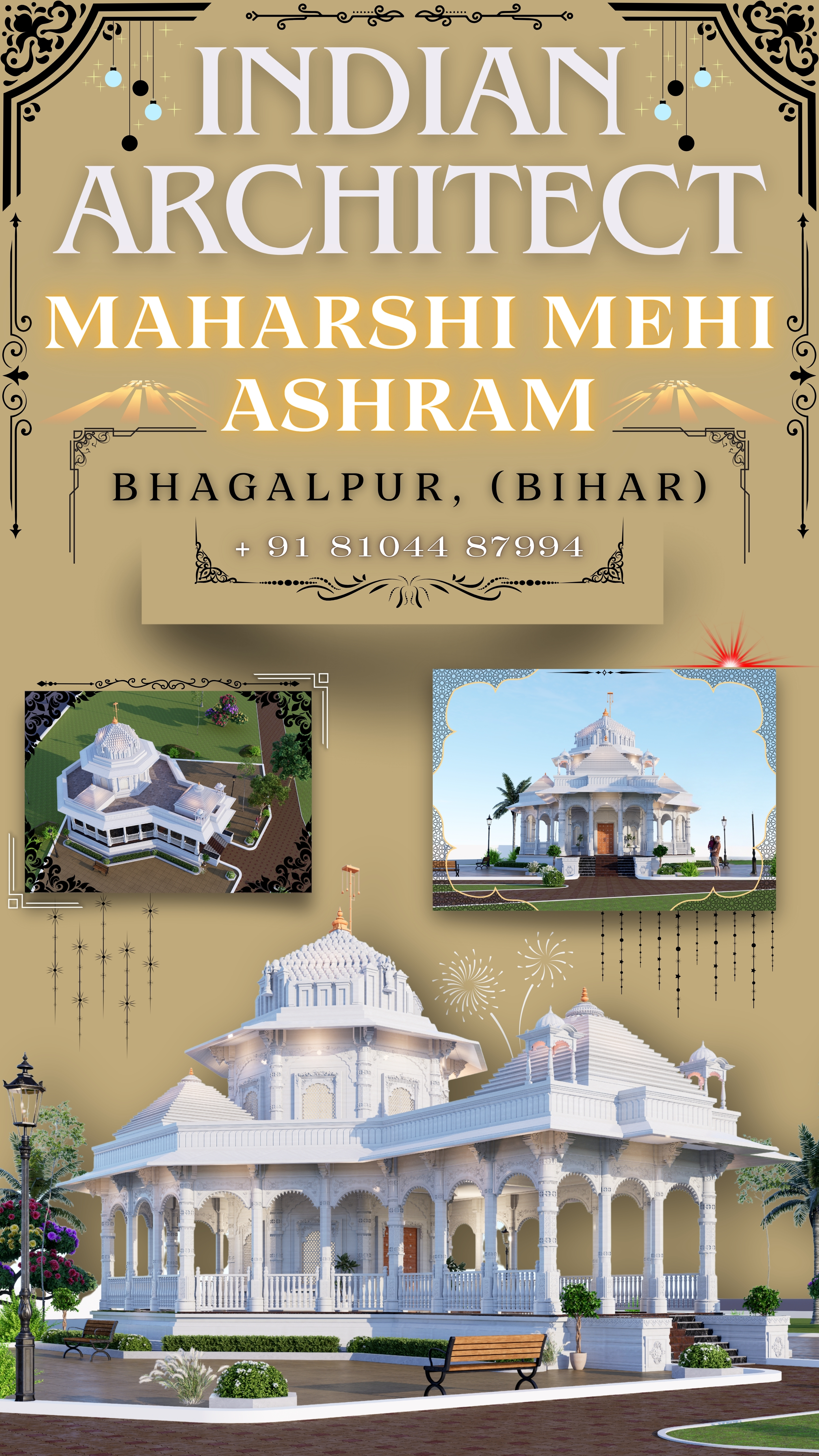
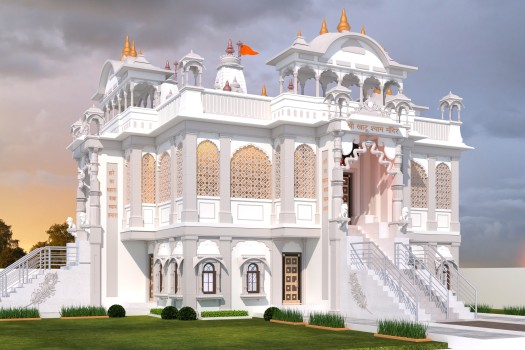
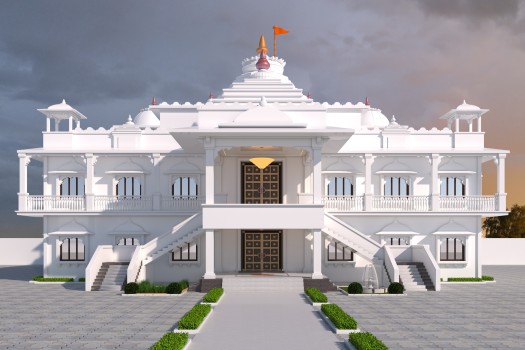
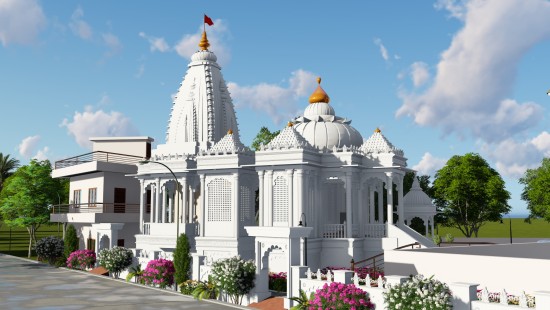
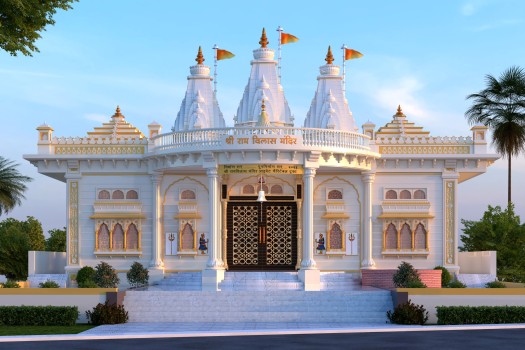
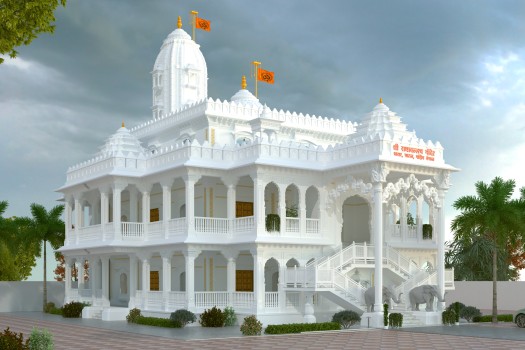
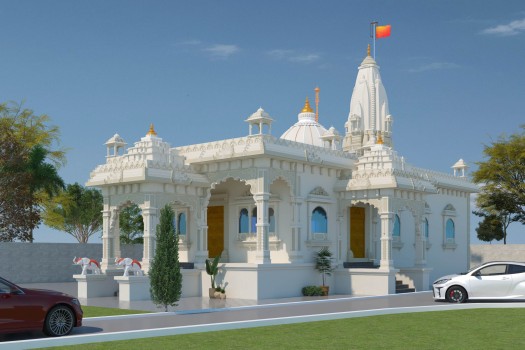
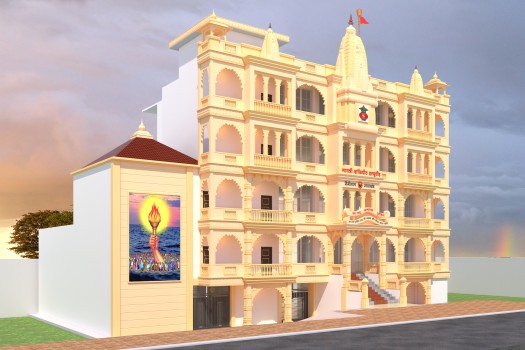
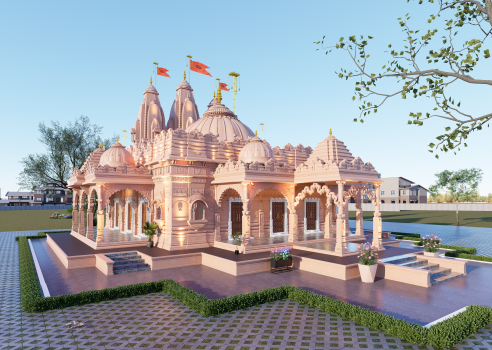
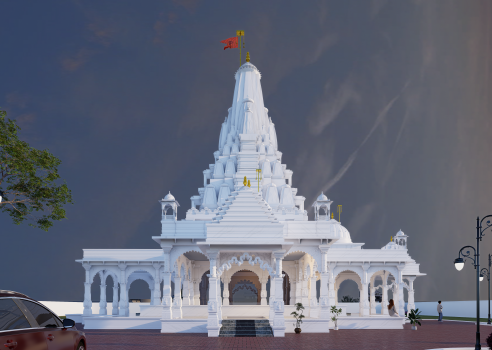
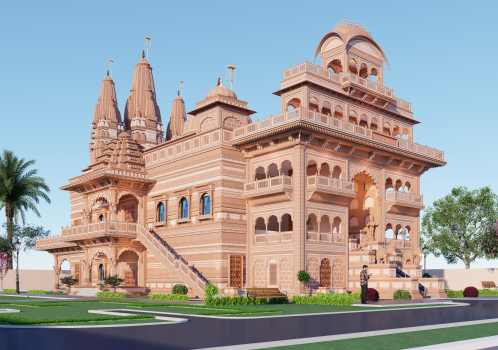
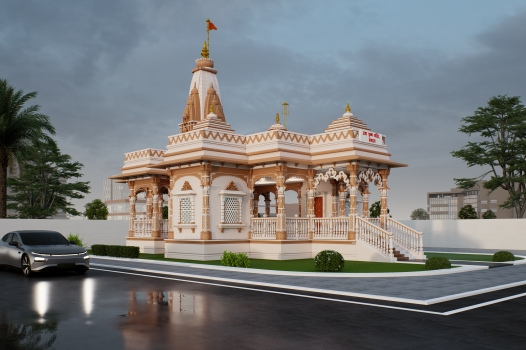
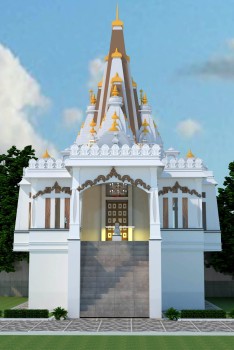
Architectural Style: The ashram is designed in a Neo-Classical Indian style, utilizing a pristine white finish that mimics high-quality marble or Makrana stone.
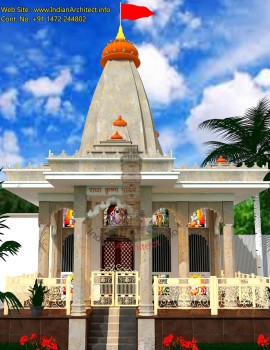
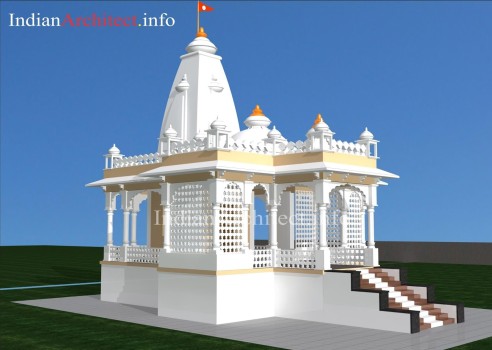
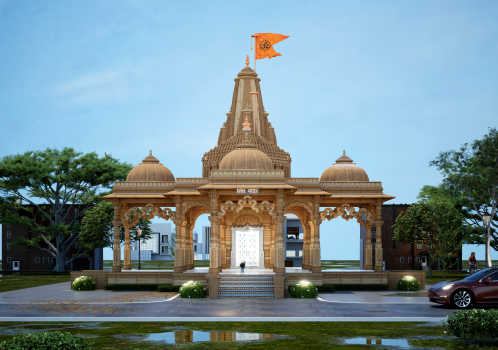
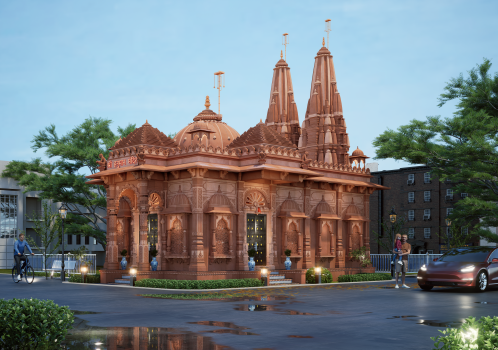
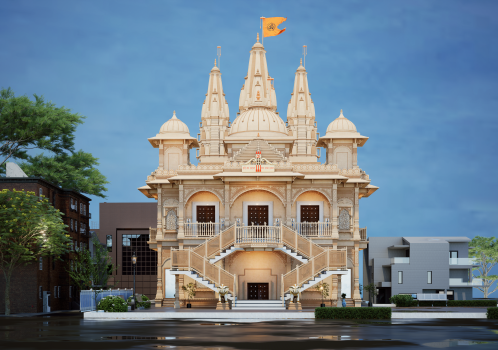
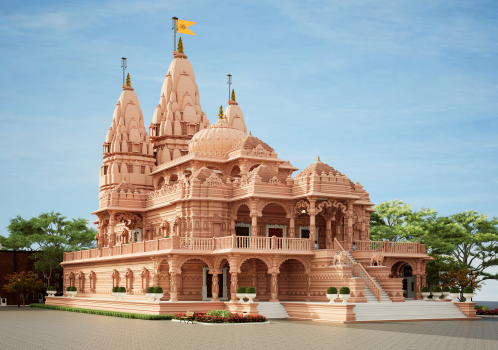
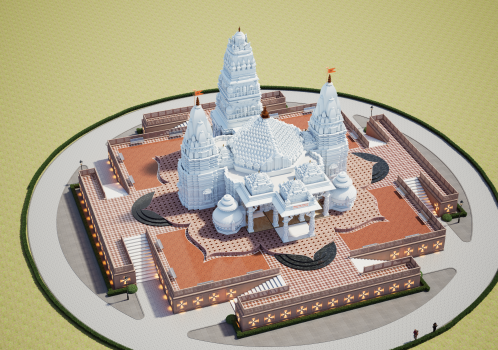
Central Shikhara (Dome): The structure features a grand, multi-layered dome with intricate horizontal carvings, symbolizing spiritual elevation.
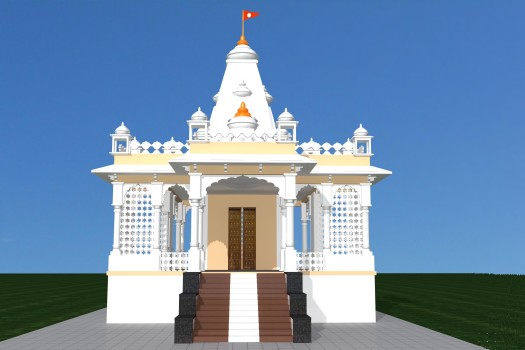
Golden Finials: At the very top, there is a golden Kalash and a flag post, which are traditional markers of a sacred space in Indian architecture.
Ornate Pillars: The open pavilion (Mandap) is supported by highly detailed carved pillars that showcase traditional craftsmanship.
Main Entrance: The primary doorway is crafted from high-quality polished wood with brass or gold-toned studs, giving it a regal and welcoming look.
Grand Staircase: The entrance features a contrasting dark marble or granite staircase, providing a majestic approach to the elevated platform.
Open Mandapa Design: The structure follows an open-air layout, allowing for natural light and cross-ventilation, which is ideal for meditation and gatherings.
Intricate Jali Work: The walls and railings feature lattice-work (Jalis), which adds a delicate aesthetic while providing privacy and airflow.
Raised Plinth (Jagati): The entire ashram sits on a raised foundation, protecting the structure and giving it a prominent, towering presence.
Symmetry and Proportions: The design follows strict Vastu-compliant symmetry, ensuring a balanced and harmonious visual experience from all angles.
Landscaping: The surroundings include manicured lawns, decorative shrubs, and palm trees that create a serene, "Zen-like" atmosphere.
Pathways: The foreground features a patterned cobblestone or tile walkway, designed for easy circulation of visitors around the premises.
Outdoor Lighting: Modern black Victorian-style lamp posts are strategically placed to illuminate the pathways during evening hours.
Social Spaces: The inclusion of wooden benches and open green spaces suggests a focus on community interaction and peaceful reflection.
Color Palette: The dominant monochromatic white theme represents purity and peace, contrasted only by the natural greens of the garden and the dark tones of the stairs.