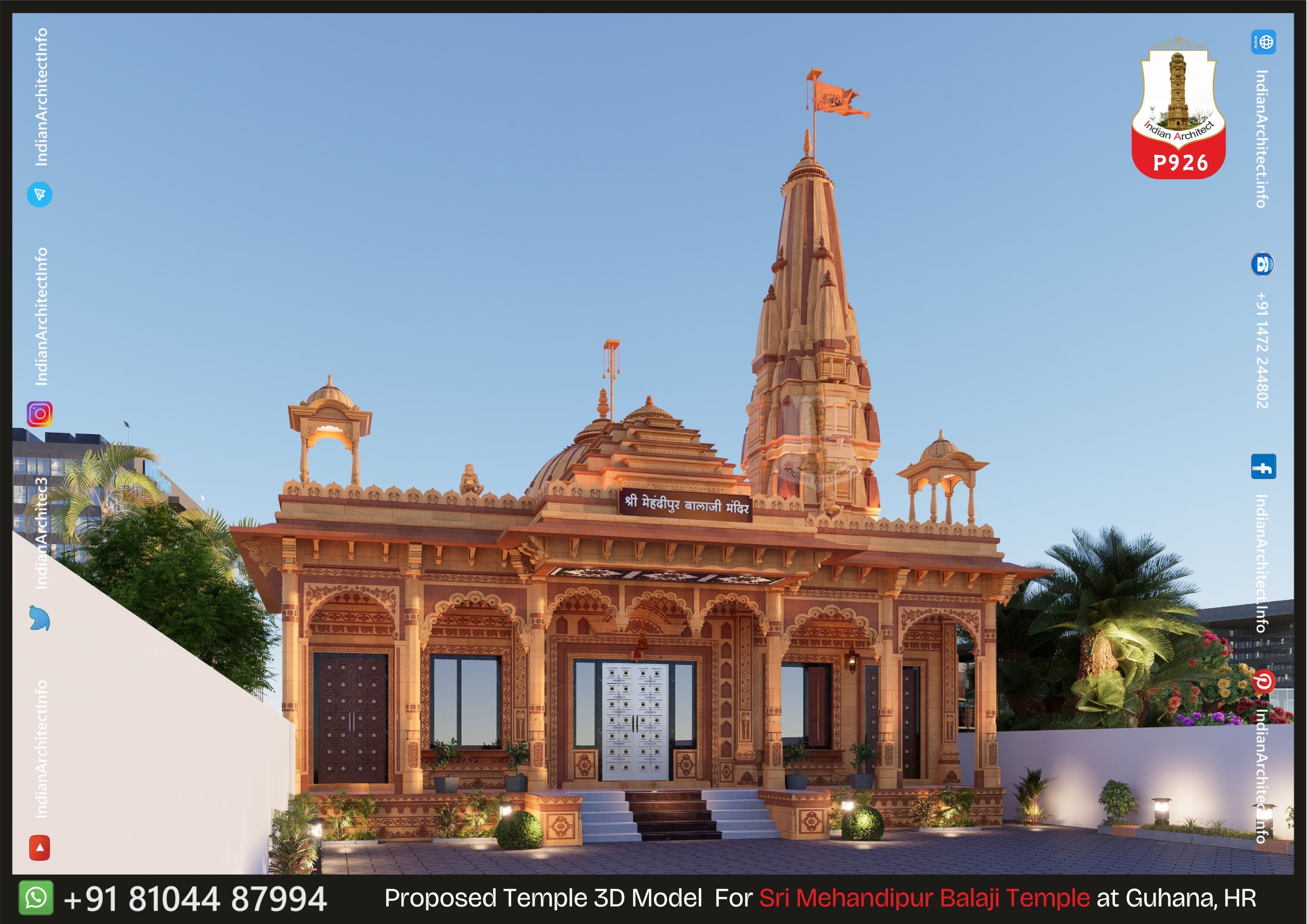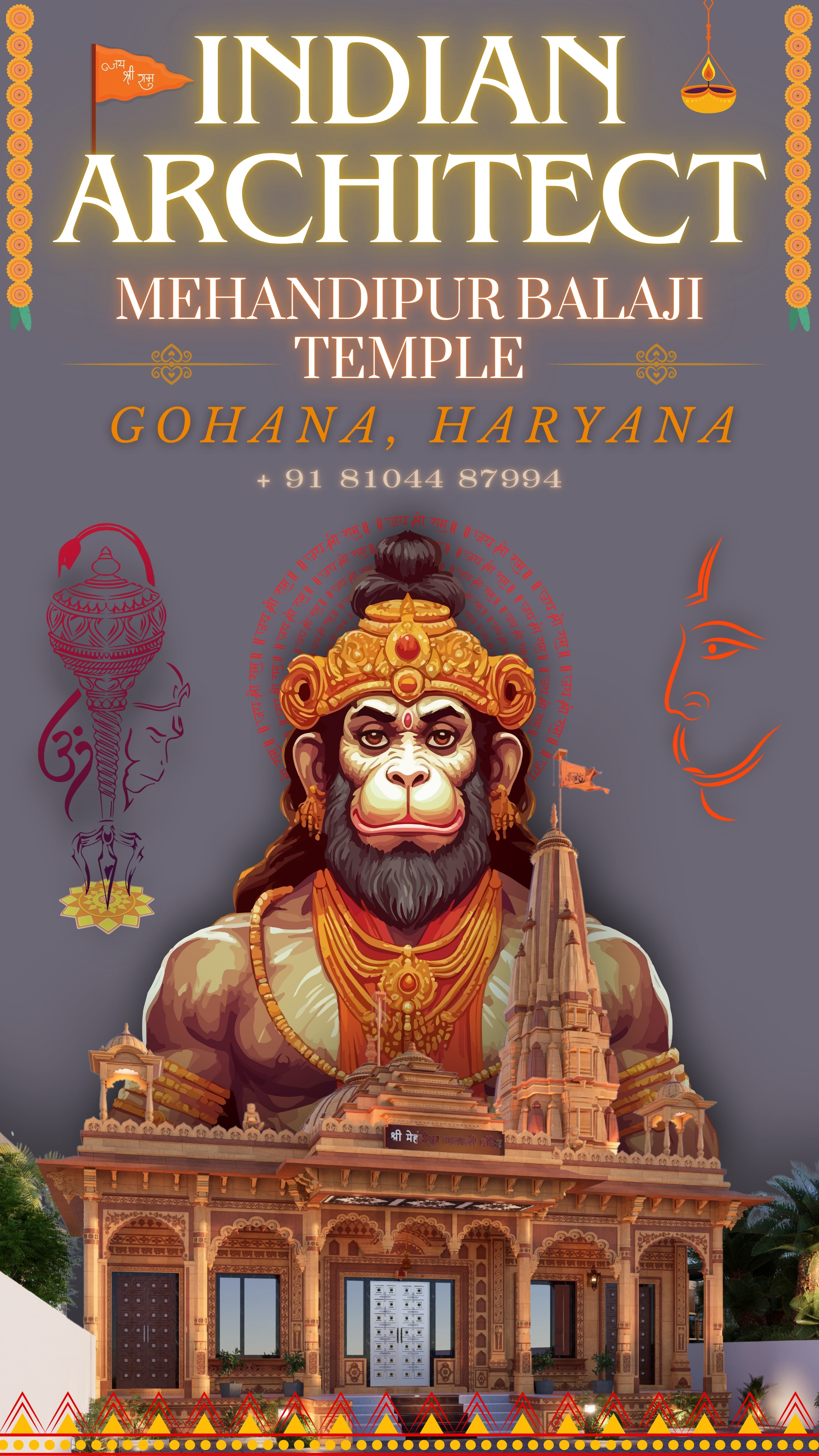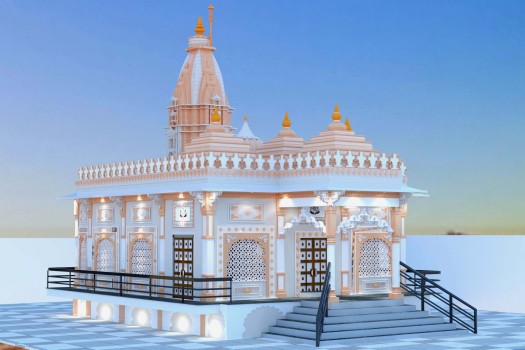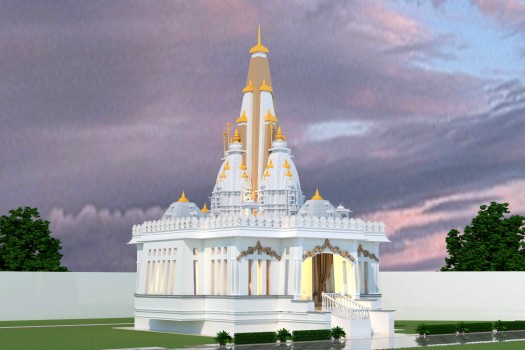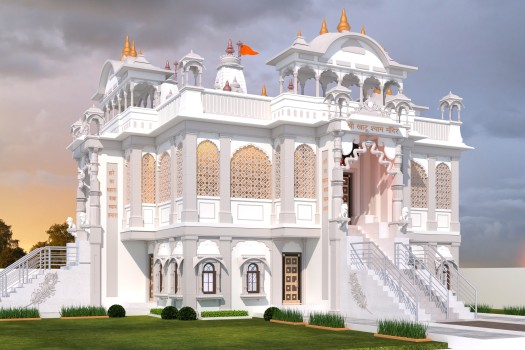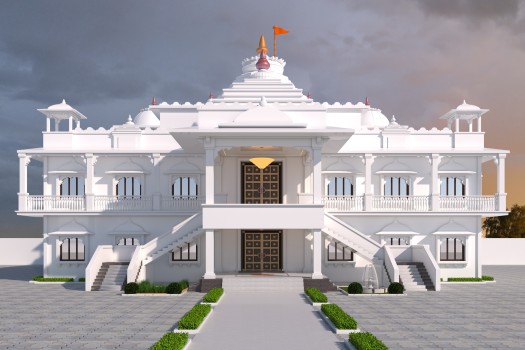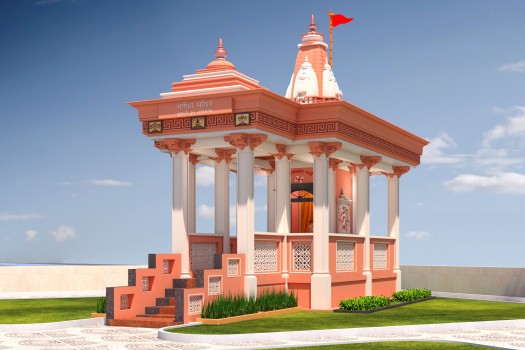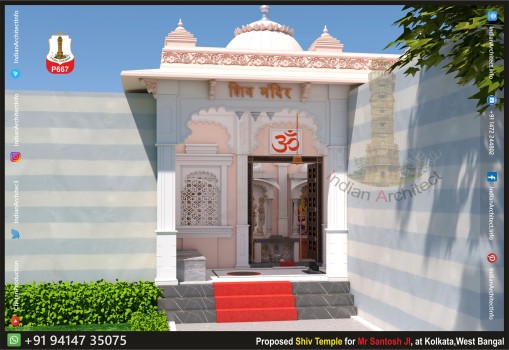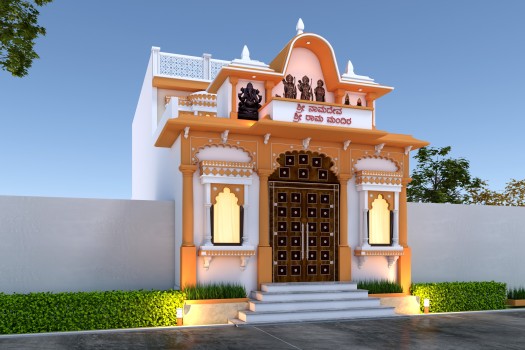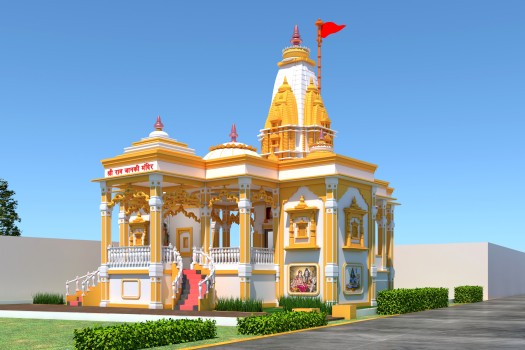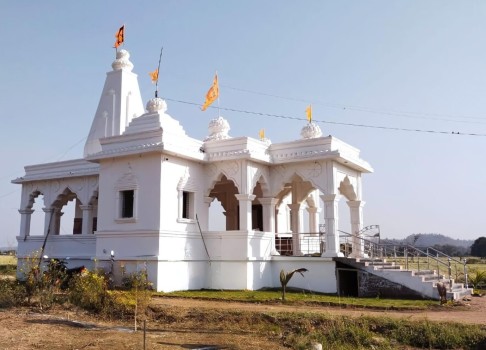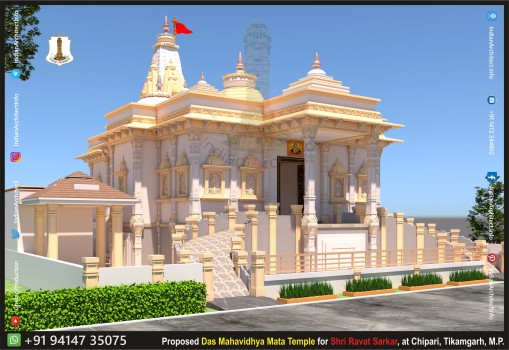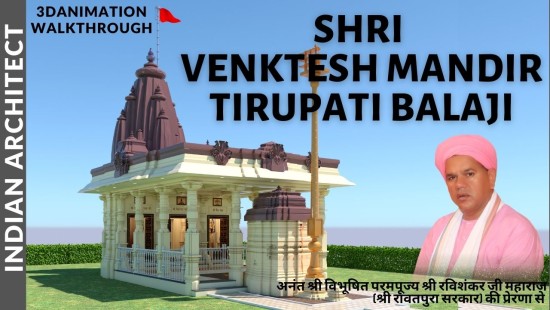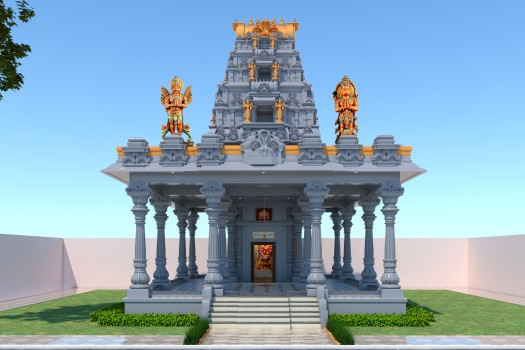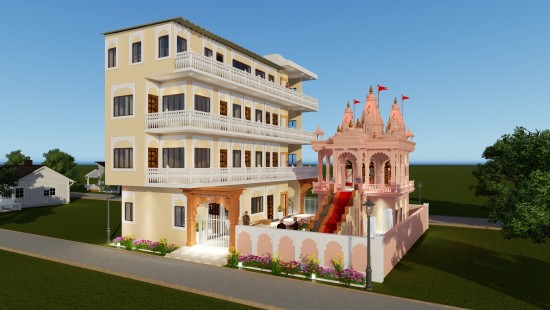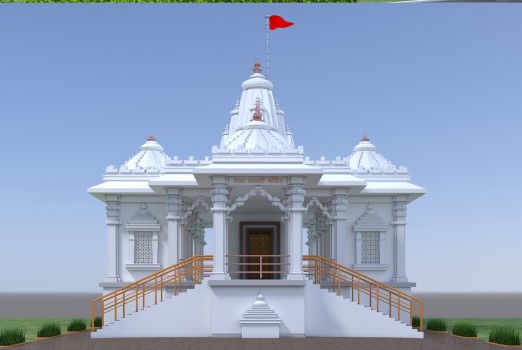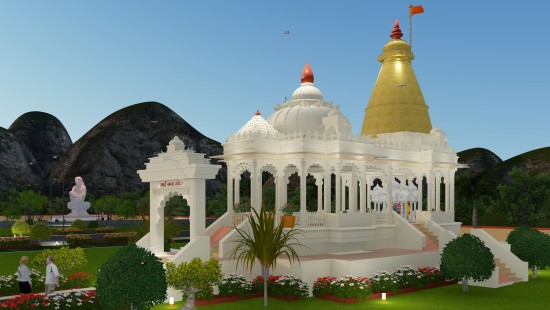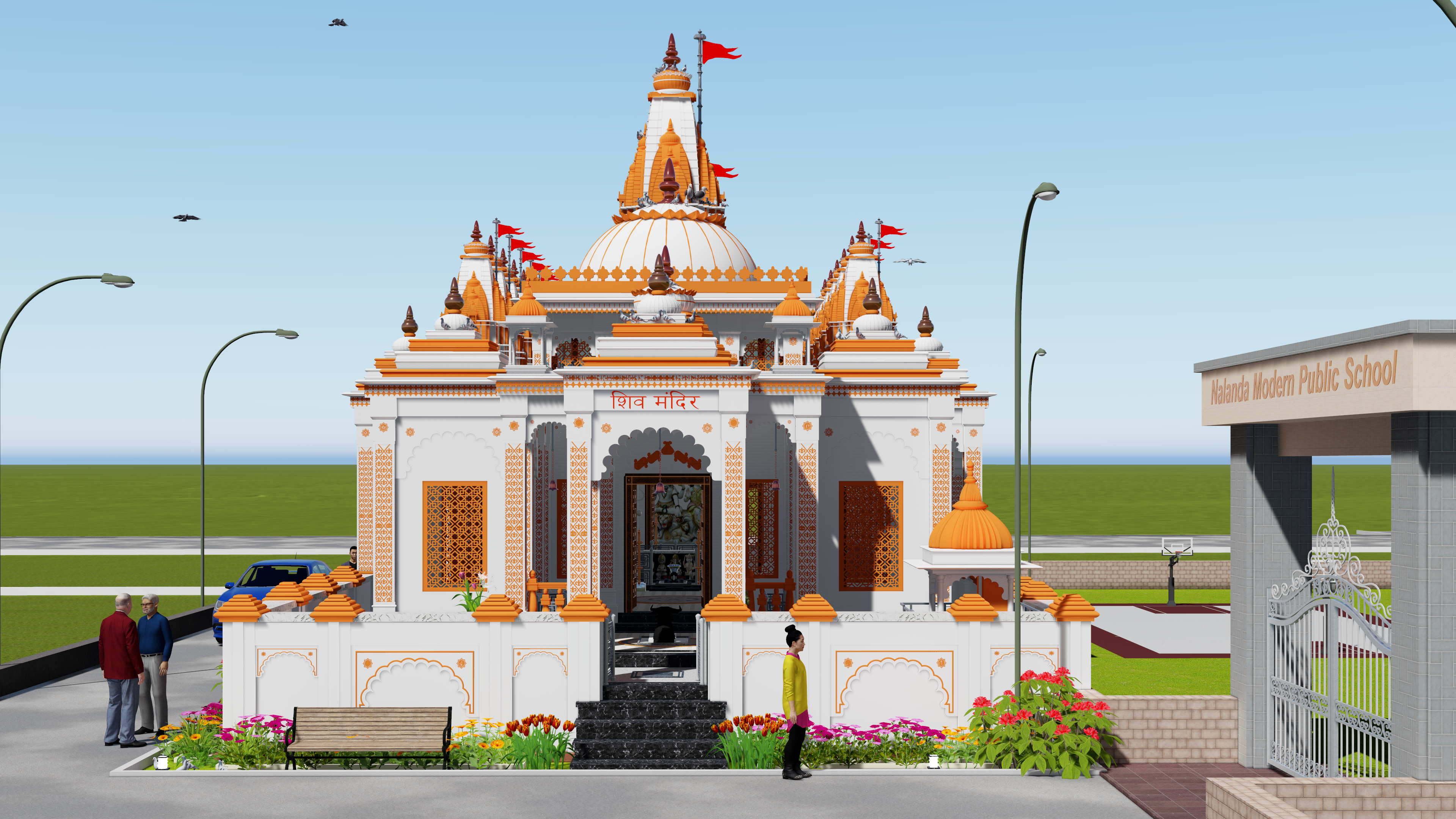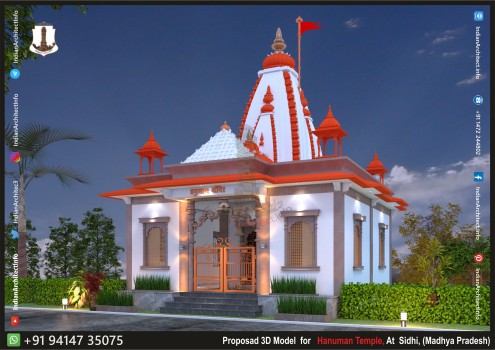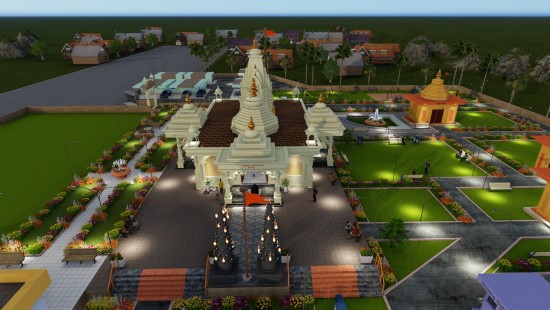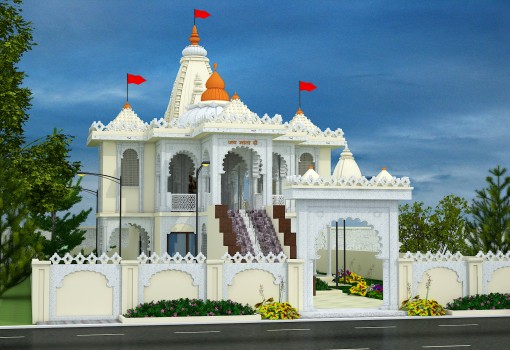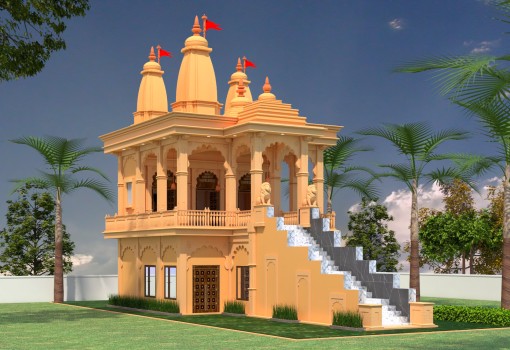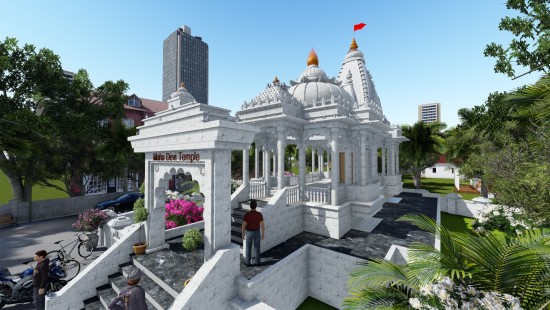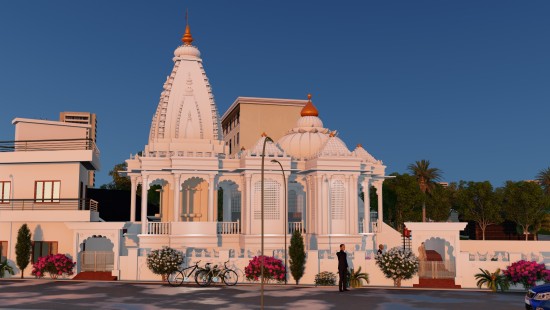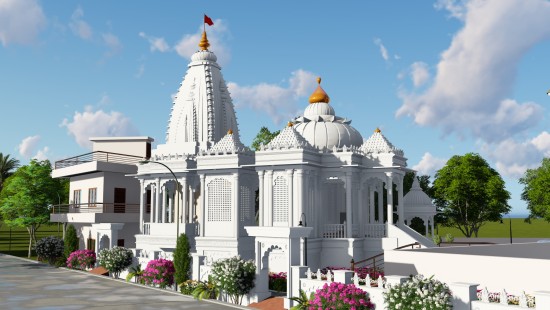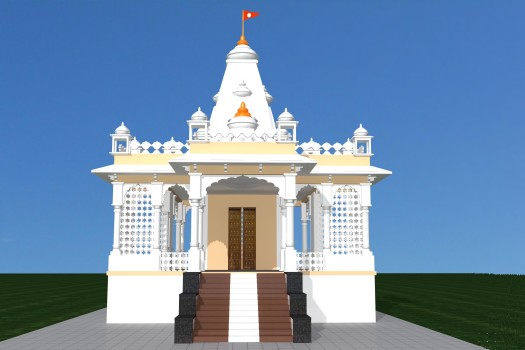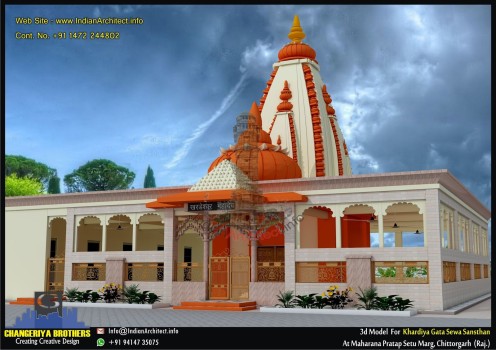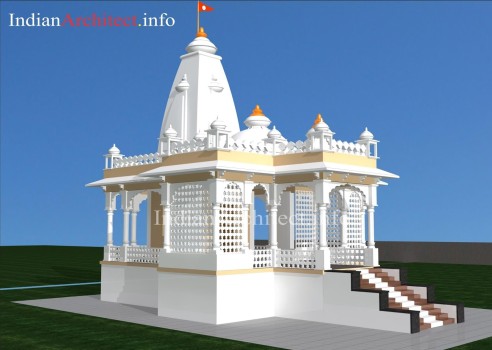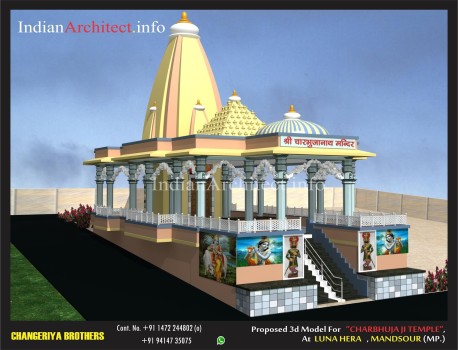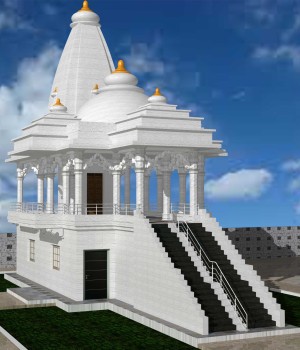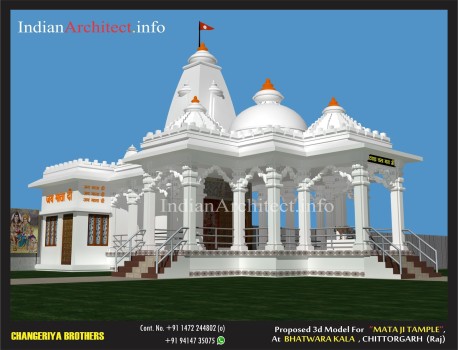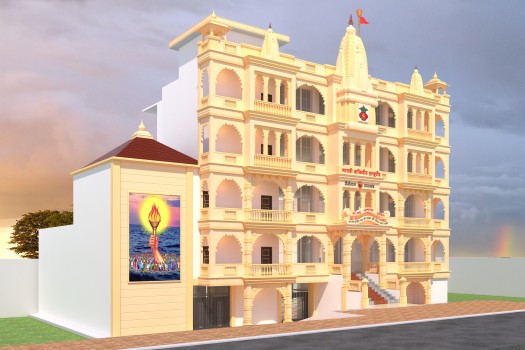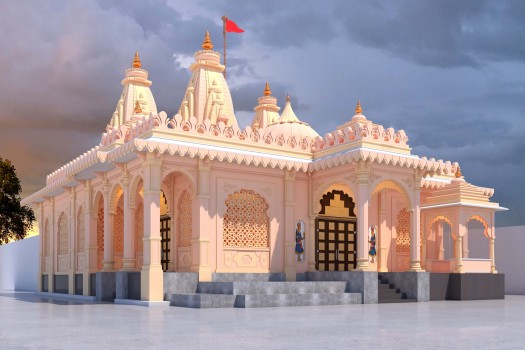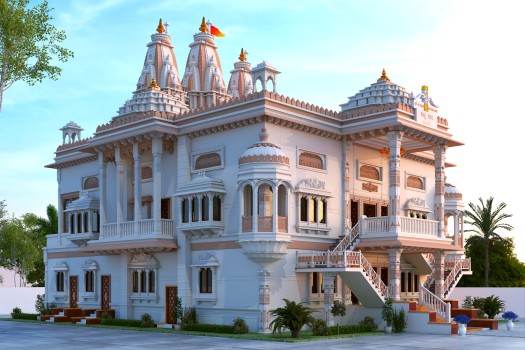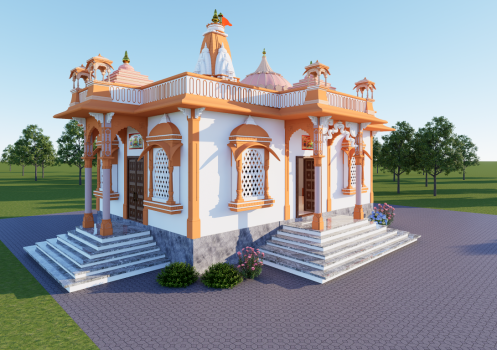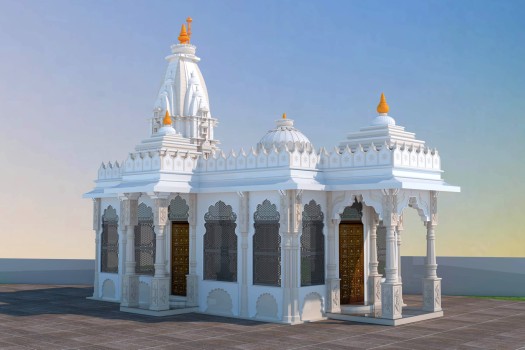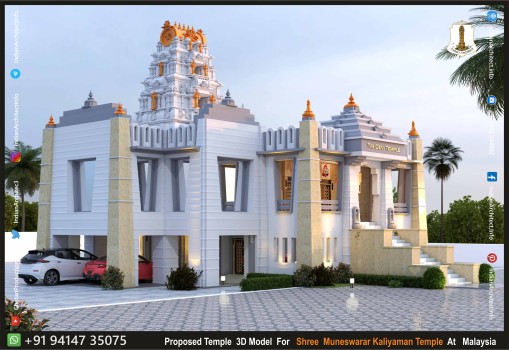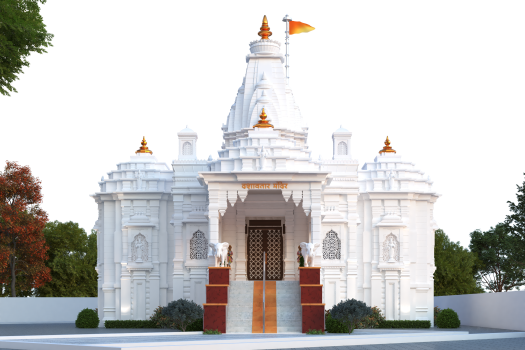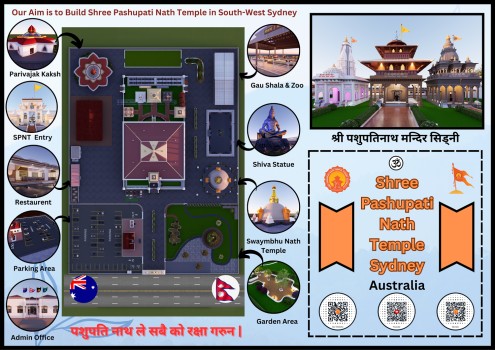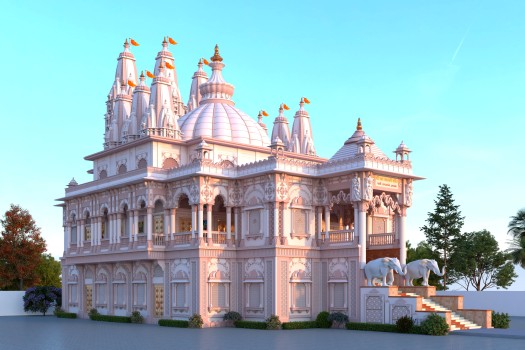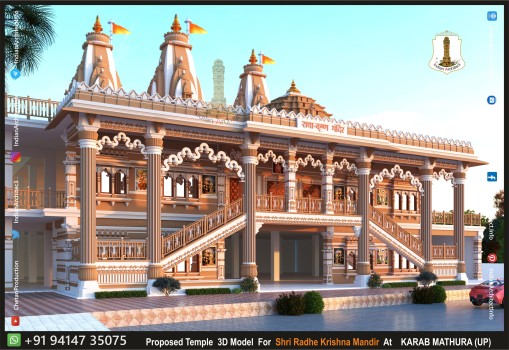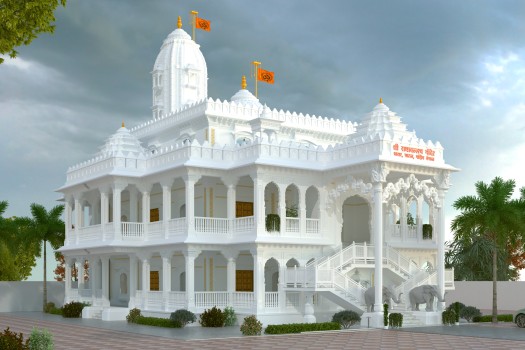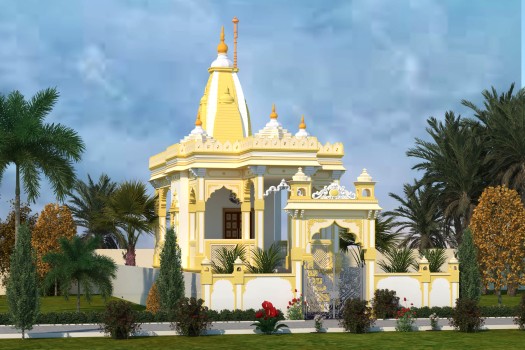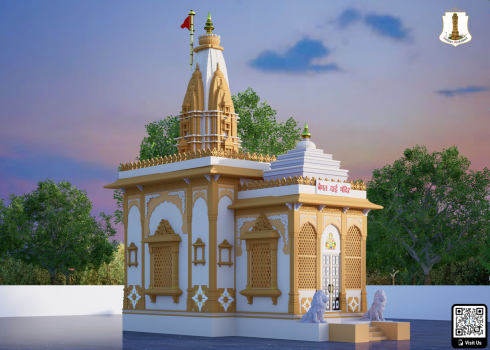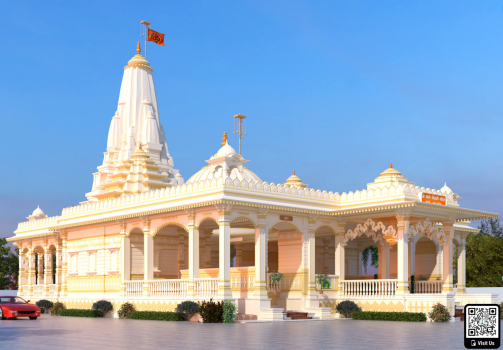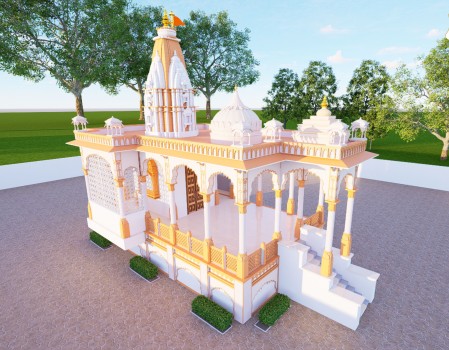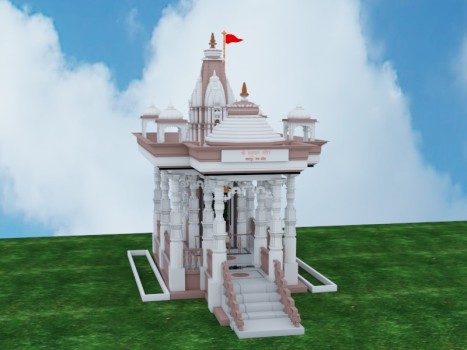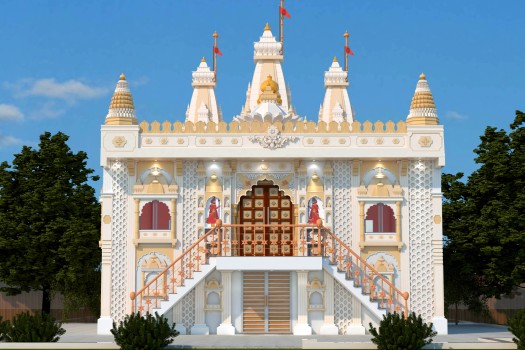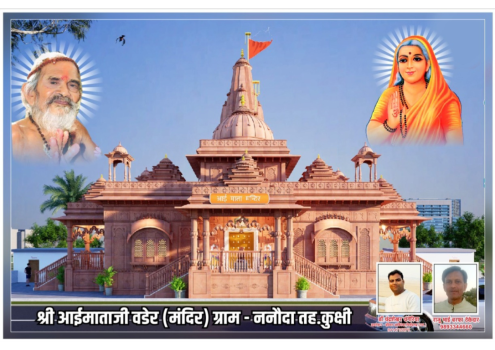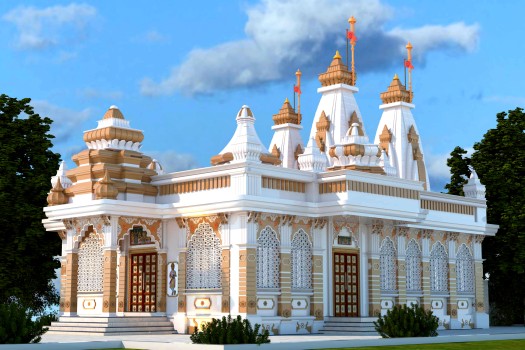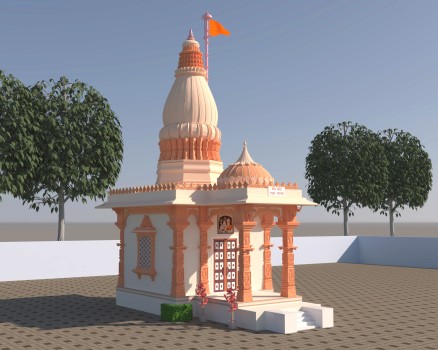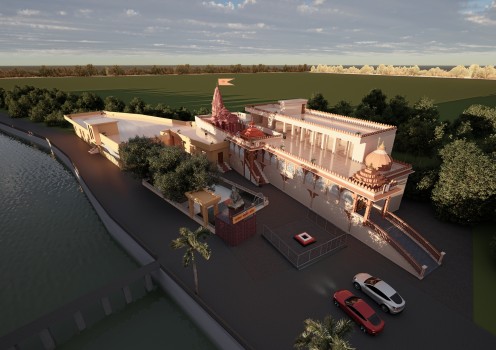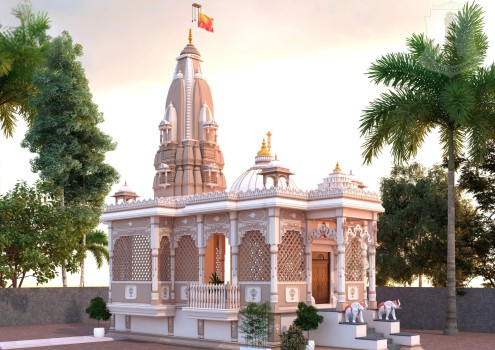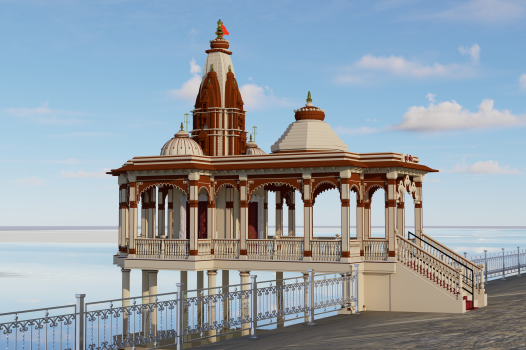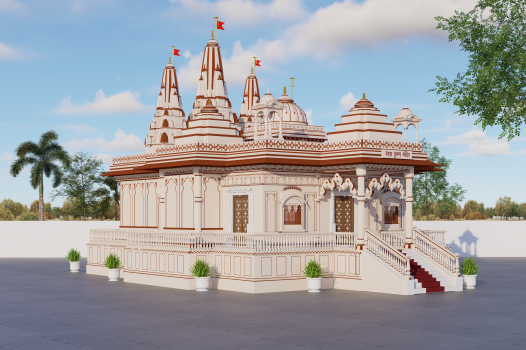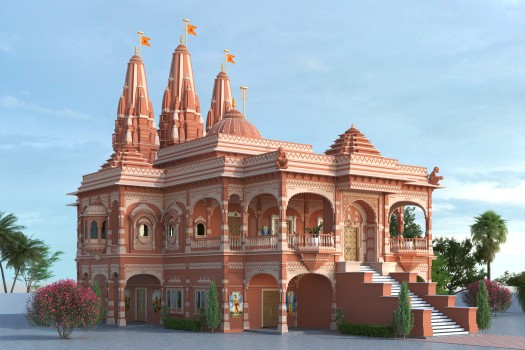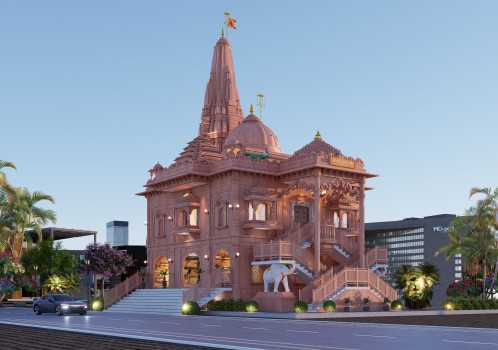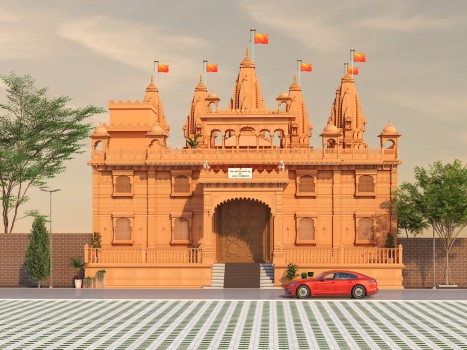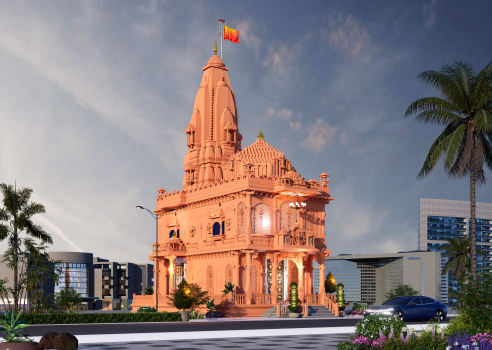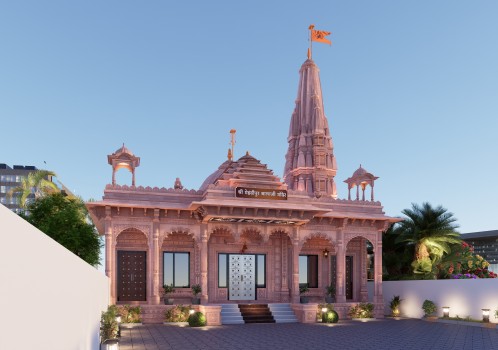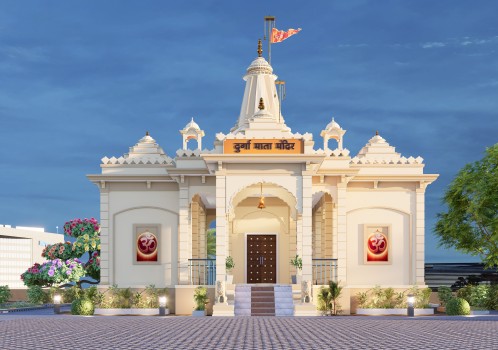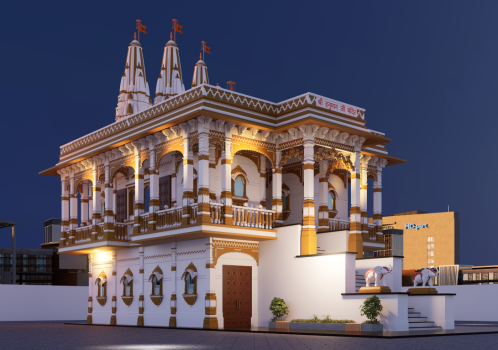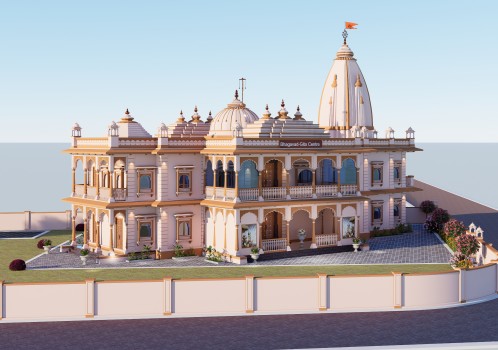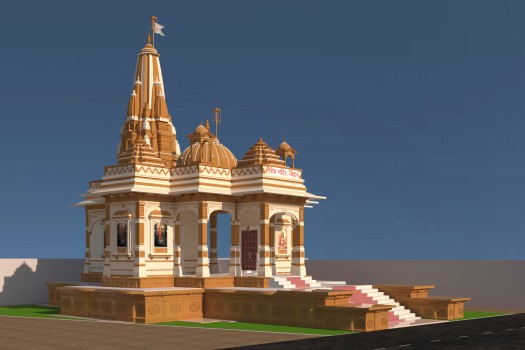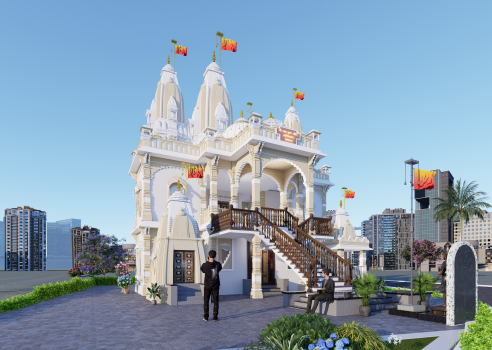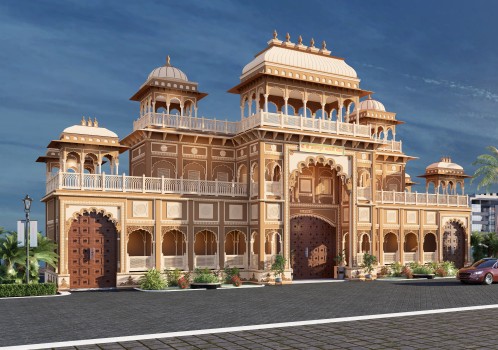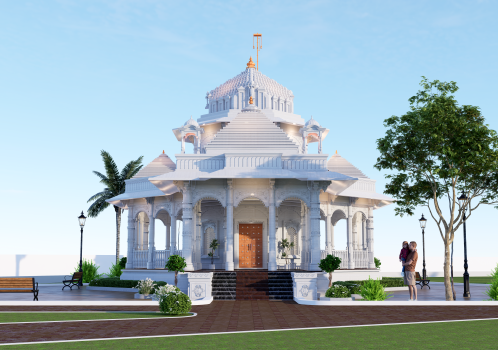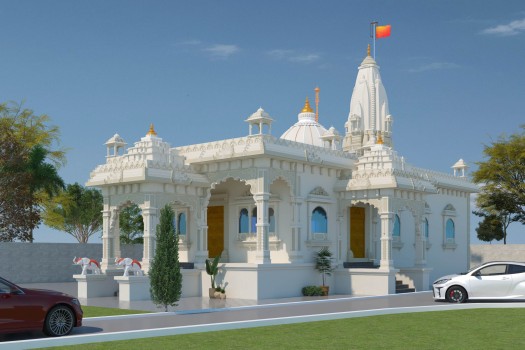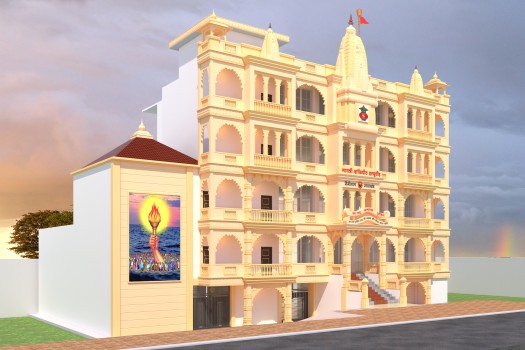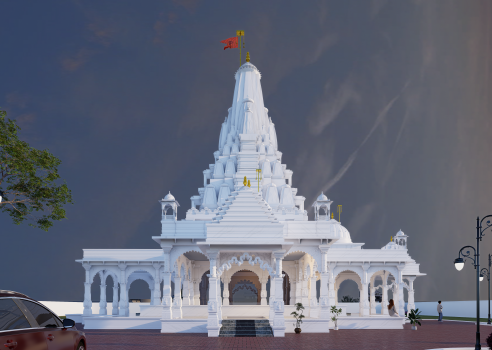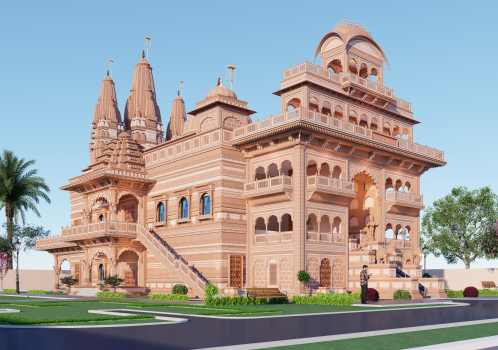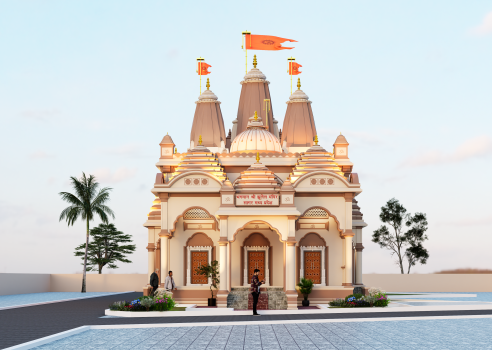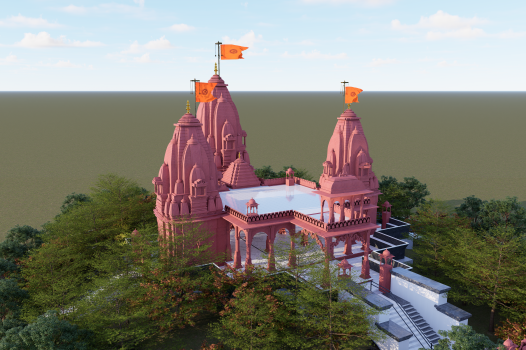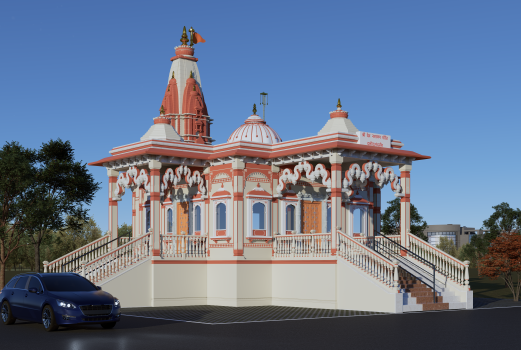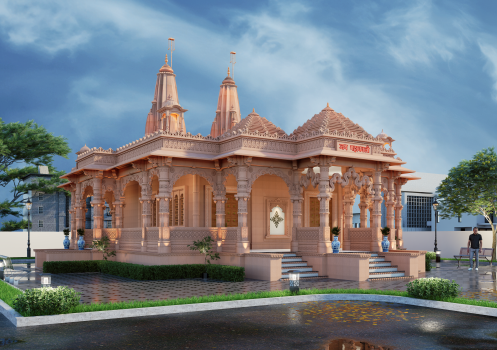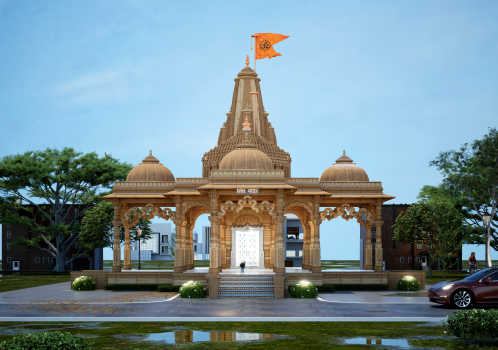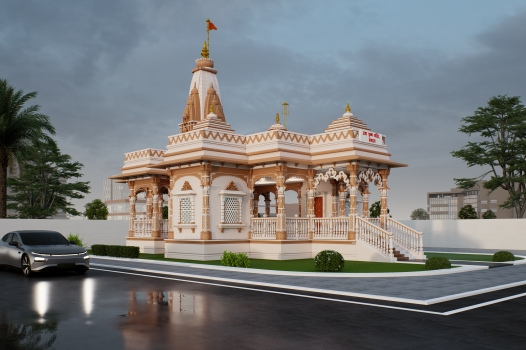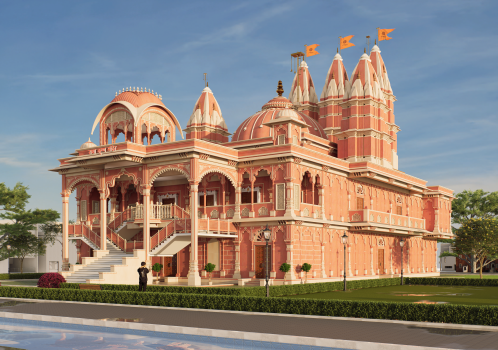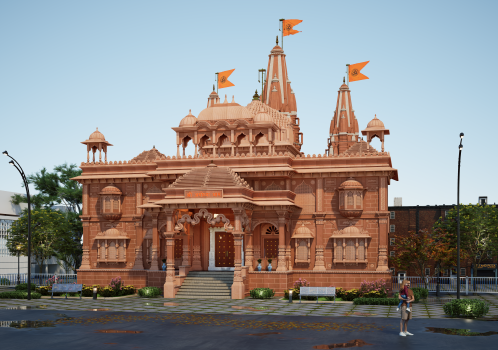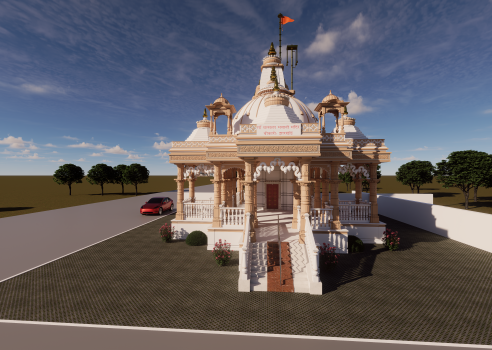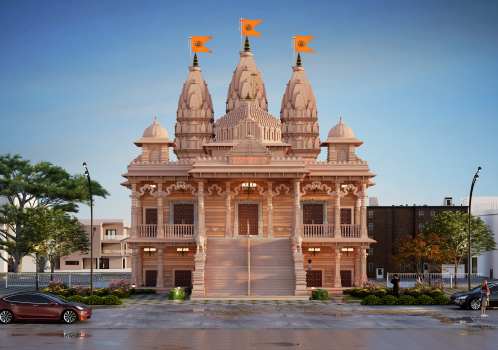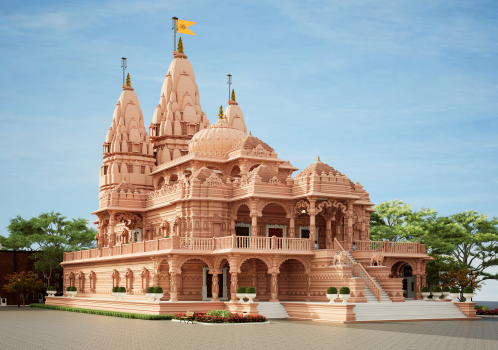
Architecture Style: The temple follows the Nagara style of architecture, which is prominent in North Indian Hindu temples, featuring a high, curved spire.
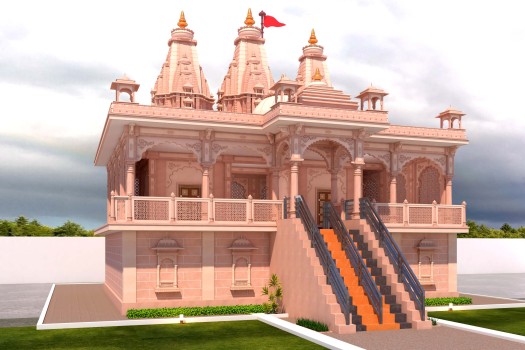
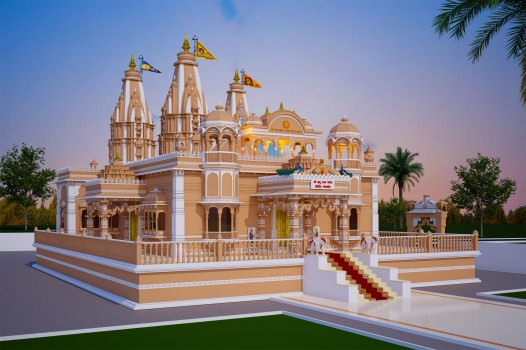
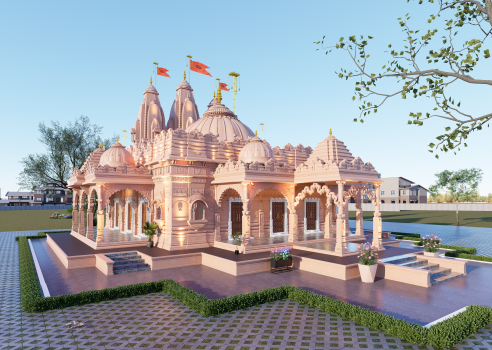
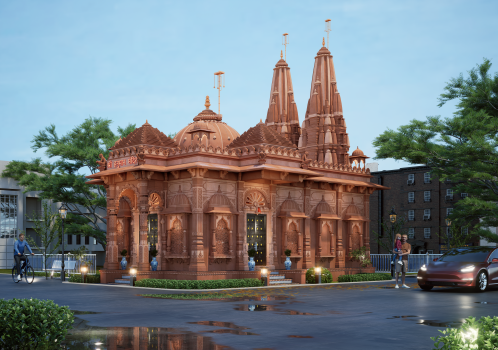
Material Appearance: The exterior uses a Pink Sandstone finish, reminiscent of the famous Banshi Pahadpur stone used in the Ayodhya Ram Mandir.
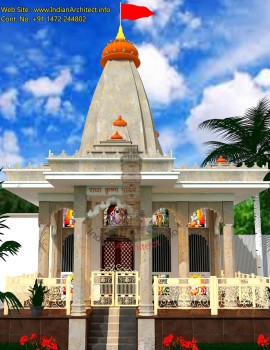
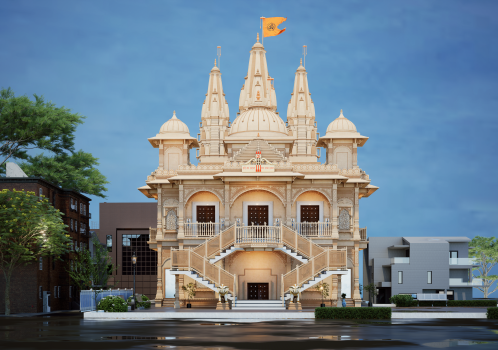
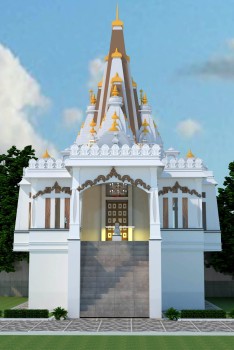
Shikhara (Main Spire): The central Shikhara is multi-layered with intricate carvings, leading up to a golden Amalaka and Kalash.
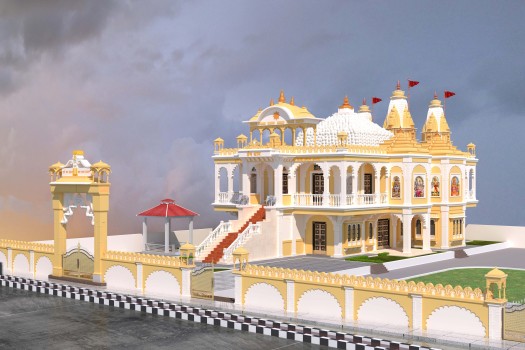
Dhwaja (Flag): A vibrant saffron (orange) flag is hoisted at the very top, symbolizing the presence of Lord Hanuman (Balaji).
Mandapa (Front Hall): The temple features a spacious front porch supported by beautifully carved pillars and decorative arches.
Intricate Carvings: The walls and pillars are adorned with Jali work and floral patterns that reflect traditional Vedic artistry.
Entrance Door: The main entrance features a white, decorative door with golden accents, creating a striking contrast with the stone.
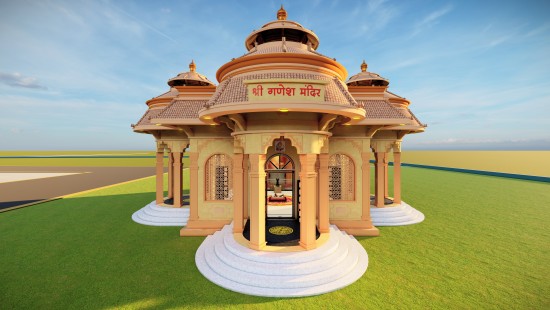
Chhatris: Small Rajasthani-style domed pavilions (Chhatris) are placed on the corners of the roof for aesthetic balance.
Ambient Lighting: Warm LED spotlights are strategically placed along the base and pillars to enhance the temple's grandeur at night.
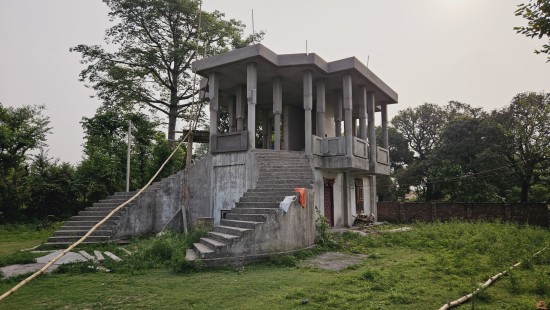
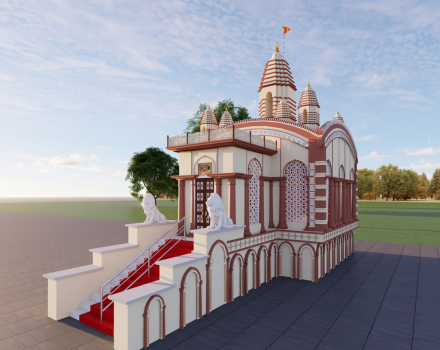
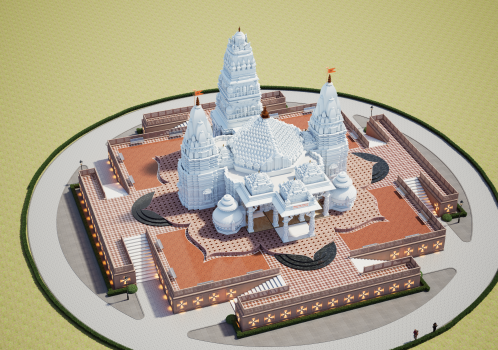
Elevated Plinth: The entire structure is built on an elevated platform (Jagati) to provide a sense of prominence and height.
Windows: Large glass windows are integrated into the side walls, allowing for a mix of traditional design and modern ventilation.
Outdoor Flooring: The courtyard is paved with grey cobble-textured stones, providing a durable and slip-resistant surface for devotees.
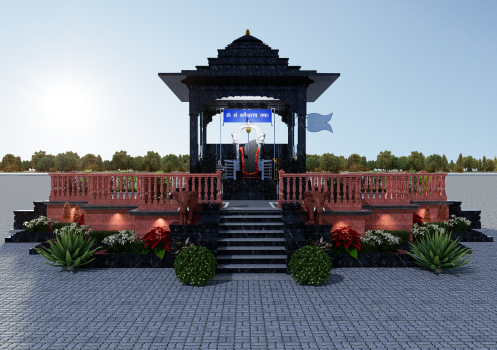
Landscaping: Modern planters and small shrubs are placed around the temple base to integrate nature into the sacred space.
Signage: A clearly visible nameplate above the entrance reads "Shri Mehandipur Balaji Mandir" in a traditional font.
Modern Finish: The overall construction displays a clean, sharp finish, blending ancient temple geometry with contemporary 3D visualization techniques.
Project Description :
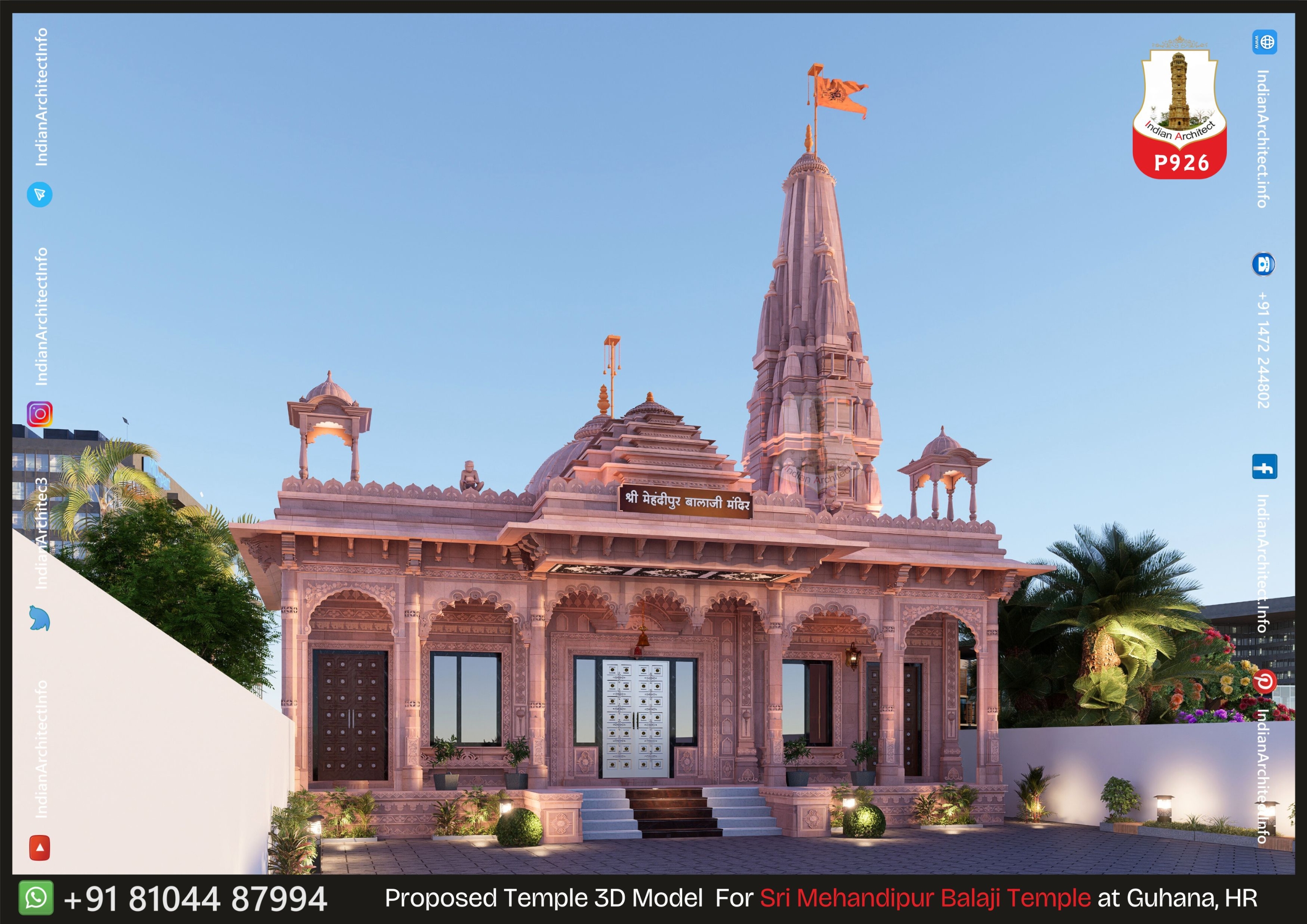
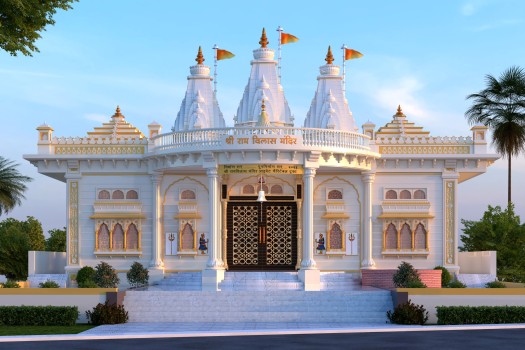
Architecture Style: The temple follows the Nagara style of architecture, which is prominent in North Indian Hindu temples, featuring a high, curved spire.
Material Appearance: The exterior uses a Pink Sandstone finish, reminiscent of the famous Banshi Pahadpur stone used in the Ayodhya Ram Mandir.
Shikhara (Main Spire): The central Shikhara is multi-layered with intricate carvings, leading up to a golden Amalaka and Kalash.
Dhwaja (Flag): A vibrant saffron (orange) flag is hoisted at the very top, symbolizing the presence of Lord Hanuman (Balaji).
Mandapa (Front Hall): The temple features a spacious front porch supported by beautifully carved pillars and decorative arches.
Intricate Carvings: The walls and pillars are adorned with Jali work and floral patterns that reflect traditional Vedic artistry.
Entrance Door: The main entrance features a white, decorative door with golden accents, creating a striking contrast with the stone.
Chhatris: Small Rajasthani-style domed pavilions (Chhatris) are placed on the corners of the roof for aesthetic balance.
Ambient Lighting: Warm LED spotlights are strategically placed along the base and pillars to enhance the temple's grandeur at night.
Elevated Plinth: The entire structure is built on an elevated platform (Jagati) to provide a sense of prominence and height.
Windows: Large glass windows are integrated into the side walls, allowing for a mix of traditional design and modern ventilation.
Outdoor Flooring: The courtyard is paved with grey cobble-textured stones, providing a durable and slip-resistant surface for devotees.
Landscaping: Modern planters and small shrubs are placed around the temple base to integrate nature into the sacred space.
Signage: A clearly visible nameplate above the entrance reads "Shri Mehandipur Balaji Mandir" in a traditional font.
Modern Finish: The overall construction displays a clean, sharp finish, blending ancient temple geometry with contemporary 3D visualization techniques.