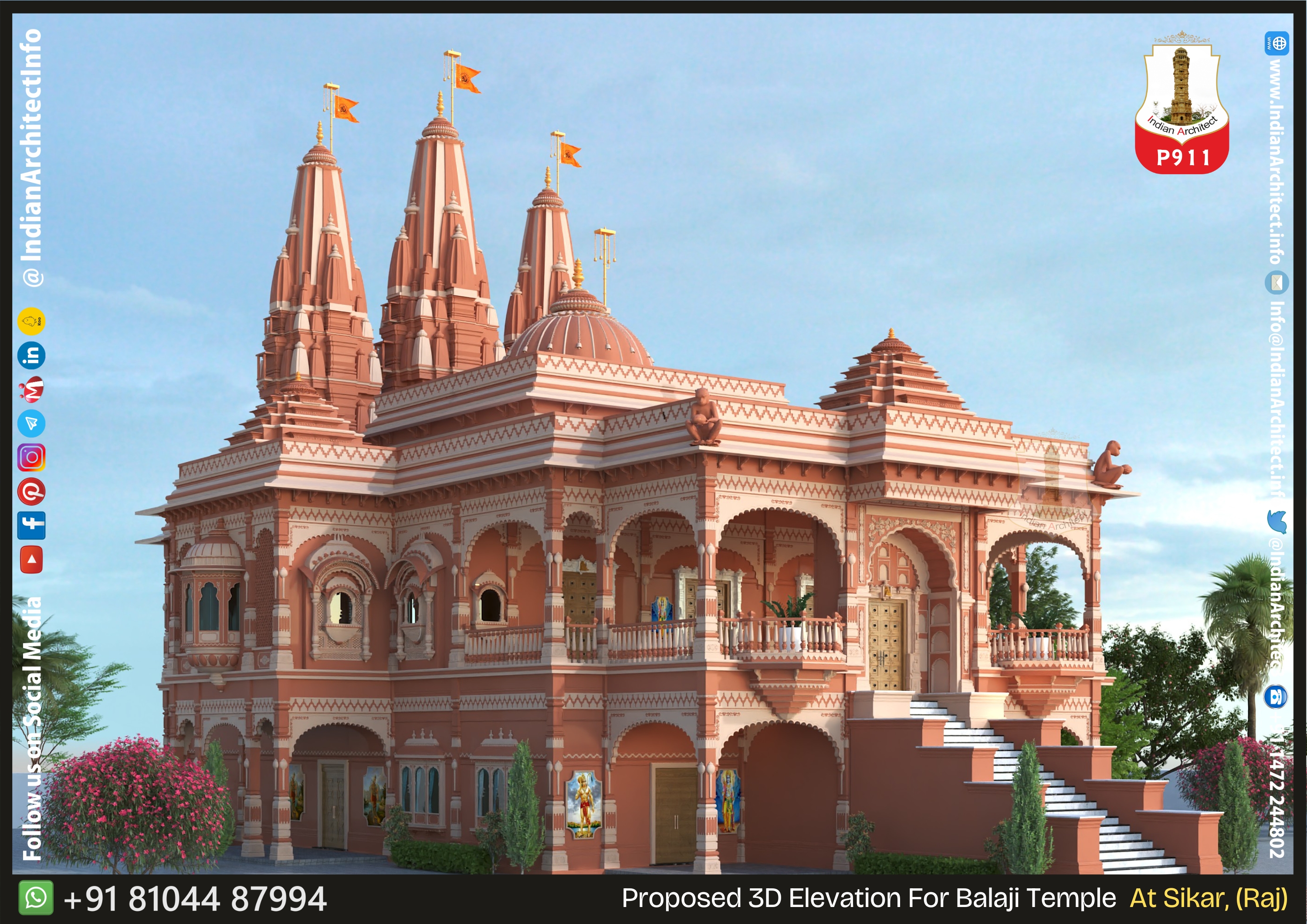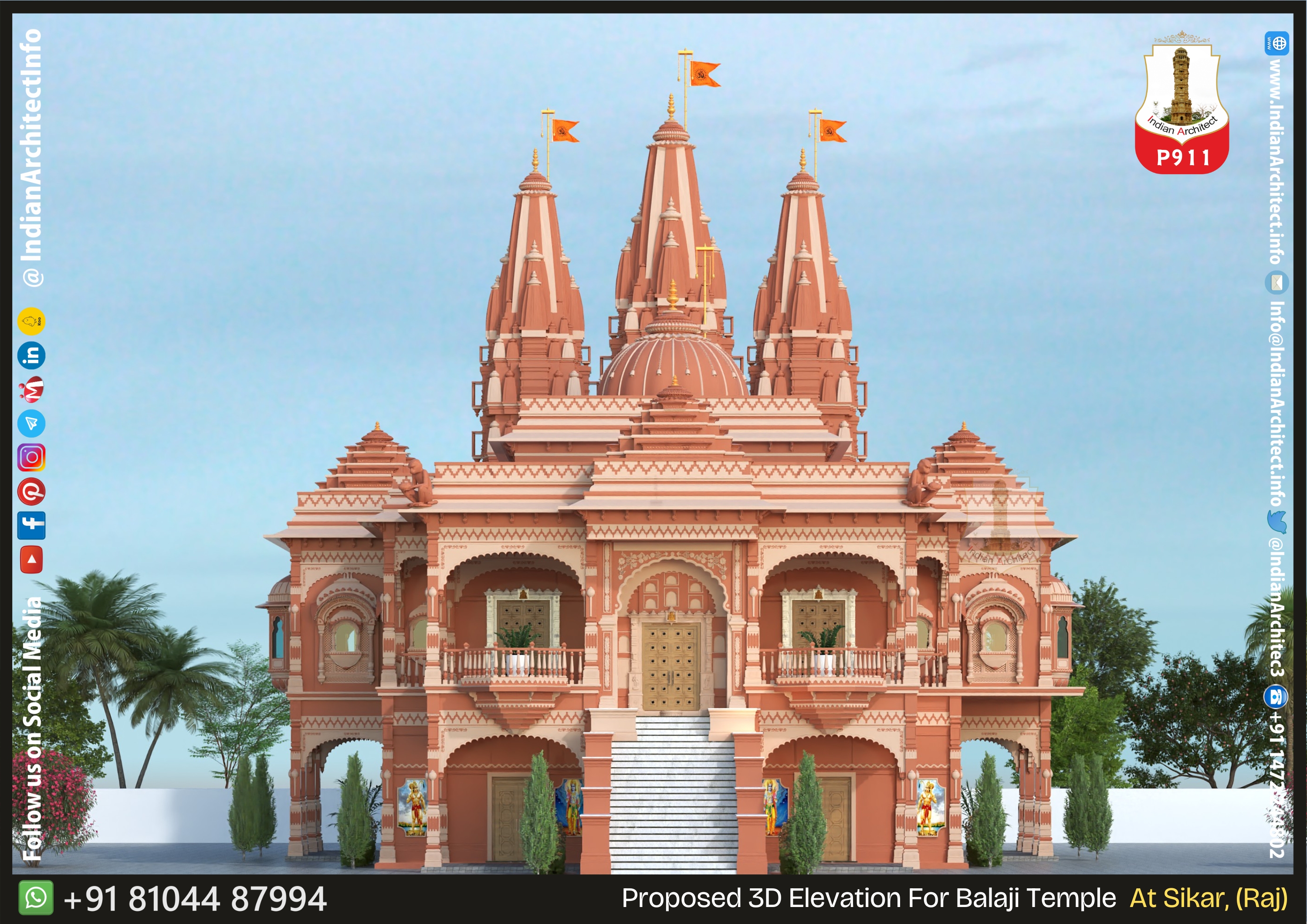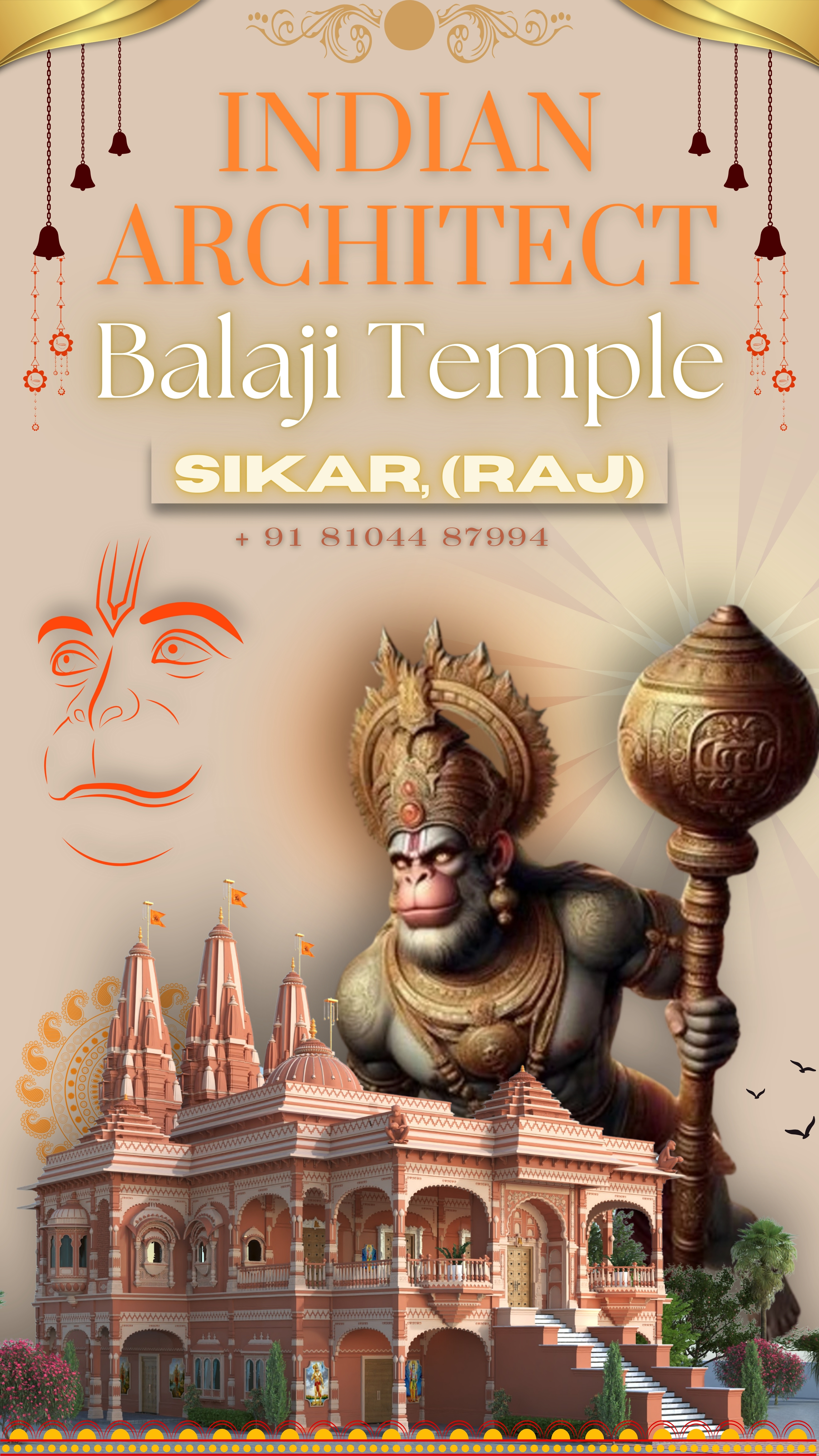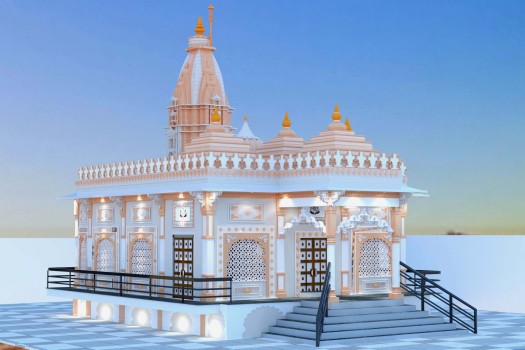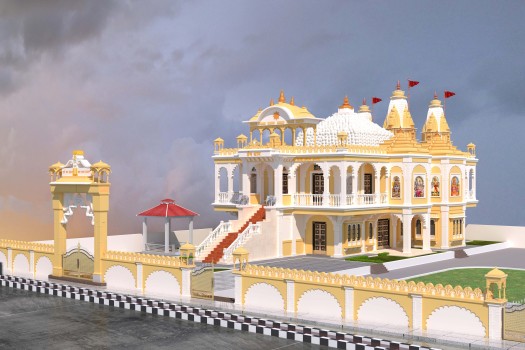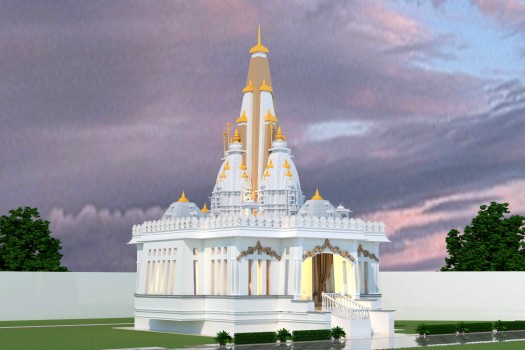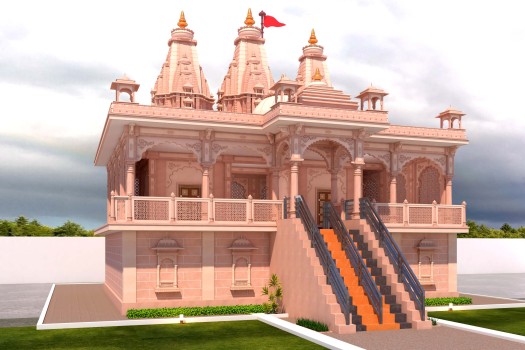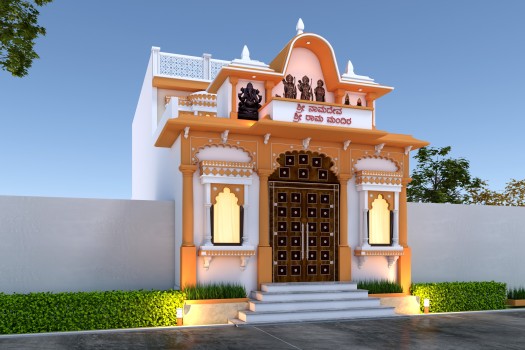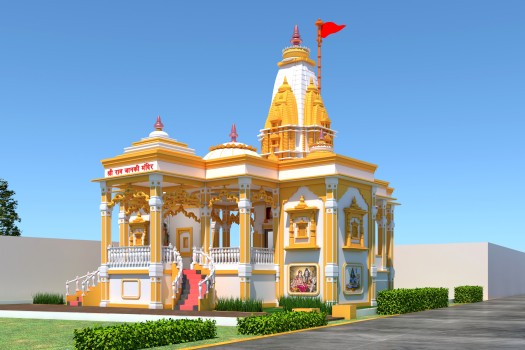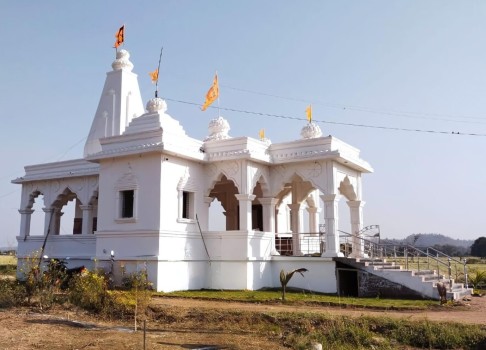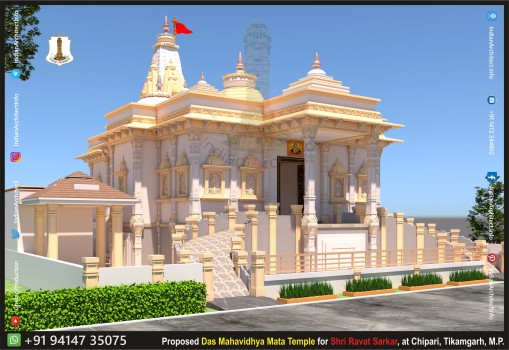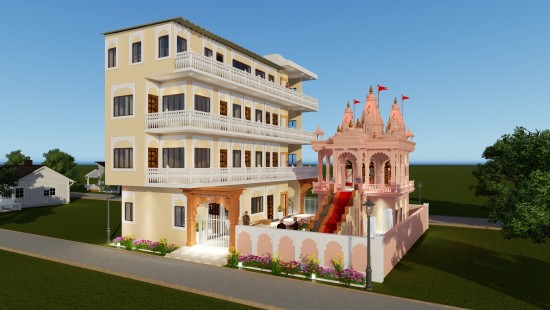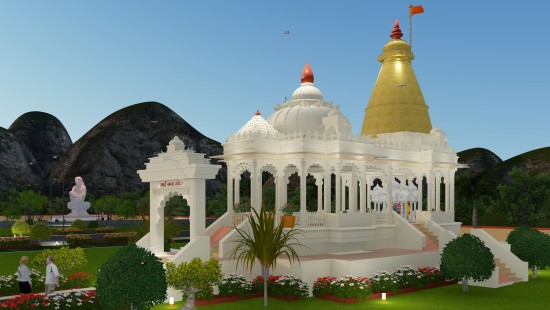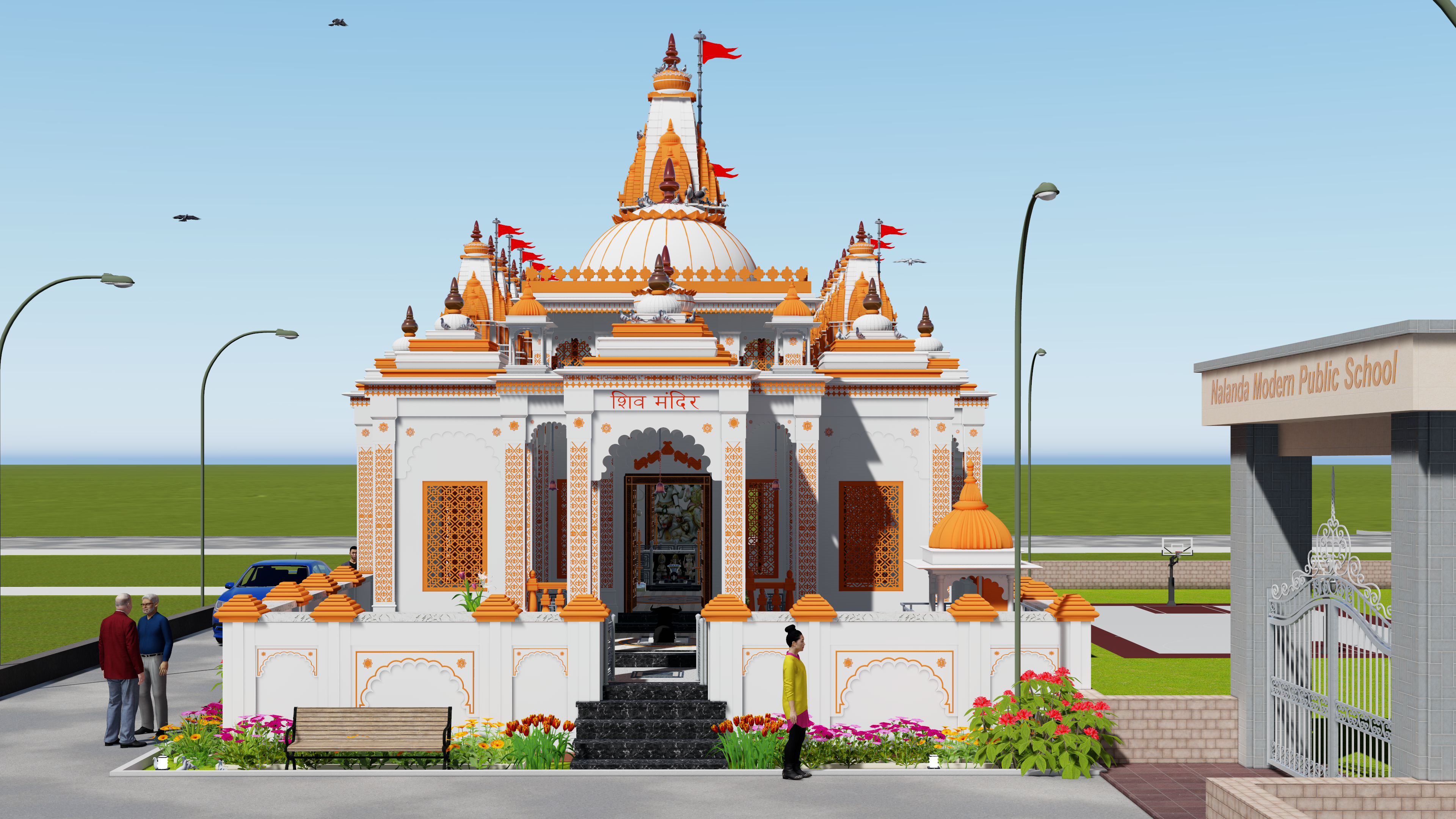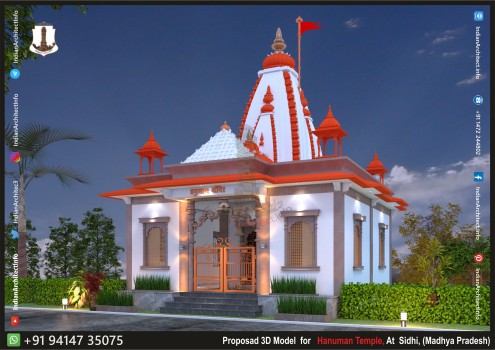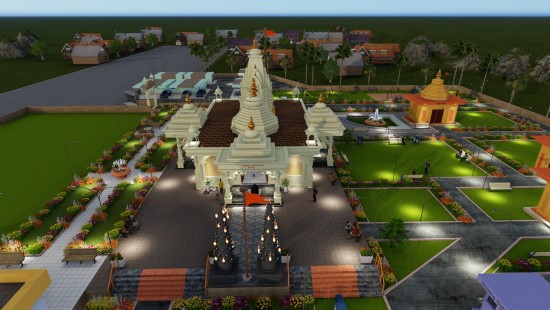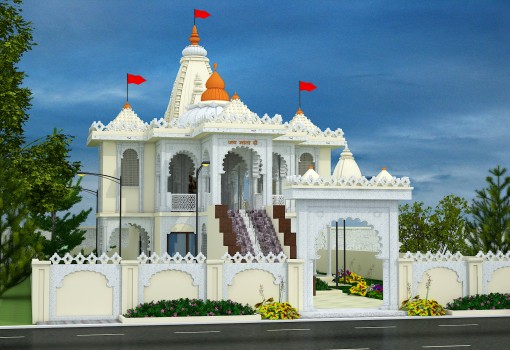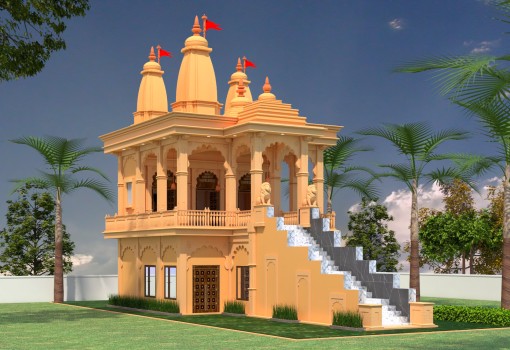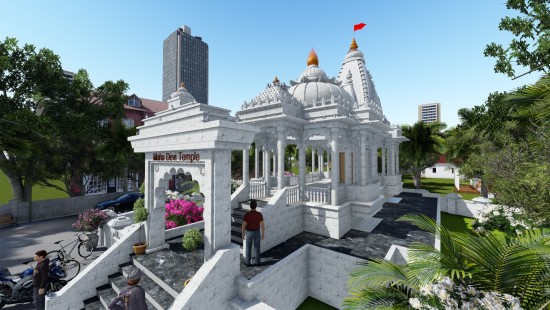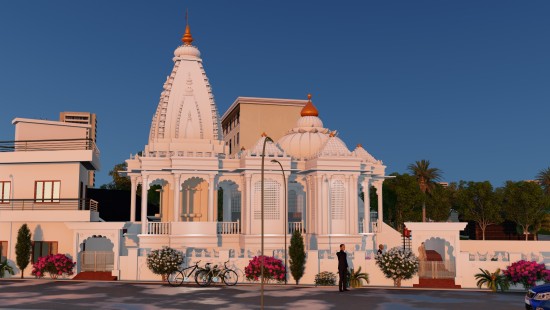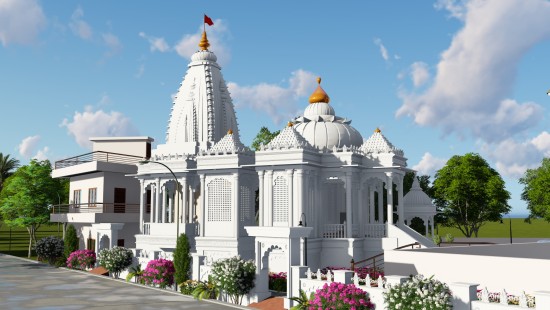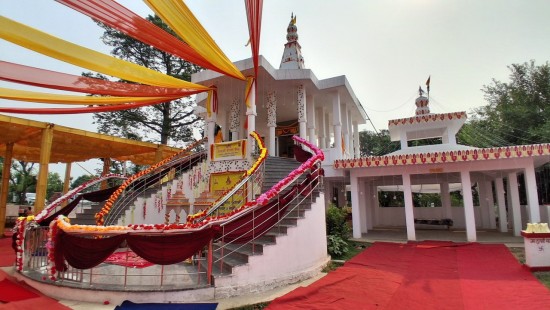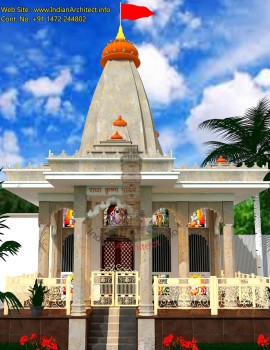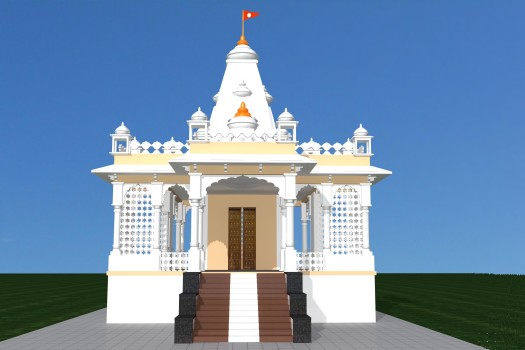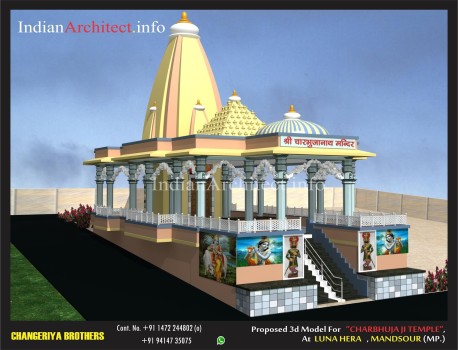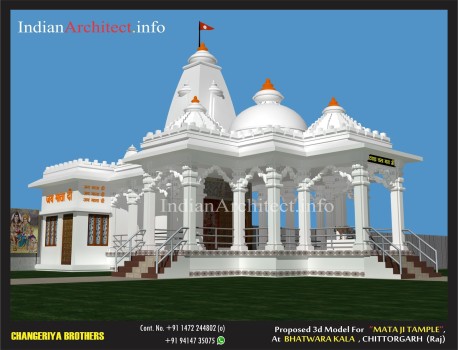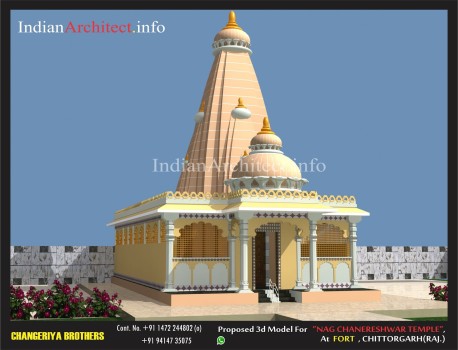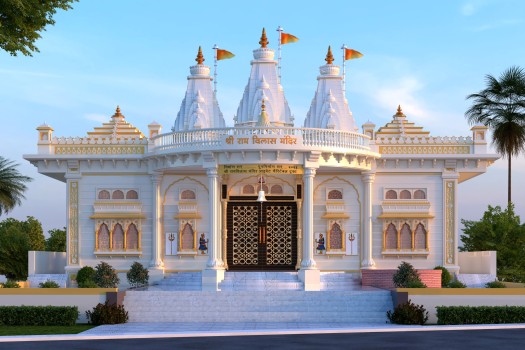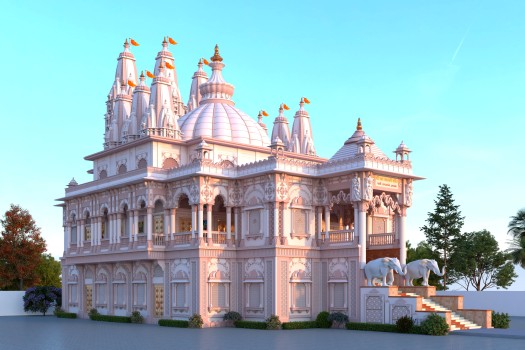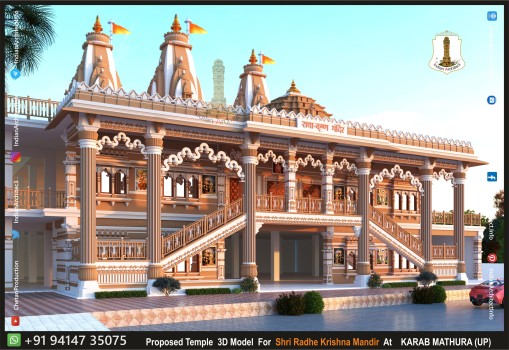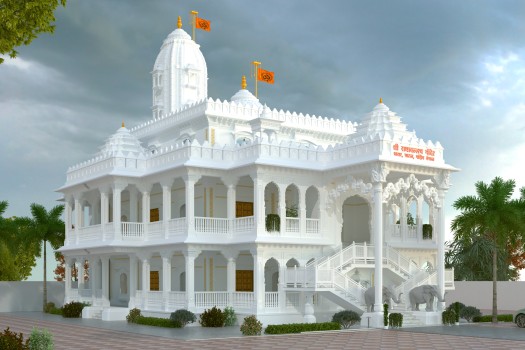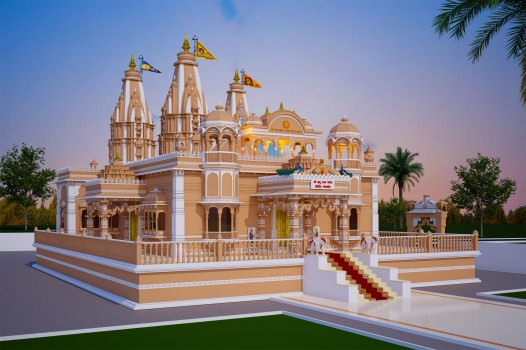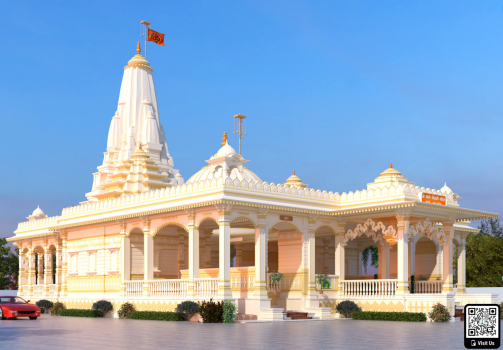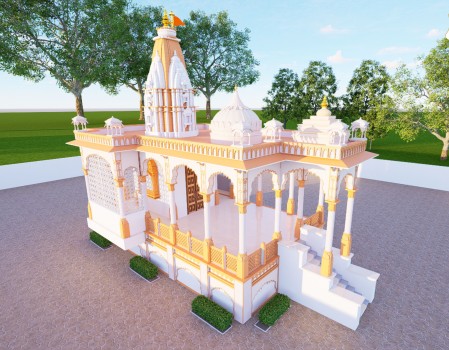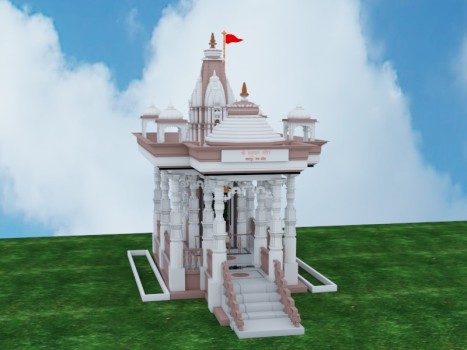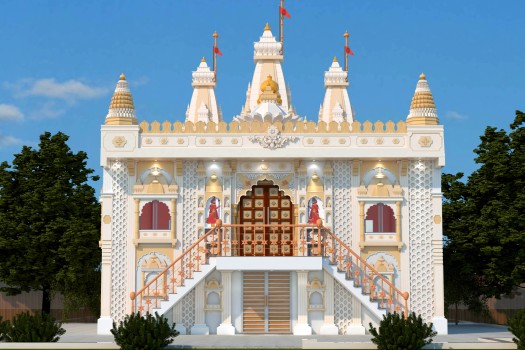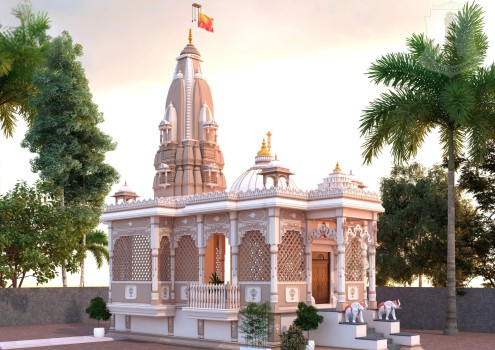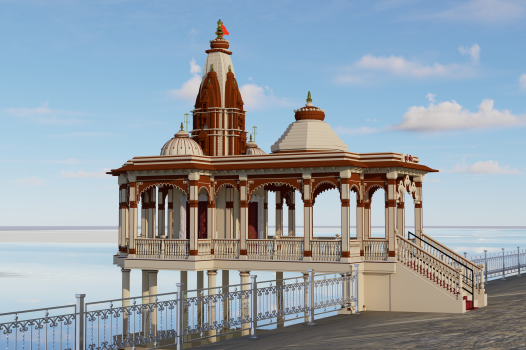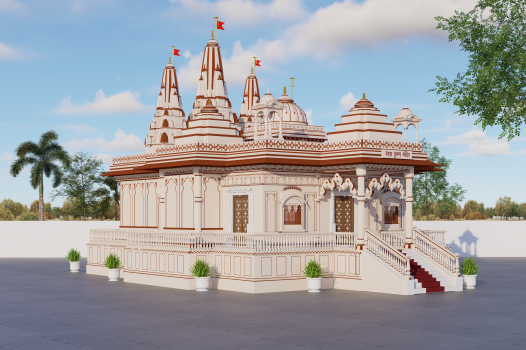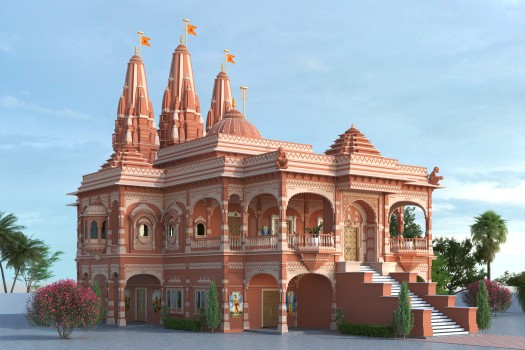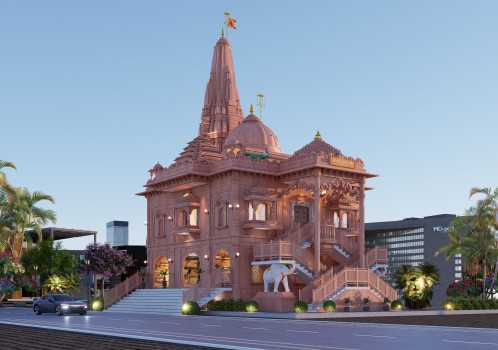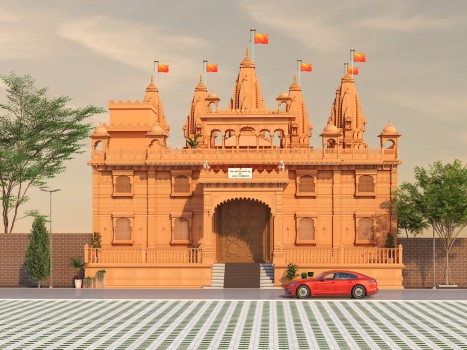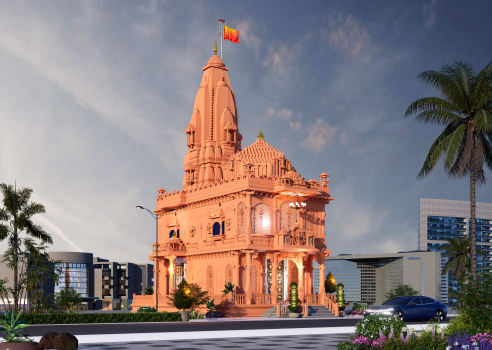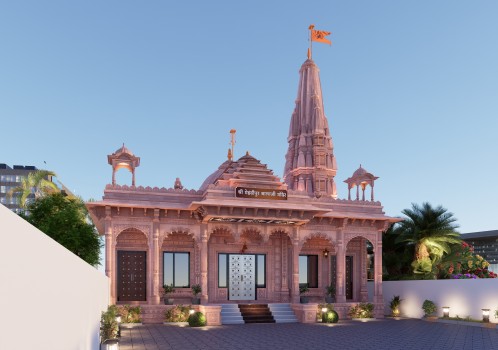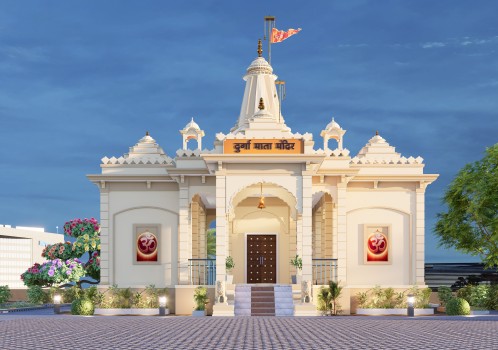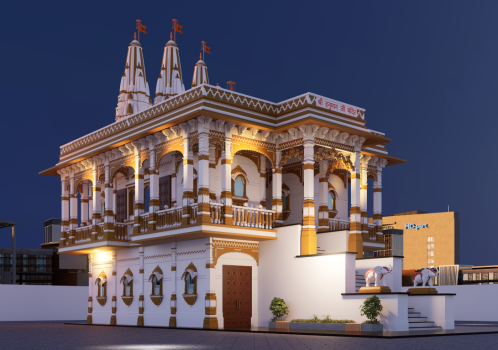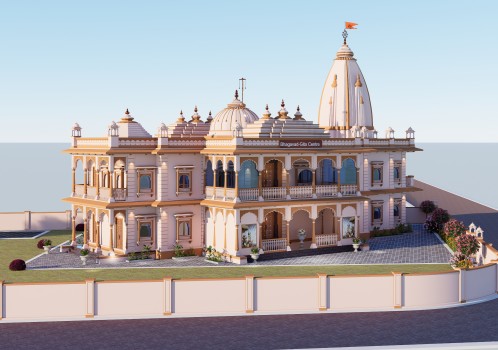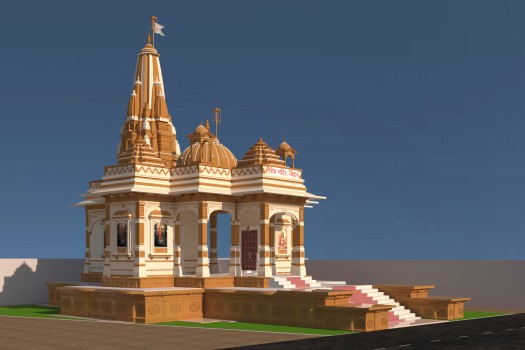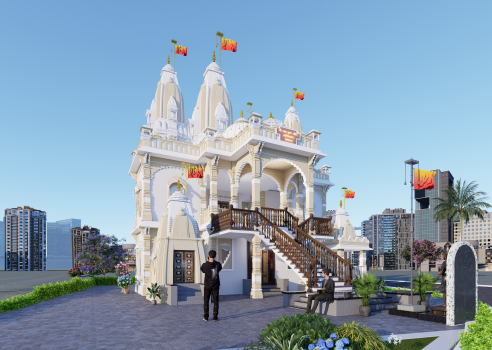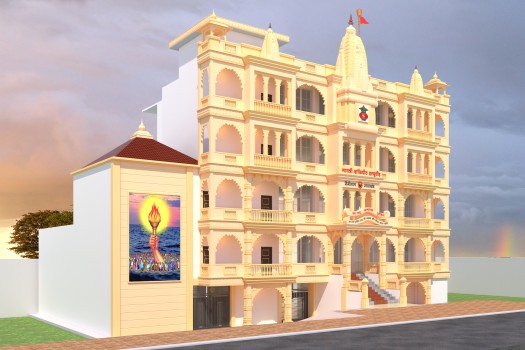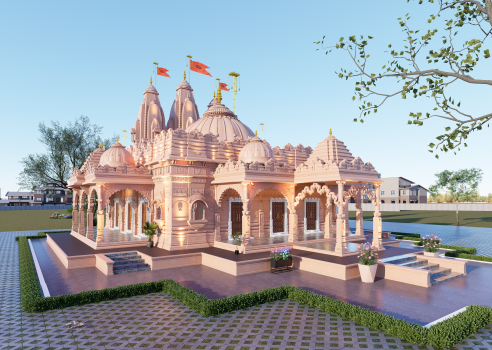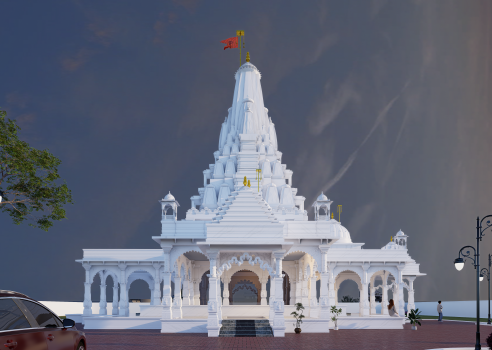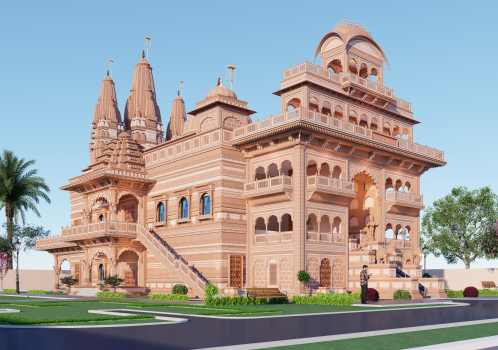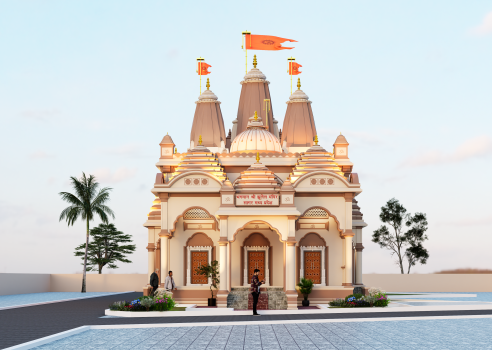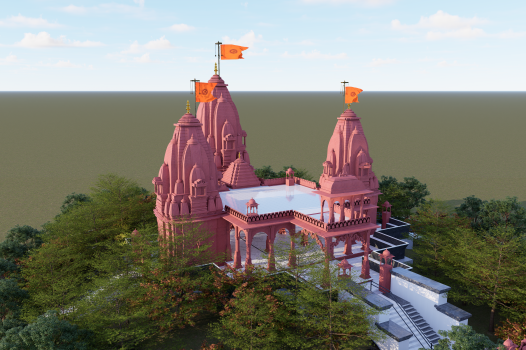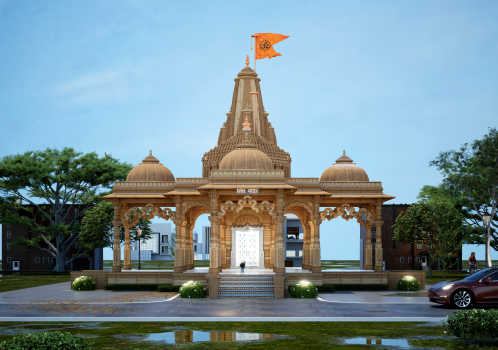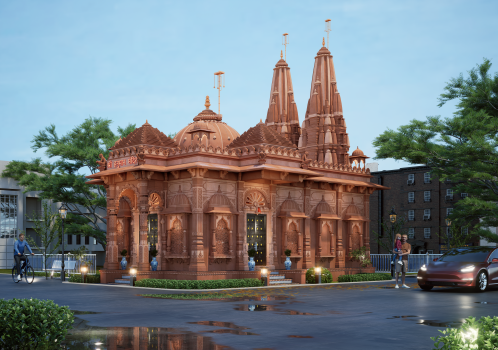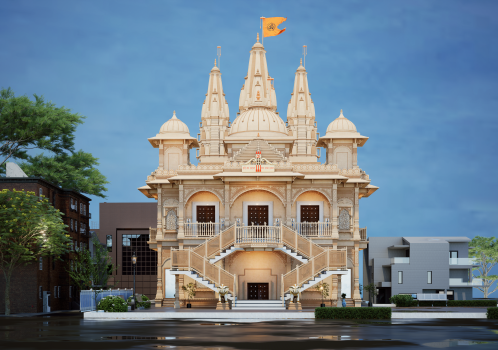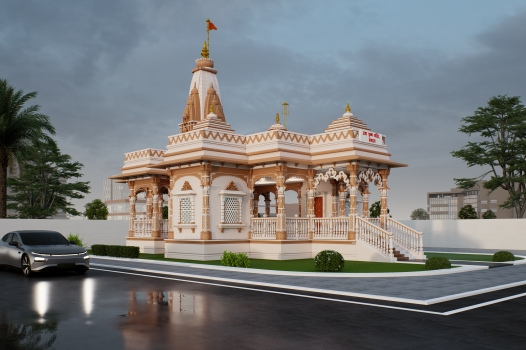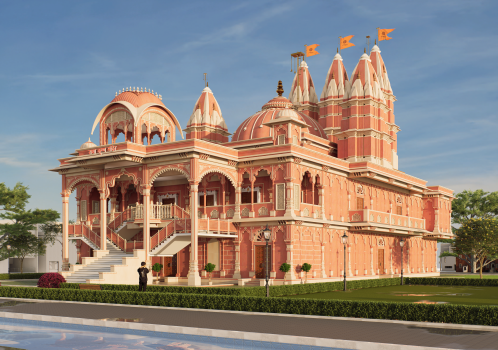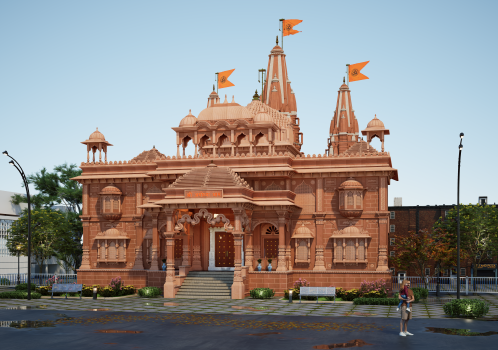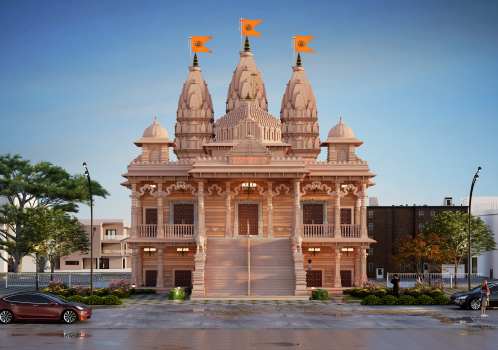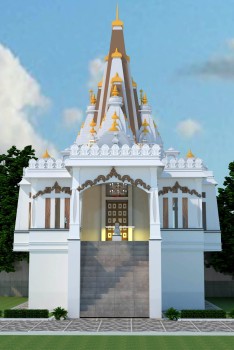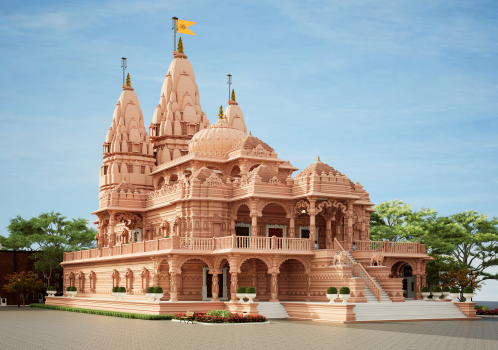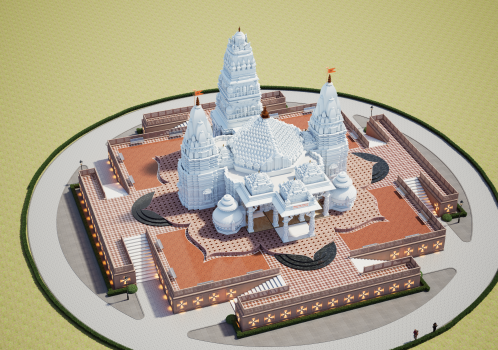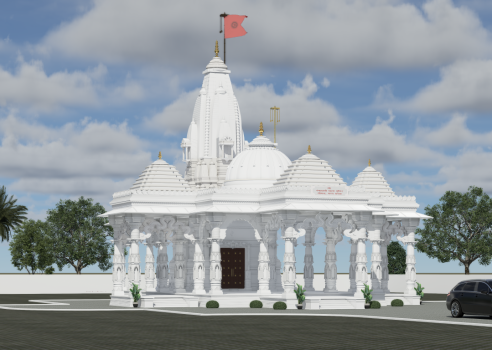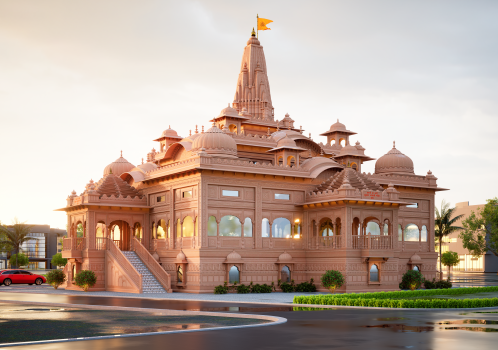
Triple Shikhara (Spires): The design features three prominent Shikharas at the rear, symbolizing the rising peaks of a sacred mountain.
Saffron Flags (Dhwaja): Each spire is topped with a Bhagwa (Saffron) flag, representing the victory of Dharma and the presence of Lord Hanuman.
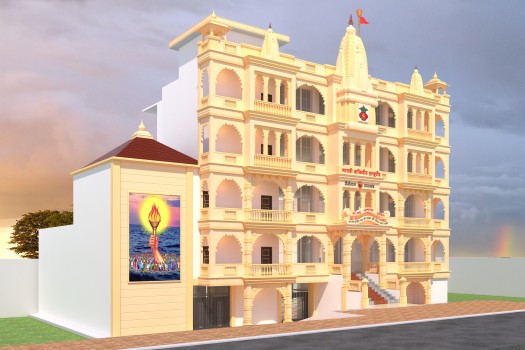
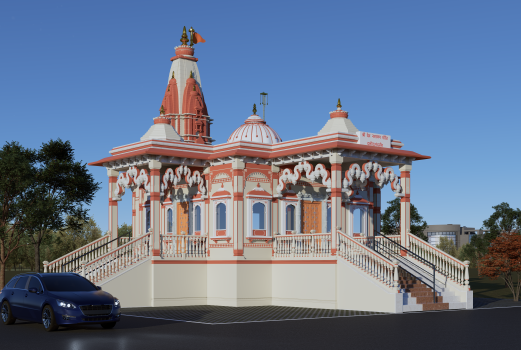
Two-Tiered Structure: The building is a two-story complex, likely using the ground floor for community halls or offices and the upper floor for the main sanctum.
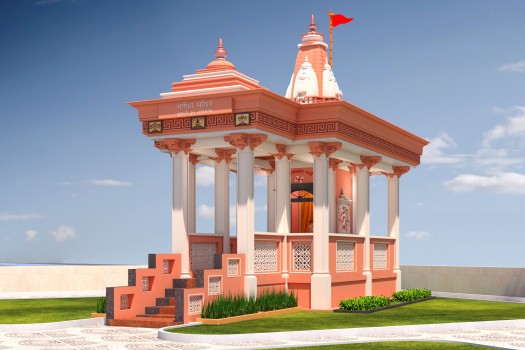
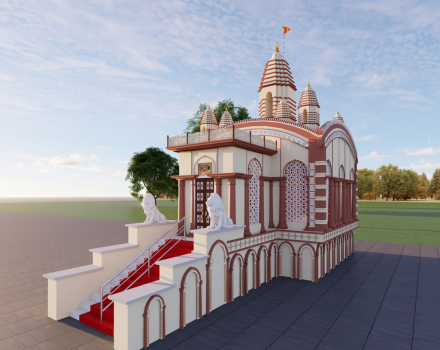
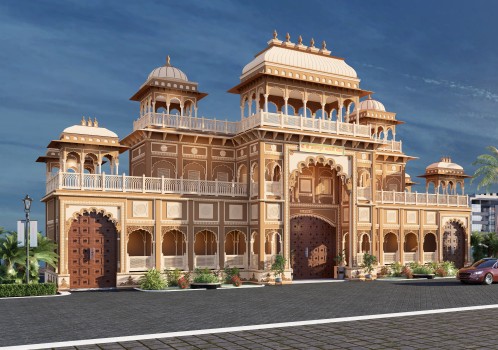
Color Palette: The exterior uses a warm terracotta or sandstone pink finish, giving it a classic, earthy, and peaceful appearance.
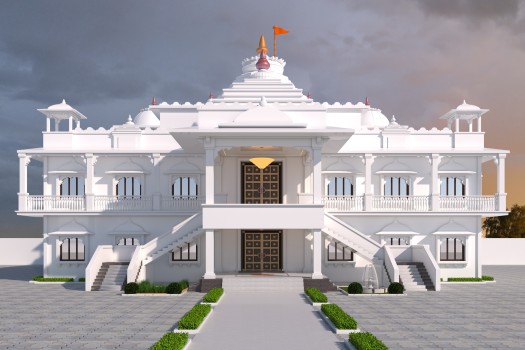
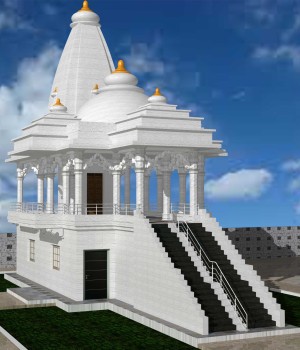
Grand Entrance: A wide, white-tiled staircase leads visitors directly to the upper main prayer hall, creating a sense of ascent.
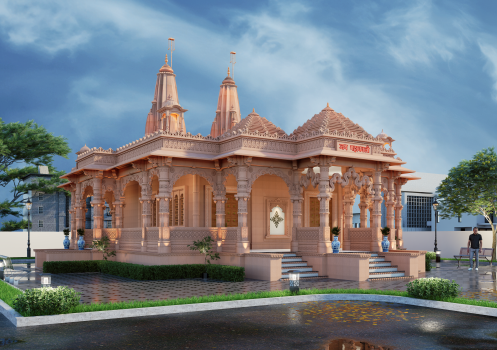
Ornate Arches: The balconies and corridors are lined with cusped arches and intricately carved pillars, adding a regal touch.
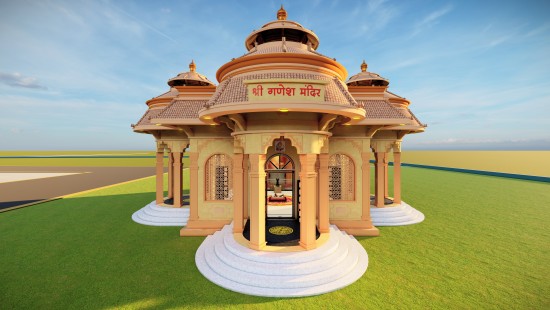
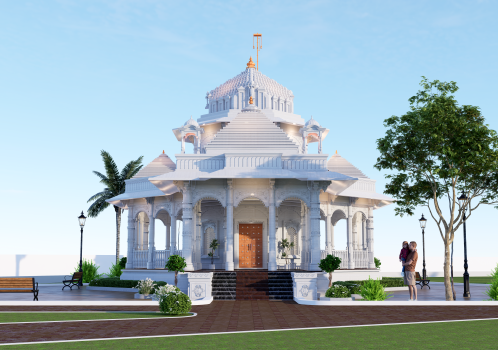
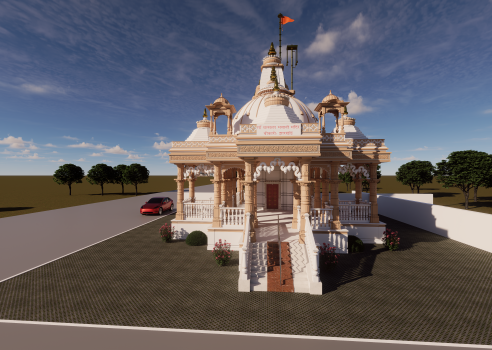
Central Dome: A large mandapa dome sits in the center, providing a spacious and airy interior for devotees to gather.
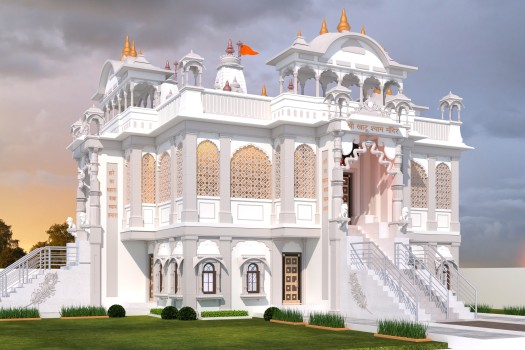
Jharokha Windows: The sides feature traditional Jharokhas (overhanging enclosed balconies) that enhance the historical Rajasthani aesthetic.
Religious Iconography: Small statues of Hanuman are placed at the roof corners, and sacred murals (paintings) are visible on the ground floor walls.
Decorative Railings: The upper balcony is surrounded by carved stone railings, ensuring safety while maintaining the decorative theme.
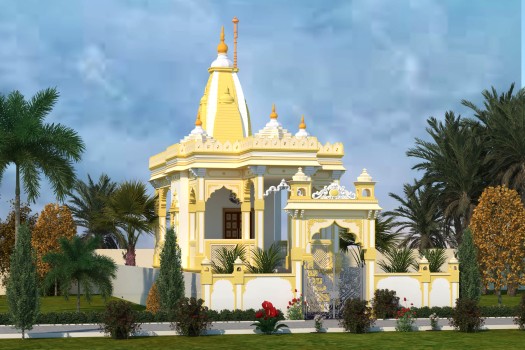
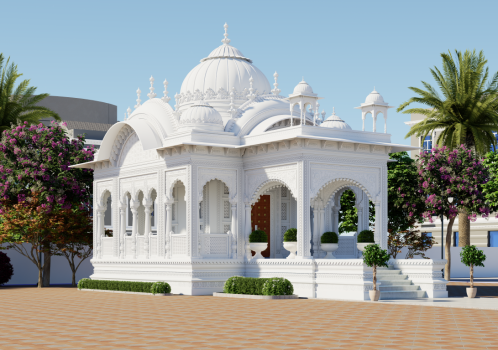
Landscaping: The temple is surrounded by well-maintained greenery, including palm trees and flowering shrubs, creating a serene environment.
RCC & Stone Fusion: While the look is traditional stone, the structural design suggests a modern RCC (Reinforced Cement Concrete) framework for durability.
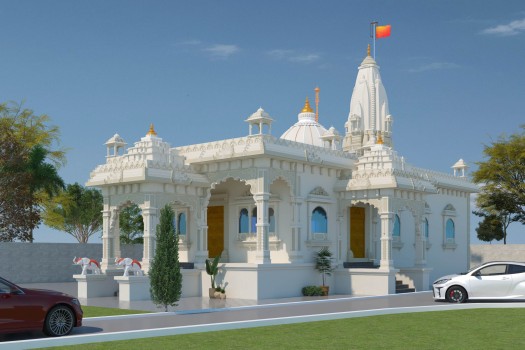
Symmetry: The entire structure follows a symmetrical layout, which is a core principle in Vaastu Shastra and temple architecture.
Ample Ventilation: Multiple open arches and windows ensure that the temple remains naturally ventilated even during large gatherings.
Project Description :
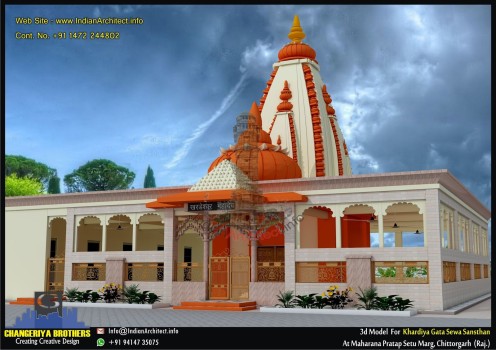
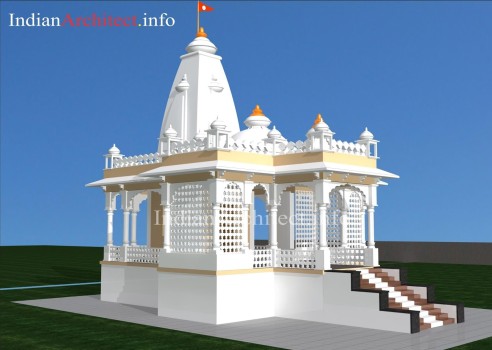
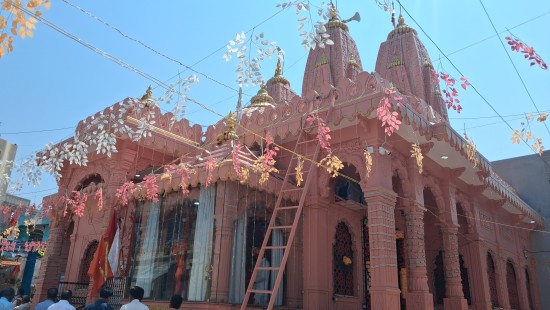
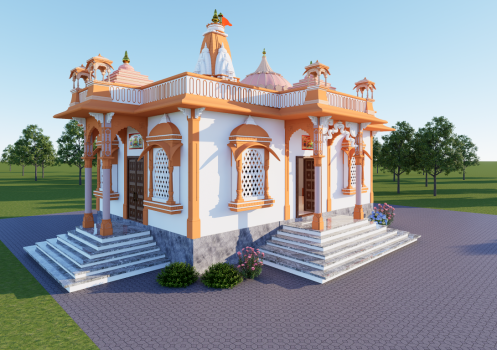
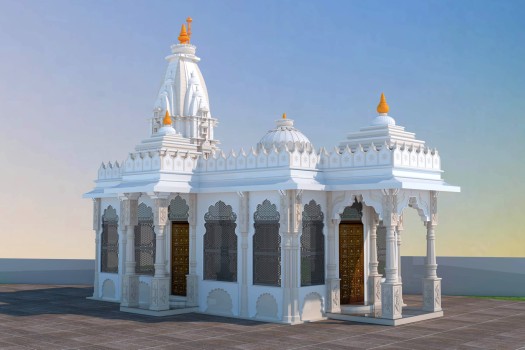
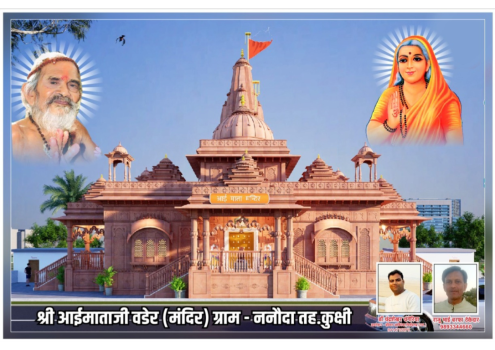
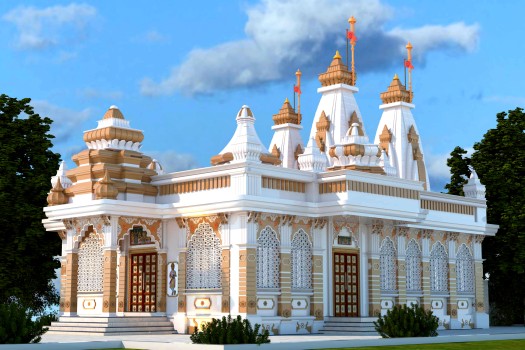
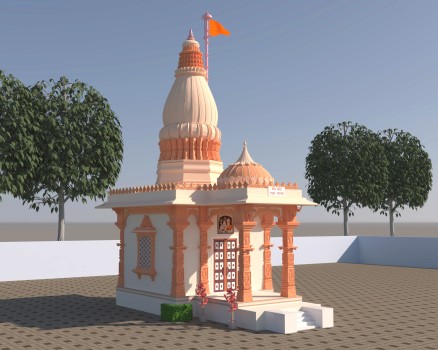
Architectural Style: The temple follows the Nagara style of North India, characterized by its towering spires and tiered elevations.
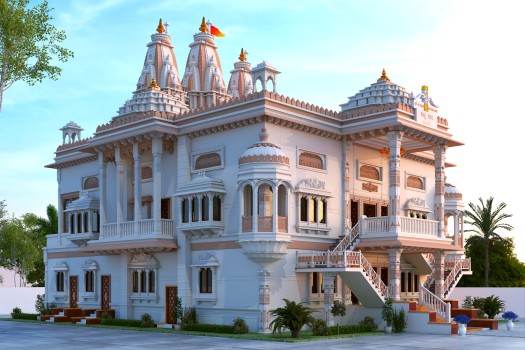
Triple Shikhara (Spires): The design features three prominent Shikharas at the rear, symbolizing the rising peaks of a sacred mountain.
Saffron Flags (Dhwaja): Each spire is topped with a Bhagwa (Saffron) flag, representing the victory of Dharma and the presence of Lord Hanuman.
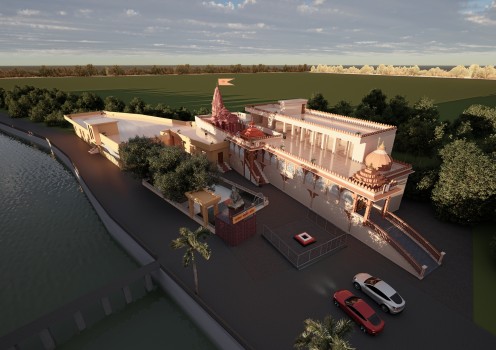
Two-Tiered Structure: The building is a two-story complex, likely using the ground floor for community halls or offices and the upper floor for the main sanctum.
Color Palette: The exterior uses a warm terracotta or sandstone pink finish, giving it a classic, earthy, and peaceful appearance.
Grand Entrance: A wide, white-tiled staircase leads visitors directly to the upper main prayer hall, creating a sense of ascent.
Ornate Arches: The balconies and corridors are lined with cusped arches and intricately carved pillars, adding a regal touch.
Central Dome: A large mandapa dome sits in the center, providing a spacious and airy interior for devotees to gather.
Jharokha Windows: The sides feature traditional Jharokhas (overhanging enclosed balconies) that enhance the historical Rajasthani aesthetic.
Religious Iconography: Small statues of Hanuman are placed at the roof corners, and sacred murals (paintings) are visible on the ground floor walls.
Decorative Railings: The upper balcony is surrounded by carved stone railings, ensuring safety while maintaining the decorative theme.
Landscaping: The temple is surrounded by well-maintained greenery, including palm trees and flowering shrubs, creating a serene environment.
RCC & Stone Fusion: While the look is traditional stone, the structural design suggests a modern RCC (Reinforced Cement Concrete) framework for durability.
Symmetry: The entire structure follows a symmetrical layout, which is a core principle in Vaastu Shastra and temple architecture.
Ample Ventilation: Multiple open arches and windows ensure that the temple remains naturally ventilated even during large gatherings.